In the environment of aerospace, tolerancing of every component is more than a cold number; it is a solemn promise to life and mission. Micron-order tolerancing deviations can propagate a cascade effect under the worst conditions of operation, with severe effects ranging from degradation in performance to catastrophic failure.
CNC machining tolerances, being the missing link between conceptual design and actuality, have a direct effect on the strength of an aircraft’s structure, its aerodynamic efficiency, and fuel efficiency, and a minimum guarantee of safe flight. They are not merely a reflection of the manufacturing process, but the very blood of performance and safety.
This article will illustrate how tolerances influence main aircraft safety and performance directly. By means of real life at LS Manufacturing, we will demonstrate how we transform uncontrolled precision into an irreplaceable competitive advantage and a basis of customer confidence. To save you time, here’s a quick overview of the core conclusions.
Aerospace CNC Machining Core Tolerance Quick Reference
| Key Points | Explanation/Impact |
| Extreme Precision and Consistency | Tolerances are controlled regularly at the micron level to permit part interchangeability and assembly dependability in severe environments. |
| Structural Integrity | Over-tolerance leads to stress concentration, reduced fatigue life, and violation of primary load-carrying structure safety. |
| Aerodynamics and Engine Performance | Blade and flow channel tolerance impinges on efficiency, thrust, and economy, and can even cause vibration. |
| System Reliability | Failure to attain tolerance in hydraulic and avionics systems leads to cascading failure modes like leaks and loss of signal. |
| Material and Stress Management | Prevent internal stresses by processing with consideration of material properties (thermal expansion) to prevent post-process warping. |
| Standards and Specifications | Adhere to industry specifications like AS9100 and MS for complete process traceability. |
| Advanced CNC and Measurement | Employ five-axis/multi-axis machine tools, in-process gaging, and three-dimensional coordinate measurement to accomplish closed-loop accuracy. |
Aerospace tolerance control is a disciplined process that extends through the entire product design, production, and test cycle. It is not a simple dimension control and is a technology base that has a direct impact on aircraft performance, safety, and durability.
Every diligent search for tolerances rubs against each flight’s safety and is a real-time measure of the core competitiveness of a company.

Why trust this guide? Practical Experience from LS Manufacturing Experts
This guide is based on LS Manufacturing’s over fifteen years of experience in aerospace CNC machining. LS Manufacturing does not only read books but also follows standards strictly. For example, we supplied the machining solution to one bearing part of the flight control system of a specific civil airliner. The component is high-strength titanium alloy with complicated structure and very precise tolerance (±0.005mm at some points).
With the closed-loop operation on LS Manufacturing’s five-axis machining center and in-machine probing system, not only do we ensure 100% yield rate at all times but also enhance machining efficiency by 20% with cutting parameters optimized. This ultimately helped the customer successfully shorten project timelines without making any compromises on the highest standards of safety.
LS Manufacturing’s real-world problem-solving experience with just such challenges gives this manual real-world validity and credibility over abstractions.
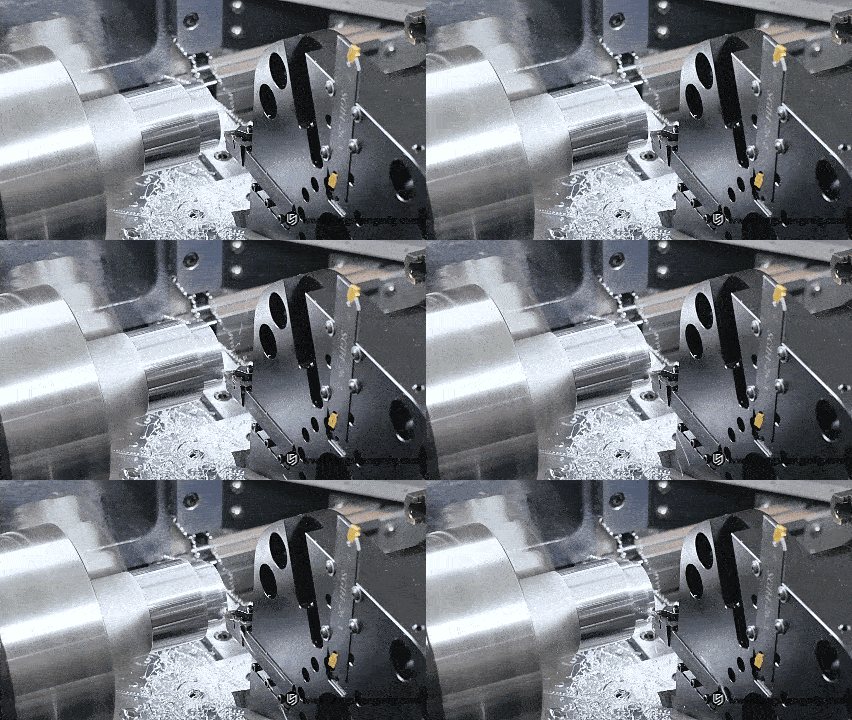
Why are tolerances in aerospace CNC machining so stringent?
In aerospace, the requirement of ultrahigh precision in precision machining of aircraft parts is not random; it is dictated by the nature of the harsh operating conditions.
1. Ensuring Performance Under Extreme Operating Conditions:
Aerospace CNC machined components have to endure severe temperature extremes, pressurization, and altitude loading. Tight aerospace CNC machining tolerance variations have a direct impact on part clearance: overheating will cause seizure, but over-looseness will cause leakage vibration, impacting critical aerodynamic shape and seal, compromising flight safety.
2. “Tolerance Chain” and System Reliability:
The root problem is the accumulation effect of the “tolerance chain.” Smallest tolerancing errors on discrete components accumulate when mated to impact system-wide loss of performance. This ensures manufacturability under close tolerance safety to be the foundation of overall reliability, engine to flight control system, in order to prevent a cascade sequence of global failure due to localized loss of control.
Thus, very tight tolerance requirements must be imposed so that there is structural stability, good operation, and system reliability of the airplane under extreme stress levels. They are the central link between precise manufacture and sole reliance.
How does tolerance control directly determine the upper limit of aircraft performance?
The magic flight of planes, i.e., high thrust-to-weight and outrageous range, does not occur by magic. Its operating ceiling is precisely determined by the microscopic tolerances produced by high-precision CNC aerospace manufacture. Understanding much about how machining tolerances impact flight is the secret to understanding modern aviation technology.
1. Thrust-to-weight ratio and fuel efficiency:
Take major engine components as an example. Casing-to-turbine-blade fit tolerances have significance:
- Heavy clearances will cause gas leakage, reduce combustion efficiency, reduce thrust and fuel, immediately.
- Heavy clearances can lead to thermal expansion jamming and friction.
Only high-precision CNC aerospace machining can deliver the best airtightness, wherein every last drop of fuel is converted to productive thrust, increasing thrust-to-weight ratio and fuel efficiency directly.
2. Range and maneuverability:
Wing profile and skin mating integrity in airframe design has direct relation to aerodynamic efficiency in general. Greater surface and contour tolerances add additional frictional and pressure drag, and the engine must burn additional fuel to maintain speed and reduce range. Assembly tolerances of moving parts such as control surfaces, on the other hand, have direct relation to speed and rudder response accuracy and are the physical basis for outstanding handling.
Thus, from power core to aerodynamic shape, sound tolerance control is essential to unlock the aircraft’s potential for performance. It brings world-class design concepts into real performance gains and serves as the basis for optimum aircraft performance.
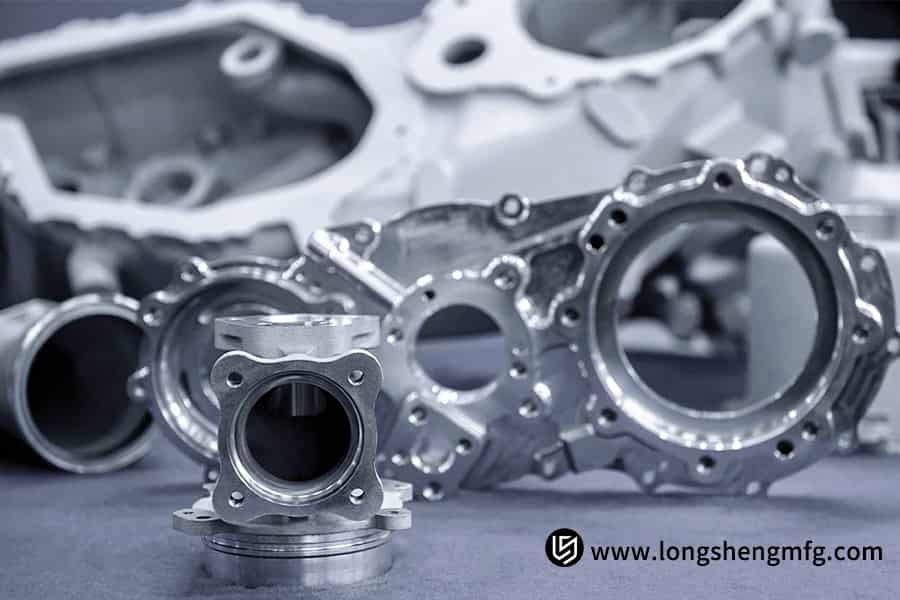
What are common tolerance standards in the aerospace industry?
In aerospace manufacturing, aerospace CNC tolerance standards are the backbone on which all parts operate correctly under extreme conditions. Aerospace part processing methods, such standards are the basis for the harmonized and correct specifications for manufacturing different kinds of parts.
1. General Quality Management System Standards:
The AS9100 series is a world-accepted aerospace quality management system standard that forms the complete model for the whole manufacturing process. The standard encompasses product functional monitoring throughout the entire lifecycle, strict traceability, and risk assessment, so that every phase from raw material to final product is under control.
2. Special Tolerance Standards for Key Components:
For major parts, there are even more precise special requirements. For example, profiles of aircraft engine blades all have their own individual special methods of marking and tolerances, which in turn directly influence engine efficiency and reliability. At the same time, strategic materials like nickel alloy and cobalt alloy plate possess such tolerance sizes like thickness, width, and flatness as stipulated by such standards as SAE AMS 2262H.
3. Specific Tolerance Grades and Part Requirements:
General geometric tolerances like ISO 2768-mK, in production, will normally refer to unspecified tolerance grades of general geometric tolerances (e.g., straightness, flatness, and symmetry). Parts with higher requirements have tighter standards. Precision aircraft actuation system enclosures, for example, can specify radial runout under control to 0.025mm, aperture tolerances to 0.007mm.
From the massive AS9100 quality management system to engine tolerance, material tolerance, and part structural tolerance, these are all tight aerospace CNC tolerance requirements that are used together in creating the foundation of aerospace part processing to guarantee end performance and safety of the final product.
How does LS Manufacturing achieve and verify micron-level tolerances?
For CNC aerospace machining, the procurement and verification of micron-level tolerances is a structured effort whose immediate impacts decide flight performance and safety margins. LS Manufacturing, within an overbearing constraint of hardware investment and process technology, has transmuted high-precision CNC aerospace machining into a concept-turned-trackable-reality.
1. Guaranteed Precision Machining Capabilities:
LS Manufacturing is founded on a group of 5-axis high-speed CNC machining centers. Its highly rigid configuration and dynamic precision control system are the foundation of stable cutting of complicated curved parts. The ideal cutting conditions along with thermal deformation compensation technology ensure surface integrity without errors even for difficult-to-cut materials such as titanium alloys and high-temperature alloys – the secret to high-precision CNC aerospace production.
2. Full-Process Verification and Data Traceability:
Also critical is machining accuracy verification. LS Manufacturing uses Zeiss coordinate measuring machines and laser scanners to conduct rigorous first-article inspection, in-process spot inspections, and end-of-run full-dimension reports. The process not only captures microscopic variation but also builds a complete digital record, so every part that leaves the factory has precise aerospace CNC machining data behind it to provide traceability to quality for its entire life.
From five-axis CNC machining high-precision cutting to accurate measurement with three-dimensional coordinate measurement, LS Manufacturing has developed a closed-loop system of quality control that encompasses both machining and inspection.

How does material selection and tolerance control synergistically influence part lifespan?
Material characteristics and tolerance control in precise machining of aircraft parts are not self-sustaining factors, but their interaction directly determines the service life and reliability of parts working under severe conditions of service. Safety of tight tolerance machining largely relies on the understanding of response of material to machining and implementation of aimed process controls.
1. Material Properties and Addressing Machining Deformation:
Material commonly used in aerospace, i.e., high-temperature and titanium alloys, are good in strength and toughness but prone to work hardening, thermal deformation, and residual stress during machining. These phenomena can lead to release of stress after machining, causing dimensional “aging” of the part.
Despite precision being achieved during machining, tolerances can begin to drift imperceptibly while stored or in use. This calls for stronger material properties to be a priority consideration in process design from the beginning in the whole precision machining process of aircraft components.
2. Specialized Processes Ensure Tolerance Stability:
- In order to counteract material deformation, we apply multi-dimensional coordinated control. In tool selection, we make use of sharp, specially treated tools to avoid cutting forces and heat.
- In parameter selection, we employ optimal combinations of feed rate and speed to avoid zones susceptible to work hardening.
- In process sequence, we incorporate in strategic intermediate steps of stress relief annealing to effectively relieve internal stresses and ensure long-term dimensional stability of the final product.
This is the key process assurance for tight tolerance machining safety and assuring long service life.
Material is the beginning, tolerance is the goal. It’s only through very specialized machining methods that work synergistically together to balance the two naturally that potential performance in fine materials can be translated to rugged, reliable performance in actual service.

Case Study: LS Manufacturing Overcomes Tolerance Challenges for Core Jet Engine Components
In machining components of turbine engines, even slight deviation of tolerance control can trigger a chain reaction. One successful recent solution to a problem of machining a high-pressure turbine blade fully demonstrates the crux of safety in tight tolerance machining of aerospace CNC machining.
1. Customer Dilemma:
A leading aircraft engine manufacturer was faced with a severe issue: the interface between the groove and the tenon of its turbine blades invariably exhibited batch-to-batch tolerance variation. Not only was the assembly inconvenient with the fit being too tight, but it was also subject to fatigue fracture risk, seriously threatening the testing schedule and delivery plan of the new engine.
2. LS Manufacturing Solution:
LS Manufacturing developed a technical team with high skill to tackle the challenge through innovative process excellence:
They simulated precisely the machining deformation behavior of the material and optimized the five-axis toolpath and custom fixture design.
They installed an in-machine measurement system to monitor and compensate for tool wear in real time, so the tenon profile and positioning dimensional tolerances of the blade remained within ±0.005mm at all times.
3. Results and Value:
Not only did this project provide the customer with design-specified blades, but also increased assembly efficiency by 40%. The product withstood extremity operating condition testing successfully, paving the way for the engine’s timely certification.
This case is the best to explain that superior aerospace CNC machining ability is the natural guarantee for achieving stringent tolerance machining security, and also enables us to establish a solid strategic supplier relationship with customers.
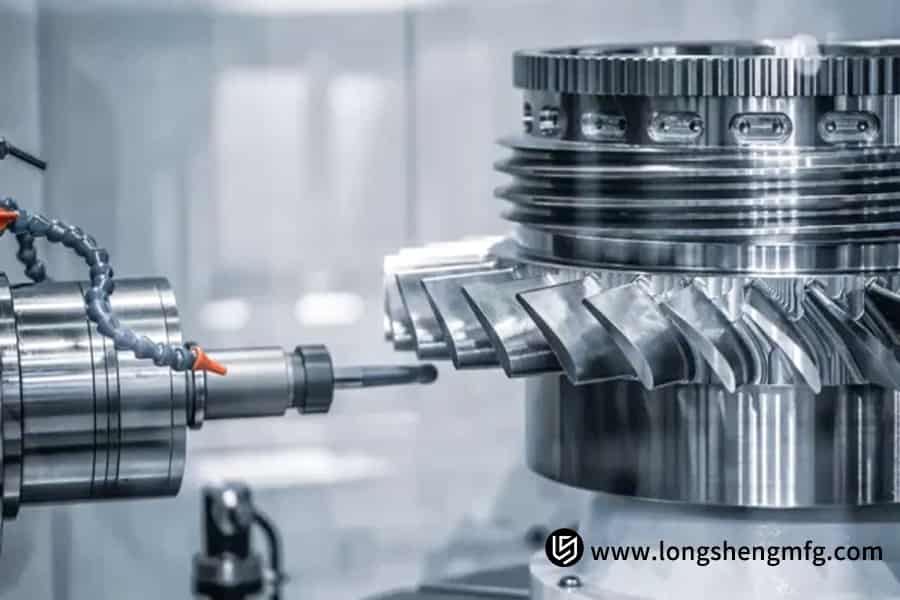
Beyond the Numbers: How Can Tolerance Control Reduce Costs and Increase Efficiency for Your Projects?
In aerospace manufacturing, many people misunderstand that pursuing the ultimate in tolerances in aerospace CNC machining inevitably leads to significant cost increases. However, true precision engineering is precisely the opposite: excellent tolerance control is the core driver for achieving long-term cost reduction and efficiency gains.
Dependable precision machining capability for aircraft parts, getting it right the first time, effectively eliminates costly chain reactions in downstream processes. The following table precisely illustrates how precision tolerances contribute to value-added in the whole lifetime:
| Cost Components | Conventional Manufacturing | LS Manufacturing | Core Benefits |
| Production Phase | High rework scrap rate, high rework | First-pass quality, low rework | Remains direct material and labor wastage elimination |
| Assembly Phase | Time and labor-intensive adjustment and repair | Smooth interchangeability, fast assembly | Dramatically increases assembly productivity |
| Operation and Maintenance Phase | High number of repairs, early failures | Long maintenance intervals, high reliability | Dramatically reduces lifecycle costs |
It is not only a cost but a strategic investment that has long-term impact on the efficiency of the project and operations advantages in the long term. It allows for better product reliability and consistency, resulting in the entire cost optimization of manufacturing through operation and maintenance.
Why do the world’s top aerospace manufacturers trust LS Manufacturing?
When selecting partners, the world’s top aerospace manufacturers build their trust on a complete evaluation of technical competence, quality infrastructure, and combined value. LS Manufacturing’s decades-long history of high-precision CNC aerospace machining has earned it the reputation as a trusted partner to the industry. Our methodology is a living manual to machining aerospace components. This trust is founded on three pillars of confidence:
1. Authoritative Certification and Complete Traceability:
LS Manufacturing not only holds AS9100 aerospace quality system certification, but has implemented a full traceability system from raw material receipt to shipment of the finished product. That is, every part will have a complete “identity file,” so any quality issue can be readily identified and remedied, providing a solid foundation for customer supply chain security.
2. Professional Team and Advanced Technology:
LS Manufacturing’s engineering personnel collectively average over 15 years of experience and have in-depth familiarity with the machinability characteristics of a wide range of materials from titanium to hot section high-temperature alloys. They are not just equipment operators, but process inventors, taking state-of-the-art high-precision CNC aerospace machining technology and translating it into customized solutions to our customers’ real issues.
3. “Zero Defect” Quality Culture:
LS Manufacturing is a part of our customers’ production process, not merely an order taker. This “partner” attitude drives our “zero defect” drive above standards, ensuring superior reliability and consistency in all shipped parts. LS Manufacturing’s disciplined system, experienced personnel, and culture of excellence have established long-term trust with the world’s top manufacturers.
LS Manufacturing not only supplies parts to standards, but also employs its own methods as a reliable benchmark for aerospace part machining, and aiding the success of each flight project.
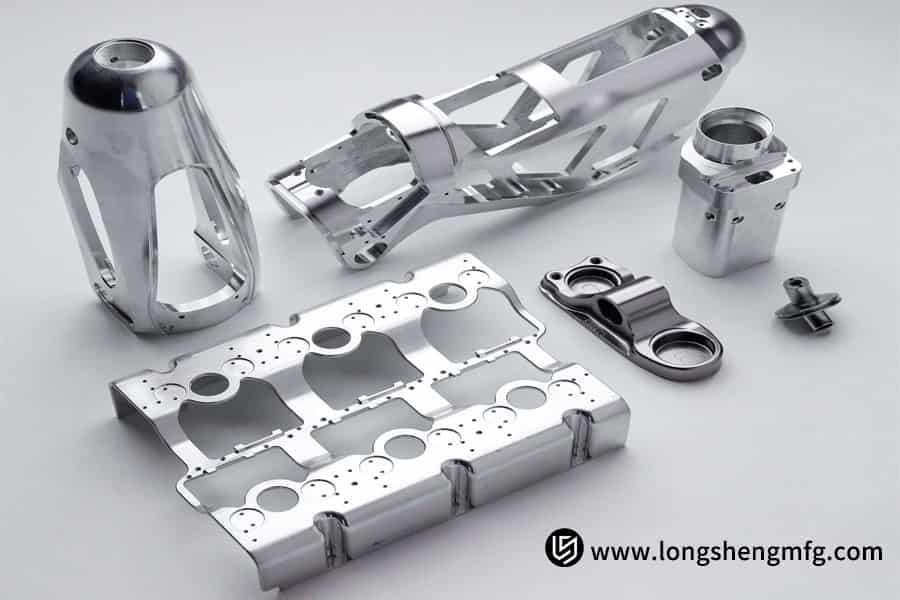
Do your projects face similar precision and safety challenges?
In your pursuit of high-level performance, have your aerospace CNC machining projects experienced the following problems? Whether batch instability or the über-pursuit of tight tolerance machining security, we completely understand these problems and solve them directly.
- Tolerance Variation: Have you ever experienced uncontrollable dimensional scatter in mission-critical components (e.g., engine or flight control system parts)? This directly leads to assembly issues, subpar performance, and even safety hazards.
- Supply Chain Reliability Anxiety: Was your supplier’s inability to regularly deliver dependable, high-precision components a cause of delay in project progression or led you to anxious consideration about the ultimate product’s dependability?
- The cost vs. quality dilemma: Are you forced to alter your design from sacrificing machining capability, or are you caught in the dilemma of “high precision = high cost” ultimately affecting your product’s core competitiveness?
LS Manufacturing is the master of breaking these difficult and demanding aerospace CNC machining problems. We understand precision machining security for close tolerance is the success key to a product.
If your project is having trouble with precision, reliability, or supply chain, contact us today for a complimentary consultation.
How to Get Started on Your High-Precision Aerospace Part Project?
Starting a high-precision part project should never be an exasperating task. As your one-stop trusted mentor to aerospace part machining, we have streamlined our collaboration process into three simple steps so that your airplane part precision machining needs take to the skies quickly and effectively. Simply watch this simple process:
1. Data Submission and Technical Evaluation:
Provide a 3D model (i.e., STEP file) and 2D drawings of your product. LS Manufacturing’s engineering team will spend their initial 24 hours on a technical review, deciding whether your design can be made for aircraft part precision machining and providing expert advice on material selection, critical tolerances, and other details.
2. Fast Quote and Plan Confirmation:
LS Manufacturing will provide a clear initial quote and complete plan for executing the project within 48 hours outlining delivery cycles, quality control milestones, and key parameters of prime significance.
3. Project Startup and Professional Support:
From the instant your plan is approved, we here at LS Manufacturing will assign a full-time project manager to you. He will be your sole point of contact, coordinating production, quality control, and shipping step-by-step, keeping in close communication and reporting to you.
LS Manufacturing is committed to translating professional aerospace part processing standards into collaborative practices that are simple and efficient.
The instant you submit your information, you will experience our rapid response and skilled project support, making your precision manufacturing project simple.
FAQs
1. What is the tightest tolerance you can handle?
Based on part geometry and material, we can achieve ultra-low tolerances of sub-±0.0025mm for key features like engine grooves and mating surfaces. Using a closed-loop quality inspection system that features a five-axis CNC center and Zeiss coordinate measuring machine, LS Manufacturing guarantees all micro-dimensional detail meets AS9100 standards, including data substantiation to performance and safety under harsh operating conditions.
2. Do you hold the necessary quality certifications for the aerospace industry?
LS Manufacturing is AS9100D Aerospace Quality Management System certified and maintains its end-to-end process control requirements under tight compliance. We have developed an all-inclusive digital traceability system, starting from raw material traceability to the process parameter monitoring up to the finished good inspection where each step of the process is auditable and traceable, so that the customers receive quality assurance up to world best for the standards of aerospace manufacturers.
3. What aerospace materials do you specialize in?
LS Manufacturing has expertise in precision machining of difficult-to-machine materials such as titanium alloy TC4 and nickel-based superalloy Inconel 718. Based on our extensive process database, we balance parameters and tools with material cutting behavior and effectively control machining distortion and residual stresses to give complex structural parts severe strength, temperature resistance, and fatigue life requirements.
4. How long does it take from inquiry to detailed quote?
Once we receive the final technical details (in the form of STEP models and 2D drawings), LS Manufacturing promises to have a process review completed and issue an open quote within 24-48 hours. By taking advantage of our efficient assessment process and working together with our skilled personnel, we make simultaneous manufacturability recommendations to allow you to streamline project approval and supply chain decision-making.

Conclusion
In the aerospace industry, CNC machining tolerances are the building blocks of design, production, and fly safely. The relaxation at any microscopic level will create a chain reaction with unforeseen results.
LS Manufacturing, with extensive industry expertise, five-axis CNC close-loop production, precision inspection, and uncompromising standards of compliance to AS9100 quality standards, is the world’s best-known aerospace titans’ go-to partner. We give every part maximum dedication to performance and safety, working radical precision into the foundation of safe flight operation.
Contact LS Manufacturing today and submit your part drawings to get a customized precision machining solution and open quote. Let LS Manufacturing’s experts take care of end-to-end support, from technical consultation to volume production. We are prepared to transform your precision manufacturing needs into improved aerospace solutions.
📞Phone:+86 185 6675 9667
📧Email:info@longshengmfg.com
🌐Website:https://www.longshengmfg.com/
Disclaimer
The content appearing on this webpage is for informational purposes only. LS Manufacturing makes no representation or warranty of any kind, be it expressed or implied, as to the accuracy, completeness, or validity of the information. Any performance parameters, geometric tolerances, specific design features, quality and types of materials, or processes should not be inferred to represent what will be delivered by third-party suppliers or manufacturers through LS Manufacturing’s network. Buyers seeking quotes for parts are responsible for defining the specific requirements for those parts. Please contact to our for more information.
LS Manufacturing Team
This article was written by various LS Manufacturing contributors. LS Manufacturing is a leading resource on manufacturing with CNC machining, sheet metal fabrication, 3D printing, injection molding,metal stamping and more.



