In engineering design and material selection, stainless steel and galvanized steel usually raise the question: How to strike a balance? Indeed, the key difference between the two hinges on the corrosion protection mechanism as well as cost behavior. The physical zinc coat is the mechanism of protection offered by galvanized steel as a sacrificial anode. Even though cheap, its lifespan is dependent on the environment.
Stainless steel, on the other hand, is resistant to corrosion by virtue of the close passive film formed by chromium. High initial cost, but very strong and durable. There isn’t so much an absolute “better,” only the one that best suits the application.
The key is in making a rational assessment of operating environment, longevity requirements, and lifecycle cost. Understanding the fundamental differences between the two will help you overcome myths of material selection. To save you time, I have given a summary of the principal conclusions below.
Galvanized Steel vs. Stainless Steel Core Quick Reference Table
| Characteristic Dimensions | Galvanized Steel | Stainless Steel |
| Corrosion Resistance | Active Sacrificial Protection: The zinc layer acts as an anode, sacrificing itself to protect the steel substrate. Rusting rapidly occurs after the zinc layer is depleted. | Passive Permanent Protection: Chromium forms a dense passive film, isolating the steel from corrosive media. It has the ability to self-repair after damage, resulting in excellent durability. |
| High Strength | The base steel is carbon steel, offering high strength but average toughness. | High and Diverse: High strength, and many grades (such as 304 and 316) combine excellent toughness and work-hardening capabilities. |
| Cost | Low. Low initial material and manufacturing costs, offering excellent economics. | High: Due to the presence of precious metals such as nickel and chromium, the initial cost is significantly higher than that of galvanized steel. |
| Appearance | Off-white with a pattern: The surface features a zinc crystallization pattern, which darkens over time and may even develop white rust (zinc salts). | Metallic Luster, Modern Look: Available in a variety of sophisticated finishes, including glossy and matte, for a beautiful, long-lasting appearance. |
The choice depends on conditions of application, service life requirements, and cost:
- Galvanized steel is an economical, utilitarian choice, best suited for atmospheric exposure, short-term protection, or applications where appearance is not as critical.
- Stainless steel is more expensive, long-term material, best suited for severe corrosive environments, long-term maintenance-free applications, high strength requirements, or upscale appearance.
Why Trust This Guide? Practical Experience From LS Experts
This manual is the outcome of LS Precision’s twenty years of experience in metal materials. We cooperate with manufacturers of world-class quality, with many cases of severe environments such as marine, chemical, and food and medical applications, and have a lot of patented anti-corrosion technologies. This makes our experience not only theoretical but also tested through gigantic industrial practices.
LS Precision formerly assisted a customer in resolving unusual corrosion issues on their equipment support frame. Testing indicated that use of stainless steel bolts supporting the galvanized steel frame in a humid environment led to galvanic corrosion, which intensified the removal of the zinc coating.
LS Precision ultimately resolved the issue by using replaceable compatible materials and creating insulating gaskets. This kind of hands-on experience is the valuable value of this handbook, preventing you from traps.
What Is Galvanized Steel? What Is Stainless Steel?
Galvanized steel and stainless steel are two common protective steels in the metal world, yet they essentially have different natures. You wonder, “What is galvanized steel? What is stainless steel?” See below to find out.
Galvanized steel
Galvanized steel is based on ordinary carbon steel, and its definition lies in the “galvanizing” treatment process. What is galvanizing? It is often achieved by hot-dip or electrochemical methods, whereby a layer of zinc is tightly deposited over the surface of carbon steel.
This layer of zinc is a “sacrificial anode,” to preferentially corrode itself but to provide very effective electrochemical protection to the supporting steel substrate, being rust-resistant and an economic corrosion protection measure.
Stainless steel
Stainless steel, on the other hand, is an alloy steel containing corrosion resistance in itself. Its corrosion resistance secret lies in its inner structure, which typically contains over 10.5% chromium.
Chromium chemically oxidizes with oxygen to form a very dense and stable chromium oxide passivation film on the steel surface. It actually isolates water and air, thus achieving its “stainless” property. It’s not totally corrosion-proof, but its corrosion resistance is the material itself.
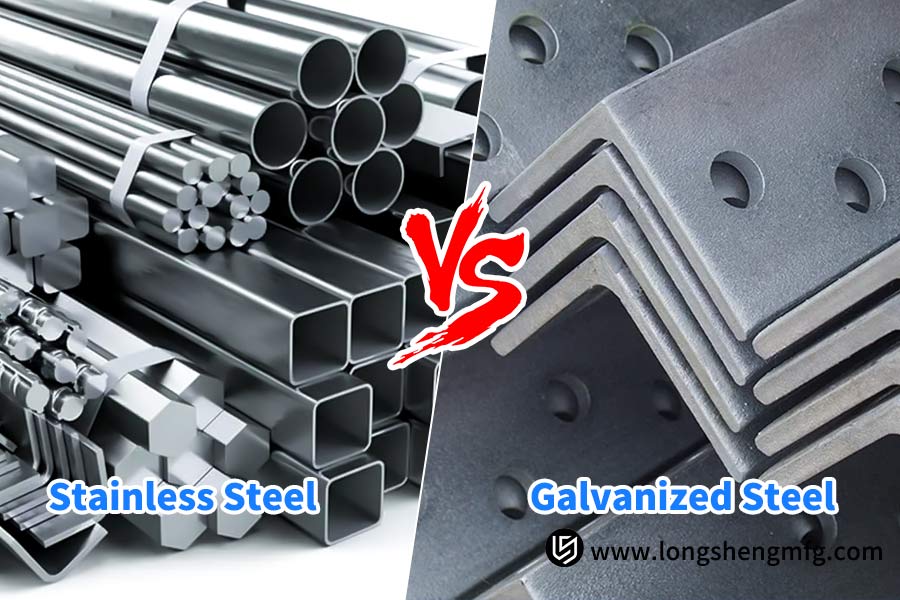
The principal distinction between the two is in the manner in which their corrosion protection function: galvanized steel relies on the sacrificial protection of their “external coating,” while stainless steel relies on the inherently inert barrier of their “internal alloy.”
Corrosion Resistance Comparison: Which Is More Suitable For Outdoor Environments?
Galvanized steel and stainless steel possess different corrosion resistant mechanisms, directly influencing the differences in their performance upon application in outdoor conditions. Below, I shall explain the corrosion protection principle of both and their corrosion performance in different environments.
1. Corrosion protection principle:
The corrosion protection of galvanized steel relies on the zinc coating obtained through surface treatment. This process acts as “sacrificial anodic protection”: the more active zinc preferentially reacts with the corrosive species, thereby protecting the underlying steel matrix.
However, this protection is not immortal, and its longevity is directly dependent on the thickness of the zinc layer and the environment to which it is exposed.
Stainless steel relies on its extremely high chromium content (typically >10.5%) for the formation of a very thin, highly dense chromium oxide “passivation film” on its surface. This “film” effectively excludes water and air, providing long-term self-protection.
2. Corrosion performance in different environments:
Under light rural or urban environments, both the steels work well. But under high corrosive environments such as high salinity and humidity along the coast or near petroleum refineries, differences are considerable.
- The galvanized steel‘s zinc coating fails right away under those environments. Once consumed, the underlying carbon steel rusts right away.
- Stainless steel (particularly type 316 with molybdenum additions) has a more stable passivation coating, better resistance to crevice and pitting corrosion, longer life, and minimal requirement for maintenance.
The choice is based on environment severity and lifespan requirements:
- Galvanized steel is less costly for normal outdoor conditions;
- Where severely corrosive environments are present in coastal and industrial areas or designs where maintenance-free operation over a long period is required, stainless steel is a worthwhile investment.
Strength vs. Weight: Which Material is Stronger and More Durable?
Deciding whether galvanized steel or stainless steel is stronger and more resistant requires investigation of their mechanical and physical properties. Each material also has weaknesses as well as strengths, and each one’s relative merit is largely dependent on the specific application.
1. Tensile strength and hardness:
Mechanically, galvanized steel is pulled from carbon steel, which naturally possesses high tensile strength and hardness and is ideal for heavy-load structures such as building frames, guardrails, and load-carrying beams. Carbon steel, however, possesses relatively low toughness and can be susceptible to brittle fracture from severe impact.
Stainless steel, as an alloy steel, possesses a wide range of strengths. Some popular grades (e.g., 304) possess modestly lower initial strength than carbon steel, but their superior toughness provides them with greater resistance to deformation and impact.
Moreover, austenitic stainless steels (e.g., 304 and 316) are work-hardening alloys, and their hardness and strength can be significantly increased by cold working, resulting in parts that are both strong and corrosion-resistant.
2. Weight:
The weight disparity between the two is because of density. Stainless steel is denser on average (around 7.9 g/cm³) than carbon steel (around 7.85 g/cm³), so stainless steel parts will be slightly heavier than comparable-sized galvanized steel parts. The difference is tiny, but in weight-critical applications such as transport or large moving parts, it can become significant.
There is no strong “stronger” option:
- Galvanized steel: If you require extremely high static load-carrying strength and lowest cost, use galvanized steel.
- Stainless steel:If you require high strength, high toughness, and corrosion resistance over a long life and are willing to accept some penalty in weight and cost, use stainless steel, a more general-purpose and durable material.
Cost Analysis: How Significant Is The Price Difference Between Galvanized Steel And Stainless Steel?
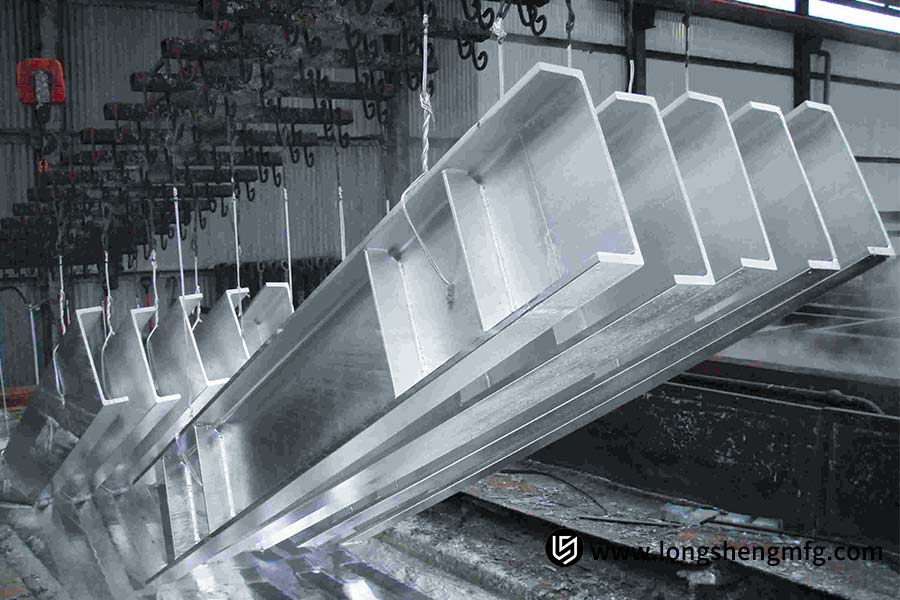
The price difference between galvanized steel and stainless steel is immense at first glance, but the true cost difference requires proper analysis of raw materials, processing, and every stage of the life cycle. It is simple to overestimate by merely looking at unit price alone; wise material selection is invaluable for economic success in the long term.
The following table compares the cost structures of the two from different perspectives:
| Cost Dimension | Galvanized Steel | Stainless Steel |
| Raw Material Cost | Lower (carbon steel base + zinc coating) | Higher (contains precious metals such as nickel and chromium, whose prices are significantly affected by international market fluctuations) |
| Processing Difficulty | Easy to cut and weld, mature processing technology, and low cost. | High toughness and strength, but with a significant tendency to work hardening, which results in high tool wear and higher processing costs. |
| Maintenance Cost | Requires regular inspection, and rust prevention maintenance after the zinc layer is depleted, resulting in cumulative maintenance costs. | Almost maintenance-free, requiring daily cleaning, resulting in extremely low long-term maintenance costs. |
| Service Life | Depends on zinc layer thickness and environment, with a limited lifespan. | Extremely long lifespan, especially in harsh environments, where its durability offers significant advantages. |
The determining factor is perception:
- Galvanized steel is the “low initial cost” option for low-budget applications, mild exposures, or applications of short duration.
- Stainless steel is the “low initial cost over the life cycle” buy. While it costs more to start with, its lengthy, trouble-free operating life offers superior economic value in harsh corrosion situations or installations for long-term usage.
Appearance Difference: Which Material Is More Aesthetically Pleasing?
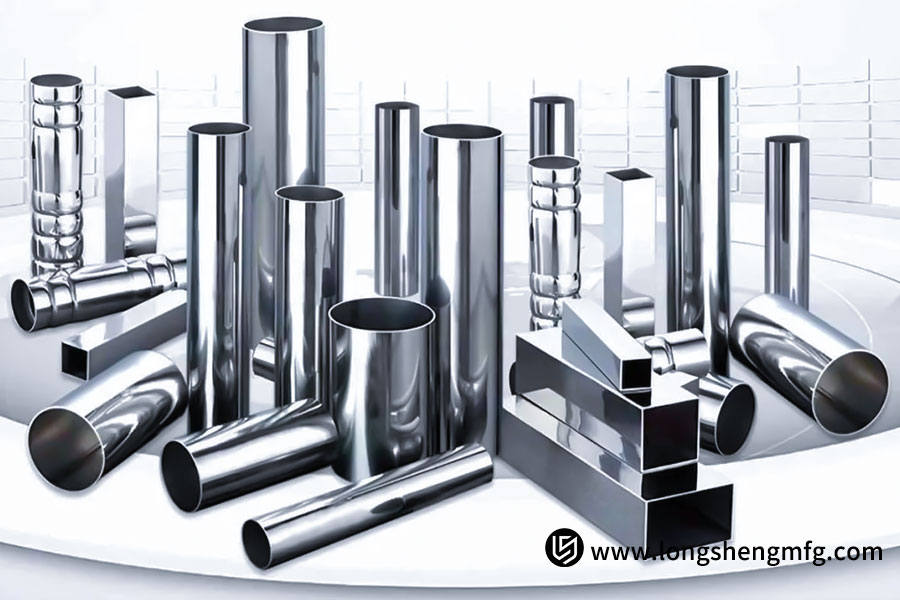
Galvanized steel and stainless steel each get their visual attractiveness based on their surface quality, and this in turn determines how they are utilized and positioned in visual design. Which one of the two is more aesthetically attractive, then? That necessitates comparison according to their respective applications.
1. The silvery-white appearance of galvanized steel:
Galvanized steel has a very industrial quality look. When hot-dip galvanized, its surface takes on a silvery-gray flower crystal sheen characteristic of its handcrafting, a mottled look that is a natural identifier of its manufacture. New from the craftsman, it has a harsh, raw texture to it. But this hardly a permanent appearance.
Exposed to the elements, the zinc coating gradually oxidizes, darkens, dulls, and even forms white zinc salts (white rust). Its appearance seriously deteriorates when exposed to time and takes on an “aged” industrial appearance.
2. The contemporary metallic glitter of stainless steel:
Stainless steel, in turn, has a contemporary, modern, and resilient metallic glitter. Due to its appearance in different finishes, ranging from highly reflective mirror, subtle brushed texture, or homogeneous matte finish, it can respond to different design needs ranging from minimalist to hedonistic.
Its strongest point of looking its best is its higher stability: a more effective passivation process ensures it to remain in its original beauty and brilliance for decades to come, ensuring it not to discolor, corrode, or rust, ensuring it to remain in its best condition, gaining an ideal blend of beauty and strength.
These two are separated solely on an aesthetic taste of style and durability:
- Galvanized steel is appropriate for those endeavors where the industrial handsomeness, the cost savings, and the disregard for eventual appearance changes are the goals;
- Stainless steel is what’s used for modern style, high-end projects, and people who desire an infinitely dazzling appearance. Its longevity causes its style to endure in the long run.
Applicable Industry Guide: When To Choose Galvanized Steel vs. Stainless Steel?
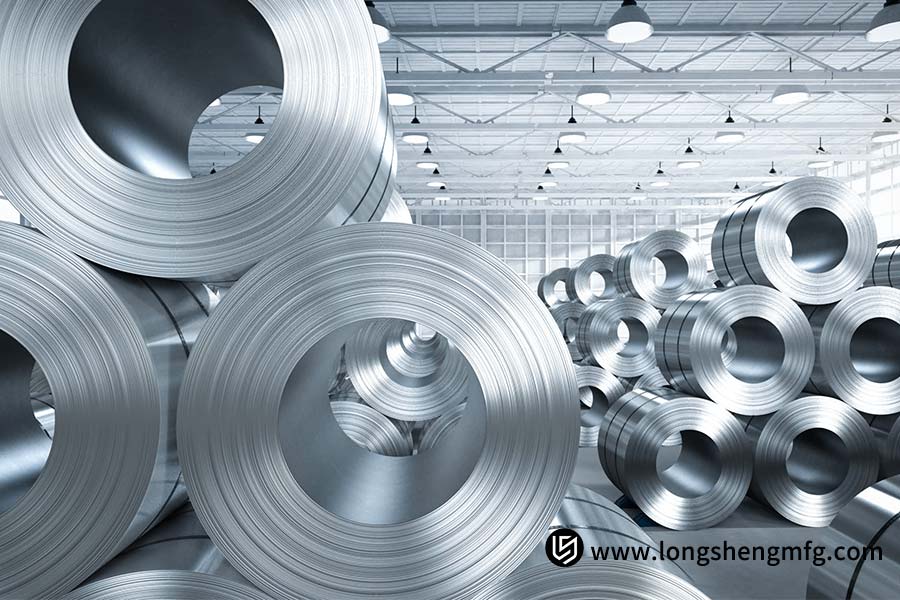
The key to deciding whether or not to use galvanized steel or stainless steel is to precisely equate the application demands with the nature-based properties of the materials. The information presented here will lead you to make a decision for your specific industry and application.
1. When to Use Galvanized Steel?
Galvanized steel is ideally suited for cost-effective uses in relatively mild conditions. Its high cost-performance ratio is exemplified in:
- Architecture and Structural Applications: Covered or internal structural elements like building trusses, roofs, wall linings, and ventilation ducts.
- Infrastructure and Agriculture: Highway guardrails, sign poles, cable trays, farm barns, and storage racks.
Selection Criteria: Low-budget projects, dry or interior conditions, low aesthetic needs, and the capability of being continuously maintained.
2. When to Use Stainless Steel?
Stainless steel is the clear choice for harsh environments, high sanitary applications, or long-term investment.
- Food, Medical and Chemical Industry: Piping for food processing, kitchen appliances, pharmaceutical appliances, chemical reactors, and pipes and storage tanks, due to its cleanliness and sterilization ease, corrosion resistance, as well as non-toxicity.
- Coastal and high-end buildings: Seashore guardrails, marine components, curtain wall frames, and trim pieces, for weathering and appearance durability in heavy salinity.
Selection Criteria: Severe applications with high humidity, heavy salinity, and chemically corrosive exposure, requiring very sanitary conditions, requiring no maintenance or an incredibly long design life, and requiring a modern good appearance.
The key to choosing stainless steel is to look at environmental corrosiveness, lifecycle cost, and functional requirement. Galvanized steel can be a cheap choice for common use, and stainless steel can be a long-life choice for harsh use.
LS Case Study: How To Select A Cost-Effective Anti-Corrosion Solution For A Large Outdoor Building Project?
1. Client background and pain points:
The project client for a large stadium complex development in a resort coast town faced a sensitive choice: what anti-corrosion treatment must be applied to the main steel structure? The project budget was limited, but in coastal environments, high salinity and humidity posed monumental challenges to the durability of the material.
The initial thought was to use the entire 316 stainless steel for protection, but material expense tested the return on investment. The client’s only concern was the acquisition of the best value of cost saving for long-term dependability in a corrosive environment.
2. LS precision’s solution and decision-making process:
The LS Precision group came into and, rather than taking a call between these two options, proposed a hybrid material strategy and drew up a complete feasibility report.
Technical Feasibility Analysis: We conducted a detailed zoning analysis of the building.
For exposed critical open members such as the roof canopy and water gutters open to direct rain and wind and to puddling by water, we strongly advocated 316 stainless steel as its passive film is completely resistant to salt spray corrosion and thus maintenance-free.
For protected main trusses and concealed supporting members, we set the feasibility of using hot-dip galvanized steel with thick coating of zinc. The sacrificial anodic protection provided sufficient long-term protection against the indirect effects.
Life Cycle Cost (LCC) Analysis: We presented the customer to a whole LCC model. The calculation indicated that the pure stainless steel solution was 45% more expensive initially than the hybrid solution. While an inspection of a single galvanized component and maintenance every 30 years were required with the hybrid solution, overall it cost a great deal less than the all-stainless steel solution and this was an enormous cost-performance advantage.
Final Solution and Value Delivery: LS Precision developed a differentiated solution–stainless steel for critical components and galvanized for secondary structures. Precise connection details, including the utilization of insulating gaskets to prevent galvanic corrosion, ensured the reliability of the solution.
3. Project results and customer value:
Execution of the hybrid solution with success gave the customer over 30% cost savings in initial material. Three years after the project turn-over, the building appears to be new, with not even a single case of corrosion threats.
The customer praised the solution not only for being the least expensive in the initial cost but also for being able to offer 50-year design life through the use of scientific material selection. This best describes the engineering value of “lowest lifecycle cost,” where it is a classic demonstration of LS Precision giving the best value to customers.
Maintenance: Which Material Is Easiest To Maintain?
While selecting materials, maintenance easiness and long-term cost are crucial considerations. Maintenance requirements of galvanized steel and stainless steel vary significantly, which directly affects the project’s lifecycle management plan.
1. Galvanized steel maintenance requirements:
Galvanized steel is very high in terms of maintenance requirements. Its protection relies on the zinc covering on the surface. Although normal cleaning is simply rinsing, it is hard to repair.
If the zinc coating is scratched or worn off, or if “white rust” forms, professional attention in the process of polishing and spraying with zinc-rich paint needs to be done to bring back its protective features. The process must be done skillfully and regularly or else the base steel will rapidly rust, which will lead to ongoing, cumulative long-term maintenance costs.
2. Maintenance requirements of stainless steel:
Stainless steel, however, is not so much a bother to maintain. Its resistance to corrosion is attributed to the internal chromium content. Routine daily washing by water or a neutral detergent is commonly all that is required in order to maintain a good appearance and function.
Even minor surface abrasions are self-healing in an oxygen-rich environment, typically requiring no special treatment. This high stability entails very low long-term maintenance costs, effectively rendering it maintenance-free. It is particularly well-suited to applications where frequent maintenance is not convenient or cleanliness is paramount.
- Stainless steel clearly has a benefit regarding ease of maintenance and long-term cost-effectiveness, and thus is the choice for “set it and forget it” solutions.
- Galvanized steel, by contrast, needs to be attended to from time to time and requires professional maintenance, so it would be best used for budget-constrained projects with the resources necessary to keep maintenance in line.
FAQS
1.Will galvanized steel rust?
The zinc coating does not rust and still stays intact, while the underlying base steel will rust if the coating is stripped. Once scratched, abraded, or cut, the underlying carbon steel substrate will begin to rust when exposed to wet conditions. Stainless steel, on the other hand, has chromium spread throughout its composition (in the form of a passive film), allowing it to retain overall corrosion resistance even with damaged surfaces.
2. Which is more suitable for the food industry?
Stainless steel is more suitable for the food industry since it is corrosion-resistant, easy to clean, and food-grade. This is because, apart from being simple to clean and fully disinfect, thus resisting bacterial growth, it also possesses a very inert surface that does not react with acidic and alkaline food components to guarantee food flavor and safety. Galvanized steel, however, is hazardous. The zinc plating is able to release zinc ions in the presence of acidic food, which is not healthy for human consumption over a period of time.
3. Can stainless steel be galvanized?
Galvanizing is not only not needed but also not recommended. Stainless steel already possesses very good corrosion resistance due to the passive film imparted by chromium. Too much galvanizing will even degrade its surface properties. Moreover, high temperature and chemical environment of the galvanizing process (especially hot-dip galvanizing) can degrade the microstructure of the original passive film of stainless steel and even lead to intergranular corrosion, further decreasing its corrosion resistance.
4. How do I choose the right material for my project?
LS Precision offers complimentary, expert material selection consulting. Our engineers will fully understand your special application environment (e.g., chemical or coastal environment), load-carrying requirements, expected service life, and budget limitation. Based on technical feasibility analysis and life cycle cost (LCC) assessment, we will recommend the most efficient, cost-effective, and safe optimization solution, averting the ensuing risks due to inappropriate material selection.

Conclusion
The natural differences between stainless steel and galvanized steel lie in their mechanism of corrosion protection and cost structure; none is inherently superior or inferior to the other. Galvanized steel, with its greater cost-performance ratio, is cost-efficient for general environments load-carrying structures; stainless steel, with its excellent durability and stability, is suited for harsh corrosive environments and high-end applications.
The key to successful material specification is to look beyond a single dimension and comprehensively assess the special environment, service life requirements, budget, and aesthetic needs of the project to balance them best.
If you’re still facing challenges with material selection for your project, contact LS Precision materials experts today. LS Precision Manufacturing provide you with free material selection services and customized solutions. With our extensive industry expertise and technical advice, we’re in a position to help you accurately match your requirements, simplify your cost structure, and realize the long-term and stable performance of your project.
 📞 Phone: +86 185 6675 9667
📧 Email:info@longshengmfg.com
🌐Website:https://www.longshengmfg.com/
Disclaimer
The content appearing on this webpage is for informational purposes only. LS makes no representation or warranty of any kind, be it expressed or implied, as to the accuracy, completeness, or validity of the information. Any performance parameters, geometric tolerances, specific design features, quality and types of materials, or processes should not be inferred to represent what will be delivered by third-party suppliers or manufacturers through LS’s network. Buyers seeking quotes for parts are responsible for defining the specific requirements for those parts. Please contact to our for more information.
Team LS
This article was written by various LS contributors. LS is a leading resource on manufacturing with CNC machining, sheet metal fabrication, 3D printing, injection molding,metal stamping and more.


I got what you intend, thanks for posting.Woh I am delighted to find this website through google.
Welcome! We’re glad Google brought you here, and we hope you found this helpful. We hope you’ll discover even more interesting content here in the future!
I am impressed with this website , really I am a big fan .
Lovely blog! I am loving it!! Will be back later to read some more. I am taking your feeds also