CNC turning service is a very critical element in modern manufacturing, but how to source it reliably is quite a challenge. There are lots of wild variabilities that engineers and procurement managers have to bear: quotes, inconsistent quality despite promises, and high communication costs. The technical delays, budget overruns, and compromised project timelines that arise from such issues make what should be a routine procurement a big headache for operations.
Trouble always finds a CNC turning service, as it very often bases decisions on the prices alone. Such a narrow focus ignores the more profound factors that really determine total cost and success: the ability of a supplier to optimize technical designs, rigorous quality controls, and project management expertise. A way out of this vicious cycle will necessarily require an overall evaluation framework. Finding a vendor, now based on the following eight key dimensions, transforms into securing a long-term partner for project success. We begin.
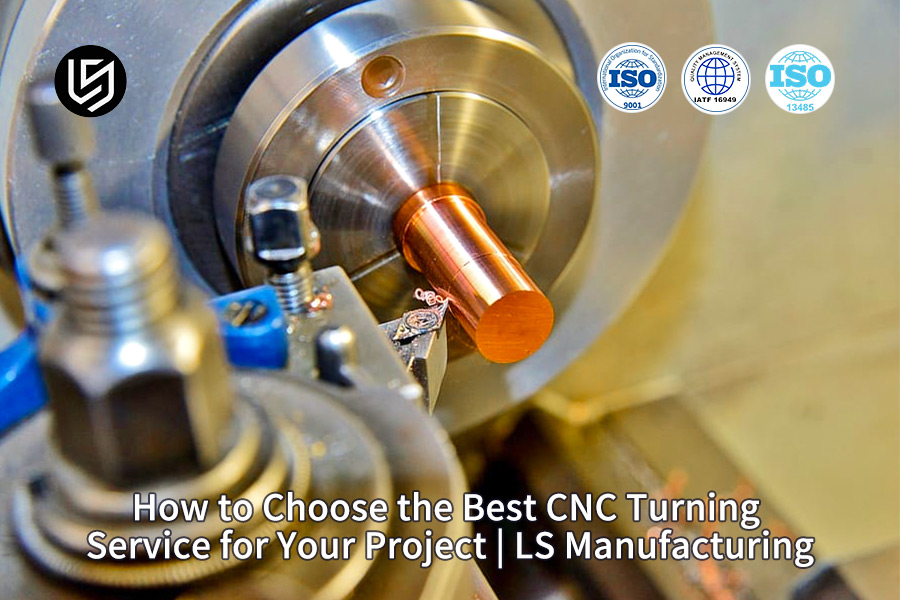
Quick-Reference Guide: How to Evaluate a CNC Turning Partner
| Category Key | Question to Ask | What to Look For |
| Core Technical Capability | Can they physically make the part right? | Check if their machines size, power and precision meet your parts specifications. |
| Material & Tooling Expertise | Do they know my material inside and out? | Judge their experience working with your grade of material & tooling required |
| DFM | Will they help optimize my design for cost and quality? | Prioritize those giving proactive, actionable, cost-saving DFM feedback. |
| Quality Assurance System | How do they ensure the production of parts that are consistently to specification? | Ensure they have written procedures such as ISO 9001 and required inspection equipment such as CMMs. |
| Production Scalability | Is it capable of handling my volumes – from prototype to full run? | Confirm their capacity and workflow efficiency against projected order volumes and timeline. |
| Operational Transparency | Will I understand the status of my order? | Find a partner that has clearly outlined lines of communication and proactive project updates. |
| Total Cost Analysis | What is the true total cost -other than the cost per unit? | Analyze the elements of cost like lead time, reliability and administrative overhead-not just the price quote. |
| Partnership & Reliability | Can I count on them as a long-term strategic partner? | Assess commitments towards problem-solving, consistency, and growing with your business. |
Success in the selection of a partner in precision CNC turning comes through holistic, systematic assessment beyond price. Indeed, the very best suppliers provide excellent technical capability, robust quality control, and collaborative DFM. That is the comprehensive approach whereby emphasis is on the total value and reliability-key elements needed to derisk your supply chain and make your project successful over time.
Why Trust This Guide? Practical Experience from LS Manufacturing Experts
The following guide has been distilled from day-to-day realities in our workshop, doing real-world manufacturing problem-solving in CNC turning. Knowledge herein is culled from machining complex parts for mission-critical industries where reliability is uncompromising; it is experience that ensures a turned shaft meets exactly the specifications of a robotic assembly or that a component for a medical pump functions perfectly. Clearly, these are practical insights put to test on the shop floor.
All our processes for superior surface finish and integrity of the parts are informed strictly by standards from the National Association for Surface Finishing, National Association for Surface Finishing (NASF). Further, our deep experience in machining advanced materials, particularly sintered metals, is in line with material specifications and best practices detailed by the Metal Powder Industry Federation, Metal Powder Industry Federation (MPIF). Insofar as an approach has a proper basis in these recognized industry standards, one can be assured the methods will be robust and reliable.
We have fabricated and delivered tens of thousands of precision CNC-turned parts. For every project-from prototype to full production run-our approach has been honed: optimize tool path for Inconel, master tight tolerance chucking for thin-walled parts, perfect first-article inspection process. The guidance given here is based on this huge repository of verified experience at the bench and equips you to sidestep those common pitfalls and deliver superior results.

Why would the selection of a supplier for CNC turning based on price only be considered as a risky decision?
Selecting a supplier based solely on the lowest CNC turning service quote is a common but precarious shortcut. The price reflected on the quote shows only a part of what reality can actually uncover-much risk and financial surprises threaten to put your whole project in jeopardy as regards success and budget.
Cost of compromises:
A low CNC turning cost control for the supplier often means you pay for it in other ways. It could be through substandard material usage, overly simplified processes that compromise on the longevity of the part, or a lack of quality checking that results in field failure.
Downstream Effects on Your Operations
The real cost kicks in long after delivery. Issues like part rejection, production line delays, and massive amounts of communication overhead to solve the problems as soon as possible erode any initial savings. Those kinds of instances disrupt your workflow and inflate the overall cost of ownership.
Strategic Reliability Cost
Other than immediate reworks, inconsistent quality, or delayed shipment, it may dent your brand name and shake the trust your customers have gained over time. This risk in brand equity and positioning within the market far outweighs small savings on any quote related to the unit CNC turning service.
Prudent control of the costs of CNC turning means taking into consideration total cost of ownership, not just the price of buying. A marginally higher upfront investment spent in a qualified partner will minimize risks, ensuring reliability that will protect not only your project timeline but create much greater value by protecting your bottom line from the expensive consequences of being trapped into a “low-price trap.”

What are the eight core competencies to be considered when evaluating a CNC turning supplier?
A structured approach is necessary to ensure that the right decision is made. How to choose a CNC turning supplier? One needs to know how to look beyond the surface to truly understand it. This comprehensive CNC machining supplier selection guide provides lucid direction to change the paradigm from price-driven to holistic capability assessment-those affecting the very success and quality of your project, not to mention its total cost.
| Coe Competency | What to Assess |
| Technical & Machinery Capability | Cosmetic Machince Specification, Precision and size should be suitable to handle your part size, Geometry & Material. |
| Material & Process Expertise | Assess their real-world experience and technical depth in machining your grades of material and necessary processes. |
| Design for Manufacturability | Gage their ability and willingness to review your design and provide proactive, cost saving optimization feedback. |
| Quality Assurance & Metrology | Check their quality management system – be it ISO 9001 or otherwise – and the level of sophistication in their measuring/inspection equipment. |
| Production Scalability & Capacity | Confirm their capability of dependably meeting your required volumes from prototyping all the way through to full production runs on time. |
| Operational & Communication | Transparency Measure them for project management practice as well as transparency into communications regarding ongoing status updates and issue resolution. |
| Total Cost of Ownership (Beyond Unit Price) | Calculate all cost drivers including lead time, reliability, and administrative overhead to find true value. |
| Partnership & Long-term Reliability | Consider their track record, problem-solving approach, and commitment to becoming a strategic long-term partner |
In the end, the structured selection guide below empowers you to make an informed choice. As a matter of fact, you go beyond mere quessing on how to choose CNC turning service and manage to lay the bedrock for a successful, low-risk partnership in manufacturing by putting these eight pillars under rigorous scrutiny one after another.
How to check the ability of precision machining and tolerance control from suppliers?
Verifying that a supplier can deliver to your precision requirements is one of the most critical elements in the selection process. It is not enough to simply ask if they can “make it.” A complete CNC turning quality assessment would place a concentrated focus on specific proof points to tangible, sustained, and repeatable performance. The base with which this can be achieved is within a structured approach that assesses their commitment to standardization, technical specifications, and verification methodologies.
| Verification Aspects | Action and Key Question |
| Quality Management System | Request certificates for applicable standards ISO 9001, AS9100 verifying a documented, systemic approach to quality is maintained. |
| Dimensional Capability Statement | Request their standard and typical tightest achievable tolerance ranges for critical features such as diameters, lengths and roundness. |
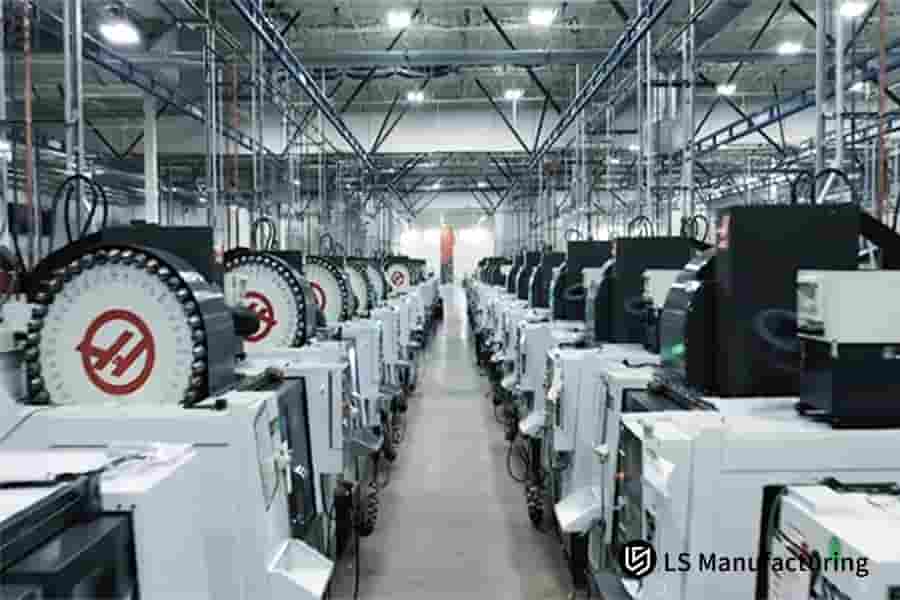
| Inspection Equipment & Process | Verify ownership of sophisticated equipment such as CMMs and the frequency of inspection, e.g., first-article, in-process, applied to manufacturing. |
Documented evidence-inspection-which goes beyond promises-is an indispensable part of a comprehensive CNC turning quality assessment. The best tools are only part of what the very best suppliers have; they’re organized into a structured quality system. Such a formal system, besides proven technical capability and robust measurement processes, is exactly what constitutes a true precision CNC turning standard, assuring stability and dependability on your most critical components.
How do both material selection and process optimization impact the final part performance?
There are two factors which interlink for the determination of ultimate performance, cost, and life a machined component will have, namely, base material and quality of its processing. The competency of a supplier revolves around more than inventorying material but really understanding the peculiar characteristics underlying each material and how to release those attributes with the right machining strategies-a defining characteristic hallmark of the best CNC turning service.
Material-Specific Behavior Knowledge:
The real knowledge lies in understanding the different behavior of various alloys under the forces involved during cutting. For example, the optimization parameters for stainless steel will be very different from those for machining aerospace aluminum. Correct tool geometry and coating, and appropriate cutting speeds, are an indispensable part of any CNC machining process optimization, since this directly influences tool life, surface finish, and prevention of work hardening or thermal distortion.
Direct Impact on Final Part Properties
Well done, the process enhances the inherent properties of the material; or it can degrade them. A properly optimized process preserves fatigue strength in aluminum, keeps corrosion resistance intact in stainless steel, and provides required surface integrity for dynamic components. This is where effective CNC turning quality control merges with process design to protect and verify the performance of the final part.
Driving Efficiency and Total Cost:
Proper optimization isn’t just about the quality; it is an effective driver of efficiency. By selecting the perfect grade of either steel or aluminum for the application and then combining that with optimized feeds and speeds, you are minimizing cycle time, reducing tool wear, and decreasing scrap rates. This holistic approach to the CNC machining process optimization builds a direct association with better results in CNC turning quality control while keeping the lower total production cost in check.
Material and process are not separate considerations but an integrated engineering challenge. Mastery by a supplier in this area-that is, selection of the proper material and then execution of a perfectly tuned machining strategy-represents the most basic differentiator. It answers not just whether a part can be made but how well it will perform, how long it will last, and at what true cost, thus constituting the very foundation of manufacturing excellence.
Proactive DFM analysis is more than just an upfront step; actually, it constitutes one of the most critical exercises in risk mitigation and value engineering. Relying on a supplier for print execution without collaborative review wastes the chance thereof in that manufacturing challenges and preventable costs locked into the design may be apparent only at production, involving unavoidable delays and budget overruns. This underscores the strategic importance of foundational decisions like the CNC turning material selection, which fundamentally influences manufacturability, performance, and cost.
Can DFMA by a supplier save you money/avoid possible problems?
Proactive DFM analysis is not just a preliminary step; it is an integral exercise in risk mitigation and value engineering. If one relied on a supplier to execute a print without collaborative review, then surely that is an opportunity lost, as it is only then-at production-that potential manufacturing challenges and unnecessary costs locked into the design may come to light, chasing delays and blowing budgets.
Minimize cost drivers as early as possible
It would be rather easy for a professional engineer to seek out features in your model that are inherently difficult and expensive to manufacture. Examples would be deep, small diameter holes which require special tooling; internal sharp corners which cannot be machined; or dimensions that are not critical being held to tight tolerances unnecessarily. Addressing these in the design phase is the most effective form of CNC turning cost savings.
Optimization for manufacturability and performance
Effective DFM analysis should do much more than hint that a problem exists. The tool needs to come up with alternative geometries or slight modifications in view of retaining or improving part function and making it faster to produce, more reliable, and cheaper. It may go all the way to proposing a standard radius, more machinable grade of material, or even redesigning some feature with a view to avoiding complex multi-axis set-ups.
Avoiding delay and assuring quality
It does this by not requiring the expensive iteration of prototype-test-redesign to solve the manufacturability problems in advance, even before a single toolpath is generated. The upfront collaboration ensures that the part is optimized-right from the very beginning-for the selected CNC turning process. Predictable quality, easier and faster first-article approval, seamless production ramp-up, and huge savings on long-term costs-all these are tangible benefits arising from CNC turning.
In other words, a supplier’s DFM analysis is a powerful investment whose dividends are immediate as well as long term. Instead of a transactional relationship, it is now a technical one using experiences in manufacturing to sharpen your design. And by doing so, the major goal will have been attained: to have a quality functional part in the shortest time and at the lowest cost. In turn, this makes what could be production pitfalls predictable savings.
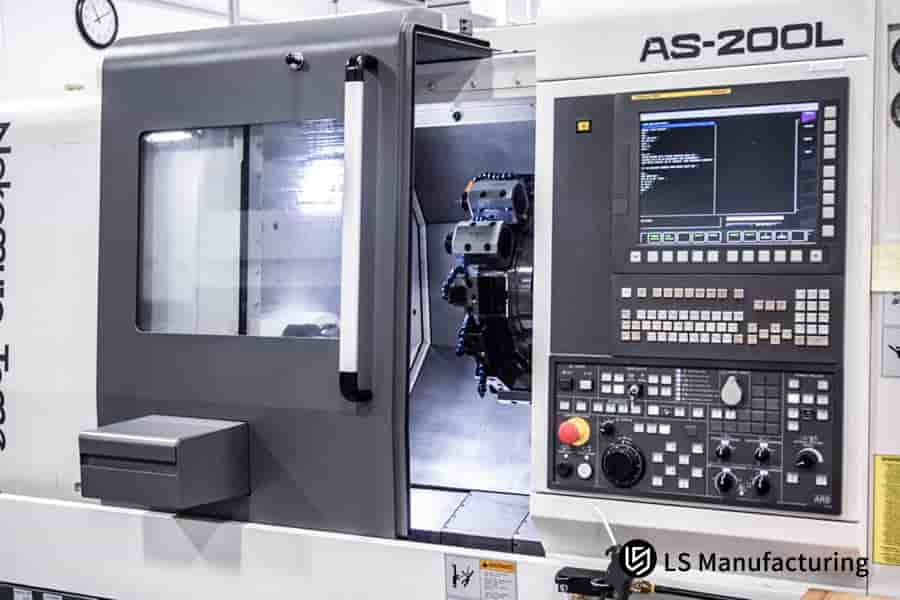
Medical Device Industry: Rapid Mass Production and Delivery of Stainless Steel Surgical Instrument Components
When a critical production bottleneck arose, this specialty CNC turning supplier was approached for help by an industry-leading medical device company. This customer approached this supplier to help them transition into high-volume production of complex stainless steel parts for a novel surgical instrument. Their current supplier could only provide low yields with unreliable delivery, threatening the timeline for a key new product launch.
Customer Challenge
The customer required a supplier capable of reliably producing complex stainless steel components in high volume. In fact, the previous supplier was delivering variable quality-only an 85% yield-and was delivering sporadically, thus directly threatening the scheduled market launch of the new surgical system. This was an extremely important need for this customer to find a supplier with demonstrated high-precision, high-volume medical device component machining capability.
LS Manufacturing Solution
We immediately set about performing a detailed DFM analysis and review of the process. This means optimizing tool paths for stability, developing an appropriate fixturing strategy in selecting specialized high-performance tooling with a view to managing heat generated by cutting to ensure superior surface finish, and putting a rigorous 100% inspection protocol in place. This comprehensive approach allowed each batch to meet tight medical-grade dimensional and surface specifications through the power of our LS Manufacturing CNC turning expertise.
Results and Value Delivered
The outcome was transformational in that collaboration: the component yield rate rose from 85% to 99.8%, and there were no more delays based on quality issues. This shaved 40% off the production lead time and allowed timely delivery. Success was guaranteed, not only in the ensuring of a product launch for the client but also in building a trusted long-term partnership for ongoing requirements in medical device component machining.
That proved the case that true partnership is more than about filling orders. By applying deep LS Manufacturing CNC turning process expertise and an unwavering commitment to excellence from design through delivery, we solved a critical production challenge for our client-with dramatic improvement in both quality and speed-delivering clear value and enabling our client’s key strategic business objective.
Ever wondered how to optimize your mass production of components in medical devices? Click here for Your Custom Manufacturing Solution Today!

How could the suppliers answer flexibly to the requirement of small-batch or largebatch productions?
The real challenge is how effectively and efficiently processes can be adapted by a supplier from prototypes to full-scale production runs without sacrificing quality, speed, or cost control. Success depends upon how uniquely crafted workflows can answer needs imposed by both prototyping and full-scale production runs.
- Individual production facilities can then provide real flexibility: Correspondingly, CNC machining services for small lots use dedicated cells with quick-change tooling to minimize set-up times, while larger lots optimize throughput by supplementing the above with automated lines. Consequently, separation means that each workflow can be specialized and uncompromised.
- Intelligently scaled processes and pricing: Whereas the focus of a low-volume job falls on speed and design validation, high-volume runs will need refinement of the process for the realization of cost and consistency. It’s smart scaling from prototype to CNC turning mass production that ensures the right resources are dedicated to each.
- It is necessary that quality systems scale with the volume of the orders: From first-article inspections for prototypes through to statistical process control in mass production, scalability of stage-appropriate checks is applied via precisely the same standards-never sacrificed for quantity.
True flexibility is, then, a function of the systems designed to realize it, not improvisations. By distinctly separating and optimizing the workflows for both small-batch CNC machining services and mass production in CNC turning, LS Manufacturingwill make sure that every order receives efficiency tailored to it with uncompromised quality, whatever the size.
What value-added services does the supplier provide beyond processing?
True manufacturing partnership means so much more than integrated solutions that will seamlessly progress from raw material to finished product in its making process and goes far beyond the machine shop. The kind of comprehensive support a supplier can provide surely is going to drastically reduce customer overhead, improve time to market, and assure quality just so.
- Finishing and Treatment after Machining: One-stop CNC turning service would include all ancillary or secondary vital processes-anything from surface treatments like anodizing, plating, and heat treatment to precision grinding and polishing. These, when handled in-house, assure quality control and also eliminate risks of damage while handling and thus make for easier logistics.
- Assembly, Kitting, and Final Preparation: Most such partners also provide assembly as a service that can be a sub-assembly where a number of machined components are joined or full kitting where all parts for a product are brought together, inspected, and packaged as a unit. It is this direct delivery of ready-to-install kits that brings huge value into the overall supply chain.
- Integrated project and logistics management: Proactive coordination is a critical value-added service. This includes project oversight, current communication of the progress, and logistics management associated with shipping and customs clearance was the most prominent. All of these save clients a great deal of administrative time and complexity.
That is, a supplier of a truly one-stop CNC turning service transforms from an unsophisticated seller into an important extension of your operation. They guarantee certainty and efficiency with a significant reduction in the total cost of ownership by consolidating post-processing, assembly, and project management under one roof.
What do you need to give to be most accurate to quote?
Probably the most important first step toward an accurate and meaningful quotation is a clear and complete package of data. Poor information invites inaccurate estimates, longer-than-necessary cycles of communication, and possibly cost overruns later on. Providing the right details upfront is essential for get an accurate quote and establishing a foundation for a successful project partnership.
- Comprehensive Design and Specification Documentation: The very basics of any turning quotation over CNC machines start with a fully dimensioned 2D drawing or an accompanying 3D CAD model-either STEP or IGES formats, for instance-whose critical dimensions, geometric tolerancing, and special material and industry standard callouts are well-defined and cannot be interpreted any other way.
- Material information in detail, post-processing requirements: Specify the exact grade of material, form-diameter of bar stock, and condition. Provide all secondary operations that are required, including the type of anodizing, plating specifications, heat treatment, or special packaging requirements, since these greatly affect the final CNC turning quote.
- Particular information on volume and logistics of the project: Clearly state your target quantities for prototype, initial volume, and annual volume. And timelines. Finally, stating the application of the part supports the quote in that it permits informed, critical DFM suggestions to assure the proposed solution will work for the intended function.
In all, preparation begets precision. By giving your supplier a complete package that includes the core information needed for CNC turning quotes – technical drawings, material specifications, volume, and finishing requirements, you are effectively equipping him to give you a fast, competitive, and dependable quote. Due diligence at the outset smoothes the process, reduces surprises, and is the best way to get an accurate quote and a well-launched project.

FAQs
1. What is the minimum quantity order in LS Manufacturing?
Under the flexible service philosophy, LS Manufacturing has no fixed minimum. Whether for single-piece prototype verification or tens of thousands of pieces, we can manage the needs through flexible production lines to provide exact support for customers at every scale.
2. How do you ensure that my design drawing and IP information is safe?
We value the intellectual property rights of our clients very much, and a legally binding confidentiality agreement will be signed before any cooperation. All technical documents are transmitted through an encrypted system, and a strict hierarchical access control system has been implemented internally to make sure your designs are secure.
3. What is the usual quotation and delivery time?
We can guarantee a detailed quotation in 1-3 days with complete technical documents. Standard delivery time is 2-4 weeks. In reality, the time will be confirmed with the customer based on process complexity, the size of the order, and our current production schedule.
4. What if a problem is found after the parts arrive?
Our company is committed to all-around quality: if the manufacturing responsibility is confirmed, it will immediately initiate a quick response process. Solutions include unconditional rework, re-production, or handling in accordance with the agreement, with all relevant costs ensured to safeguard customer rights.
5. Do you support global logistics and distribution?
A global logistics network has been established, and in-depth cooperation with international logistics providers such as DHL and FedEx has been carried out. We support end-to-end logistics for customers worldwide, covering door-to-door delivery, export customs declaration, and document processing.
6. Can you provide quality inspection reports during the processing?
A full set of quality certification documents includes first-piece inspection reports, key process inspection record, and final inspection report. All the inspection data is traceable while some projects support video recording for the sake of quality transparency.
7. What industries do I have experience in?
We have extensive experience in the high-precision manufacturing field, serving the aerospace, medical equipment, automotive, optical instrument, and industrial automation industries for many years and having a lot of mature solutions.
8. How to start my first project in cooperation?
Upload your drawing and requirements by clicking the “Get Free DFM Analysis and Quote” button on the page, and our professional team will reach out to you right away.
Conclusion
CNC service selection guide shall be an all-round strategic decision along various dimensions, namely technical capability, quality system, project management, and service support. A great supplier is one that extends your project by applying expertise that adds value well beyond price.
Upload your part drawings now for a free DFM analysis and an accurate quote from LS Manufacturing. Let our expert team prove to you through practical solution that choosing LS Manufacturing means choosing reliable, efficient, and long-term guarantee of success for your project.
📞Phone:+86 185 6675 9667
📧Email:info@longshengmfg.com
🌐Website:https://www.longshengmfg.com/
Disclaimer
The content appearing on this webpage is for informational purposes only. LS Manufacturing makes no representation or warranty of any kind, be it expressed or implied, as to the accuracy, completeness, or validity of the information. Any performance parameters, geometric tolerances, specific design features, quality and types of materials, or processes should not be inferred to represent what will be delivered by third-party suppliers or manufacturers through LS Manufacturing’s network. Buyers seeking quotes for parts are responsible for defining the specific requirements for those parts. Please contact to our for more information.
LS Manufacturing Team
This article was written by various LS Manufacturing contributors. LS Manufacturing is a leading resource on manufacturing with CNC machining, sheet metal fabrication, 3D printing, injection molding,metal stamping and more.



