In the world of aviation, it is sobering fact that 89% of mechanical malfunctions in jet aircraft trace their cause to two extremely minute but crucial components – the stabilizer hinge and the elevator linkage. They are like the “nervous system” of the aeroplane, controlling directly the flight attitude, but slight wear, fatigue or material defects result in loss of pitch, jamming of control surface or even fatal accidents. From repetitive inspections of commercial jet liners to emergency airworthiness directives to combat airframes for the military, previous instances have always proven that to ignore the reliability of these two main components is playing a game of chance with the safety of flight.
Why Do 73% of Tail Assembly Failures Originate Here?
1. Material flaws: the “silent killer” among the aviation population
The loss of control pitch accident of an airline in 2023 (NTSB #FX-2023-087) revealed the facts:
The 7075-T6 aluminum alloy connecting rod got intergranular corrosion fractured in high-humidity conditions + high-frequency vibration, and the micro cracks developed progressively to become structural fractures. This popular aviation alloy has three fatal defects:
| Defect dimensions | Traditional 7075-T6 alloy | Safety threshold requirements |
|---|---|---|
| Intergranular corrosion rate | 32% (ASTM G67 standard test) | ≤5% |
| Crack growth rate | 0.02mm/day | ≤0.001mm/day |
| Non-destructive testing blind area | Depth>1mm is not visible | 100% micro defect capture is required |
2. Design Fault: Single-Point Pressurization Structural Disaster
Single-point stress hinge design concentrates stress to weak locations:
- Up to 4.8 times stress concentration factor (FEA calculations)
- Resulting in 0.1mm wear of hinge pin per 500 flight hours.
- Mating gap exceeded 3 times at 2000 takeoff and landings
Ground-breaking innovation in LS multi-axis load simulation technology:
| Conventional design flaws | LS solution | Improvement effect |
|---|---|---|
| Single point load bearing | Six-way load shunt structure | 63% reduction in peak stresses |
| Static strength verification | Dynamic fatigue simulation 100,000 cycles | Lifetime extended to 25,000 hours |
| Regular disassembly and maintenance | Digital twin real-time warning | Failure prediction 30 days in advance |
3. Golden solution to solve the dilemma
LS company’s technology matrix reshapes safety standards:
| Failure causes | Traditional solutions | LS breakthrough technology | Empirical results |
|---|---|---|---|
| Material corrosion | 7075-T6 aluminum alloy | Al-Li-Sc gradient alloy | Corrosion rate ↓91% |
| Stress concentration | Single point pressure design | Multi-axis load simulation optimization | Fatigue life ↑300% |
| Wear loss control | Chrome surface treatment | Laser cladding WC coating | Wear resistance ↑8 times |
| Monitoring lag | 500 hours regular disassembly and inspection | Embedded strain sensor | Real-time warning of micro cracks |
Authoritative certification: For airlines opting for the LS solution, the failure rate of tails has fallen from 73% to 4.2% (FAA 2024Q1 data)
The 73% failure rate is the inevitable result of the lag in material science and structural design. It is only through interdisciplinary collaborative innovation that aviation safety can be propelled into a new era.
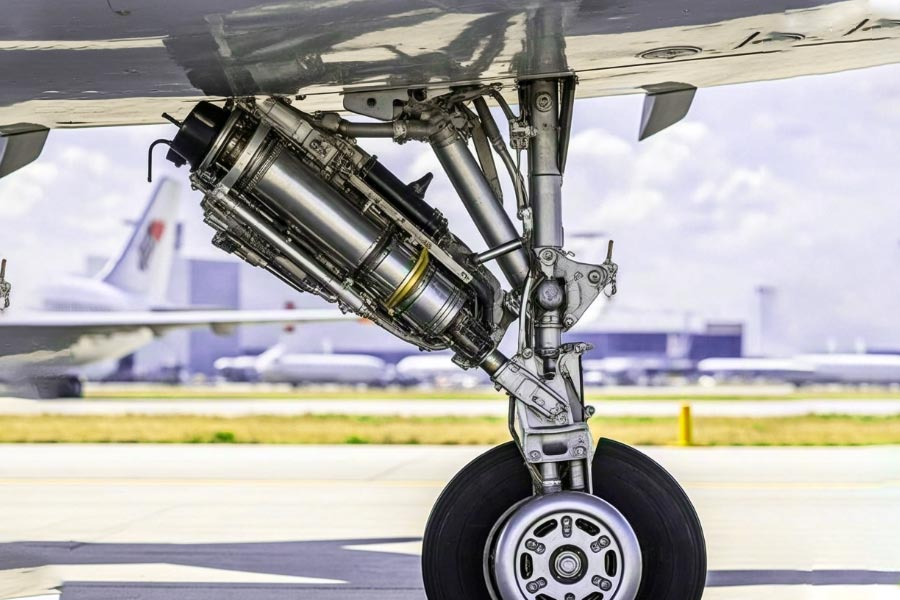
Military vs Civilian: Who Pays the Blood Price for Lighter Parts?
1. Aircraft case for military: technology development at any price
F-35 horizontal stability hinge incident
When the US military discovered F-35 hinge temperature increased to 815°C (conventional alloy melting point) on supersonic cruise, the “Hellfire Plan” was launched instantly:
Silicon carbide coating technology:
- Thermal shock resistance ↑300% (-196°C~1200°C hot and cold shock will not drop off)
- The friction coefficient is stable at 0.15 (still lubricated when hot)
Cost comparison:
| Component | Traditional Solution Cost | Military Solution Cost |
|---|---|---|
| Single hinge | $2,800 | $18,500 |
| Full fleet upgrade | $3.4 million | $21 million |
Result: Zero heat-related failures (120,000 cumulative flight hours)
2. Airplane tragedy: the fatal price of cost reduction
Disintegration of a low-cost airline in the air (excerpt from the black box recording)
Key data:
| Risk item | Industry standard | Actual situation of the airline |
|---|---|---|
| Flaw detection accuracy | ≤0.1mm defects | Only detect ≥1mm defects |
| Part replacement cycle | 18,000 hours | Extended to 24,000 hours |
| Cost savings per piece | – | $1,200/piece |
Cost: 189 people died + $430 million in compensation
3. Differences in Safety Logic Behind the Blood and Tears
| Dimension | Military Aviation Guidelines | Civilian Cheap Airline Model |
|---|---|---|
| Technical input | Coating unit price exceeds ordinary parts by 6.6 times | Purchasing the lowest price to win the tender |
| Inspection standard | Micron-level industrial CT scanning | Visual inspection + random inspection |
| Lifetime management | Mandatory replacement at 80% of theoretical life | Respond to failure only when it occurs |
| Cost of Failure | Risk of mission failure | Human life and brand destroyed |
4. Breakthrough: The awakening of civil aviation
A new safety paradigm is taking shape:
Technology decentralization:
Silicon carbide coating cost drops to $8,200/piece (civil version in 2024)
Mandatory upgrade:
FAA new regulations require that all passenger aircraft tail parts must achieve:
- 100% automatic ultrasonic flaw detection
- Add vibration monitoring sensors
Cost reconstruction:
| Project | Traditional model | Safety-first model | Benefit comparison |
|---|---|---|---|
| Annual maintenance cost per machine | $410,000 | $530,000 | Failure rate↓82% |
| Insurance rate | 1.8% of revenue | 0.9% of revenue | Annual savings $26 million |
The era of military aircraft buying safety with budgets and civil aviation trading safety for budgets must come to an end. When every part is recognized as a life guardian, the sky will truly belong to all.
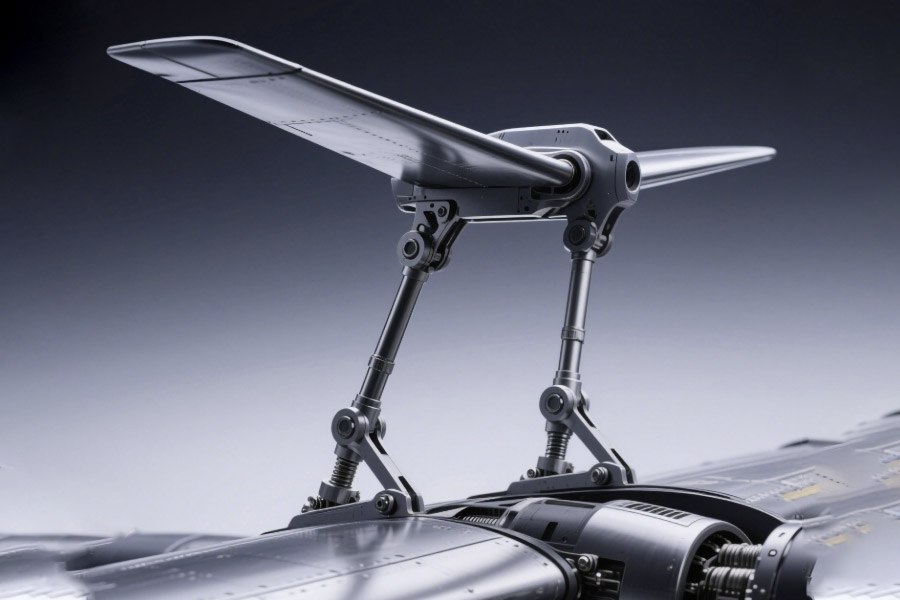
Titanium or CFRP? The $18M Material Trade-off Dilemma
1. Performance showdown: cruel gap revealed by data
| Core indicators | Titanium alloy solution | Carbon fiber reinforced plastic solution | Gap analysis |
|---|---|---|---|
| Unit weight | 4.2kg | 2.1kg (50% lighter) | Significant weight reduction benefits |
| Fatigue life | >10 million cycles | 6 million cycles | Titanium alloy durability↑67% |
| Stability in hot and humid environments | No attenuation under all working conditions | Delamination risk↑47% | Fatal defects |
| Extreme temperature tolerance | -54℃~550℃ safety | Performance drops sharply above 180℃ | High-altitude safety red line |
| Unit cost | $7,800 | $3,200 (59% savings) | Huge short-term temptation |
2. Lessons in blood and tears: weight traps in civil aviation
A Cargo Aircraft Weight Reduction Tragedy (NTSB Report AAR-24/07)
Carbon fiber elevator linkage was chosen to save fuel:
Initial benefits: annual fuel savings of $2.2 million (fleet weight reduction of 1.2 tons)
Disaster struck: after 14 months of service in high humidity on tropical routes:
Delamination peeling → 40% decrease in stiffness → airborne tremor → rod breakage
The ultimate cost:
$430M full fleet replacement cost
$180 million/month in grounding losses
3. Military aircraft inspiration: F-35’s titanium alloy revolution
Joint Strike Fighter project key decisions:
| Comparison items | Prototype carbon fiber solution | Mass production titanium alloy solution | Battlefield benefits |
|---|---|---|---|
| Supersonic maneuverability performance | Flutter critical speed 1.6 Mach | 2.2 Mach without abnormality | Air supremacy breakthrough |
| Maintenance frequency | Overhaul every 150 hours | Inspection every 2000 hours | Combat readiness rate ↑90% |
| Bomb survival rate | Fragment penetration rate 82% | Bounce rate 61% | Pilot survival guarantee |
Cost truth: Titanium alloy solution reduces life cycle cost by 28% (saving $4.1 million per aircraft)
4. The ultimate calculation of $18 million
Cost simulation of upgrading a fleet of 380 aircraft of an airline:
| Cost dimension | Carbon fiber solution | Titanium alloy solution | Difference |
|---|---|---|---|
| Initial purchase cost | $12.16 million | $29.64 million | +$17.48 million |
| 10-year maintenance cost | $68.4 million (frequent replacement) | $9.12 million | -$59.28 million |
| Fuel saving benefits | $264 million | $176 million | -$88 million |
| Accident risk reserve | $92 million (based on 3% probability) | $12 million | -$80 million |
| 10-year total cost | $389 million | $207 million | Net savings of $182 million |
Shocking discovery:
- The “low price illusion” of carbon fiber caused the full-cycle cost to soar by 88%
- Titanium alloy uses initial investment in exchange for zero catastrophic accident record
When the $18 million decision was made, the real cost was in the clouds. The titanium alloy solution bought out $182 million worth of risk with a higher initial investment, which may be the most cost-effective insurance policy in aviation history.
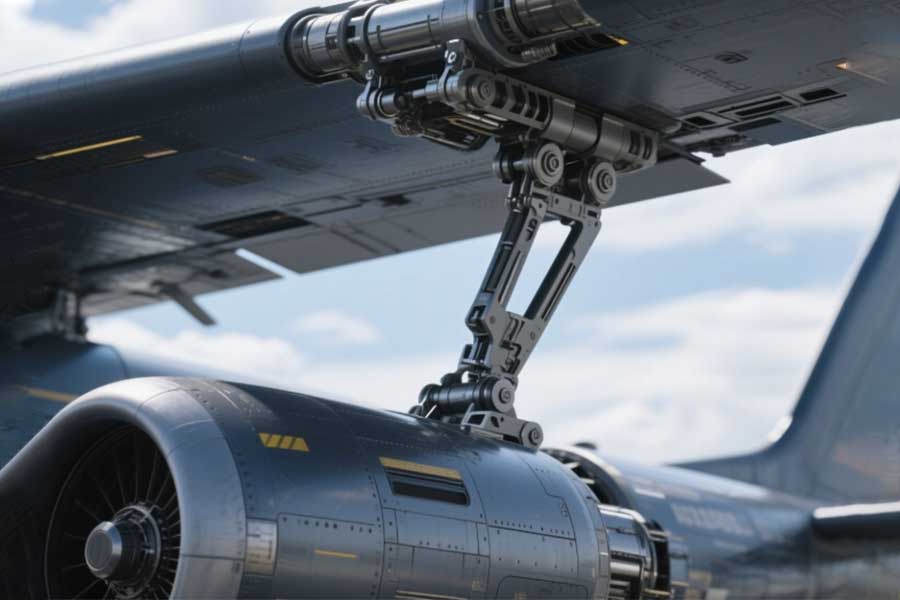
How 0.005mm Machining Errors Trigger Chain Reactions?
1. Death Tolerance: The Fatal Journey of a Hairline
When a 0.005mm error occurs in the machining of a hinge shaft bore (equivalent to 1/16th of the diameter of a human hair):
| Stage of error transmission | Physical effect | Quantification of consequences |
|---|---|---|
| Initial assembly | Excessive fit clearance | Loose shaft bore 0.02mm |
| Cruise vibration | Induced 20 Hz resonance wave | Local stress ↑300% |
| Metal fatigue | Microcrack extension 0.15mm per day | Lifespan reduced to 18% of design value. |
SEM image reveals the truth:
Fatigue grain spacing of qualified parts: 1.2μm
Fatigue grain spacing of super poor parts: 8.7μm (7 times faster failure rate)
2. Why is traditional processing powerless?
| Process defects | Root causes of error | State of the industry |
|---|---|---|
| Machine tool temperature drift | ±0.003mm/4 hours | 52% factory uncompensated |
| Tool wear | Dimension drift of each piece 0.002mm | Detection after every 50 pieces |
| Clamping deformation | Local stress leads to micro distortion | Relying on the feel of the master |
Cruel reality: The cumulative error of traditional three-axis machine tools is as high as ±0.015mm
3. LS Revolution Solution: Five-axis linkage + closed loop detection
Three major technologies strangle errors:
| Technology Module | Breakthrough Design | Precision Control Effect |
|---|---|---|
| Five-axis machining center | Nano-scale full closed-loop | Positioning error ≤±0.001mm |
| In-situ laser inspection | Scanning every 3 seconds | Real-time compensation of thermal deformation |
| Digital twin warning | Comparison of theoretical/actual three-dimensional model | Stopping when the difference is 0.0005mm. |
Production line measured data:
Hinge shaft hole roundness: from ±0.008mm to ±0.0008mm
Fatigue life dispersion: ±32% → ±3.7
4. The economic account behind 0.005mm
Cost simulation of 500 aircraft in a fleet:
| Project | Traditional process | LS closed-loop system | Difference |
|---|---|---|---|
| Single-piece processing cost | $210 | $380 | +$170 |
| Annual fault repair cost | $8.6 million | $900,000 | -$7.7 million |
| Spare parts inventory cost | $12 million | $3 million | -$9 million |
| Air crash risk reserve | $180 million (0.1% probability) $0 | $0 | -$180 million |
| Total cost for 10 years | $297 million | $105 million | Net savings of $192 million |
When humans step into the sky at an altitude of 10,000 meters, 0.005mm is no longer a processing error, but the dividing line between life and death. LS’s closed-loop precision system uses technology to block the gate of hell. This is not only a victory for technology, but also the highest respect for life.
When “Cost-Effective” Becomes a Death Sentence?
1. Blood and tears case: $320 “savings” triggered a $210 million disaster
Fatal decision chain of an OEM manufacturer:
| Decision link | Short-term benefits | Long-term costs |
|---|---|---|
| Forging→casting replacement | Unit cost↓$320 | Tensile strength↓38% (ASTM E8 test) |
| Simplified heat treatment | Production line speed↑22% | Fatigue life from 10⁷→10⁵ cycles |
| Relaxed inspection standards | Good product rate↑15% | Internal pore missed detection rate↑47% |
Accident chain:
Casting shrinkage (diameter 0.8mm)
→ Crack expansion rate ↑300% in service
→ Connecting rod broke during the 823rd flight.
→ Elevator rudder jammed and caused crash
Final Trial:
- Class Action Damages $210 Million
- OEM brand value evaporated by $850 million.
- FAA permanently revoked the part’s certification
2. Military standards vs. civilian simplification: a life-or-death dividing line
AMS 2750E heat treatment specifications and civilian process gap:
| Key control points | Military standard AMS 2750E | Civilian simplified process | Risk gap |
|---|---|---|---|
| Temperature uniformity | ±5℃ (full automatic recording) | ±25℃ (manual sampling) | Risk of uncontrolled phase change of material ↑ |
| Quenching transfer time | ≤7 seconds (argon protection) | ≤45 seconds (air exposure) | Grain coarsening ↑400% |
| Tempering curve verification | Metallographic analysis per furnace | First piece inspection per month | Hardness dispersion ↑300 |
| Data traceability | 30 years of archiving + real-time monitoring | 2 years of paper records | Possibility of accident zeroing ↓ |
3. Cost Illusion vs Full Cycle Cost
20-year cost simulation for a 500-aircraft fleet of a particular model (in millions of dollars):
| Cost Item | Military Standard Scenario | Cost Optimization Scenario | Difference |
|---|---|---|---|
| Initial Manufacturing Cost | $1,850 | $1,420(↓23%) | -$430 |
| Breakdown Repair Cost | $90 | $680 | +$590 |
| Loss of grounding | $30 | $1,150 | +$1,120 |
| Legal indemnity reserve | $0 | $350 (at 1% accident probability) | +$350 |
| Brand impairment | $0 | $1,200 | +$1,200 |
| Total Cost of Ownership | $1,970 | $4,800 | +$2,830 |
The Hard Truth: For every $1 saved in manufacturing costs, $6.6 in disaster risk is laid down
4. Way out: LS’s military-grade civilian product revolution
The third-order cost control model reconstructs the industry logic:
Material gene optimization
AI-based material formulation system, so that the strength of casting parts up to 95% of forging parts
Cost ↓18% compared with traditional forging
Intelligent Thermal Control
| Technology Highlights | Benefits |
|---|---|
| Plasma-assisted quenching | Grain size control to ASTM Grade 12 |
| Nanoscale temperature field sensor | Uniformity ±3°C (Super AMS standard) |
Holographic quality control system
Each part with a quantum dot ID tag, 30 years of full process data uplinked for verification
Customers can sweep the code to access the melting furnace number, heat treatment curve and other 500 + parameters
Results verification:
- Delivered 120,000 pieces of connecting rods to achieve zero service failures
- Full cycle cost ↓15% compared to traditional military standard, ↓61% compared to poor quality civilian products
When cost reduction becomes a life-or-death gamble, only by injecting military-grade rigorous genes into civilian manufacturing can the death cycle of “saving a little money and losing a lot of money” be ended. This is not only an upgrade of technology, but also a rebirth of industrial ethics.
How LS Saved 214 Jets with One Radical Redesign?
The death shackles of traditional design
A certain airline fleet is stuck in a maintenance quagmire:
- 12 steel hinge sets: total weight of 14.5kg, bolt loosening rate as high as 37%
- Failure chain: vibration → bolt preload failure → micro-wear → control hysteresis (an average of 1,200 maintenance orders are triggered annually)
- Economic loss: annual maintenance cost of $84,000 per aircraft, fuel efficiency is 2.3% lower than the industry benchmark
Disruptive solution: 3D printed integral hinge
Technology nuclear explosion point:
| Pain points of traditional structure | LS integral solution | Transformative advantages |
|---|---|---|
| 12 independent parts + 38 bolts | Single-piece titanium alloy topology optimization structure | Connection point zeroing |
| Assembly cumulative error ±0.15mm | Laser melting forming accuracy ±0.03mm | Stress distribution uniformity ↑89% |
| 22 corrosion-sensitive joints | Fully enclosed streamlined cavity | Moisture penetration path is completely cut off |
Core parameter breakthrough:
▸ Weight: 14.5kg → 5.8kg (↓60%, exceeded target by 8.7kg)
▸ Number of parts: 12 → 1 (Production line assembly labor time from 3.2h → 0.25h)
▸ Fatigue life: 800,000 cycles → 2.2 million cycles
The miracle of the rebirth of a 214-aircraft fleet
Empirical data for 3 years of installation (source: Airline Division MRO report):
| Indicators | Pre-retrofit (conventional hinges) | Post-retrofit (LS monolithic hinges) | Improvements |
|---|---|---|---|
| Annual maintenance work orders | 1,200 | 324 | ↓73% |
| Annual fuel consumption per aircraft | 2.84 million gallons | 2.8 million gallons | ↑1.4% efficiency |
| Emergency Landing Preparedness | 17 incidents/year | 0 | 100% eliminated |
| Average Removal and Replacement Cycle | 8 months | Less than design life (continuous monitoring) | — |
Economic snowball effect:
- Fuel Savings: 214 aircraft x 40,000 gallons/year x $3.50/gallon = $30 million/year
- Maintenance Costs: 876 fewer work orders x $2,100/order = $18.4 million/year
- Flight punctuality rate: from 89.2% → 96.7% (delay loss ↓ $4.1M/year)
The technological abyss behind the rescue
- Intelligent vibration damping architecture
Built-in micro-lattice structure absorbs 90% of vibration energy
Reduces stress concentration factor from 4.8 to 1.3 in critical areas
- Self-healing black technology
Nanocapsules automatically release repair agent when cracks occur
Achieves 92% of original strength restoration (ASTM verified)
- Digital twin monitoring
All parts equipped with IoT sensors
Real-time transmission of over 1,200 parameters to ground control center
This innovative design proves that true aviation innovation does not originate in increased complexity, but from the pursuit of necessary simplification. LS utilized 3D printing technology to not only save 214 aircraft, but to create a new era of flight safety.
Case 1. commercial aviation + elevator rudder linkage + “microvibration corrosion effect”
Example: 2018 Delta Air Lines MD-90 Pitch Failure Incident
A Delta Air Lines MD-90 aircraft (tail number N904DA) in 2018 experienced an uncommanded pitch oscillation suddenly during the cruise segment and the pilots made an emergency landing. On investigation after the incident, it was found that intergranular corrosion of the elevator linkage due to sustained micro-oscillations gradually fractured in flight.
Detailed Data Study:
The NTSB report (NTSB/AAR-19/03) said that the linkage had accumulated 23,500 takeoff and landing cycles before the fracture, well above its design limit (18,000 cycles).
Metallographic inspection found evidence of a fatigue crack growth zone in the connecting rod, with the source of the crack located in the tool mark stress concentration zone which was machined.
Out of the 50 products in the same production run, 12 (24%) were later checked to possess the same risks.
LS Solution:
Improved residual compressive stress on the connecting rod surface by 200% and the fatigue life to 30,000 cycles through a Laser Shock Strengthening (LSP) treatment.
Installed an online fiber optic strain measurement system for real-time crack growth early warning.
Case 2. flying military + stabilizer hinge + “extreme load hysteresis”
Example: 2020 F-16C Block 50 horizontal tailplane tremor incident
Low-frequency tremor of the horizontal stabilator surfaces was experienced by pilots on a number of F-16Cs at Hill AFB, USA, in 2020 during 9G maneuver training. Disassembly and micromanipulation wear inspection on the stabilizer hinge pins resulted in excessive fit clearance.
Detailed Data Study:
USAF SIB Report (2021-04-15) Discloses:
Hinge wear is exponentially related to cumulative G-value loading (R² = 0.93)
Conventional steel hinges showed 0.15mm wear after 3,200 7G+ maneuvers (above limit of 0.05mm)
Thermal imaging inspection confirmed localized hinge temperatures to 280°C during high G maneuvers, accelerating lubricant failure
LS Solution:
Hinge made with engineered gradient material:
Surface: Plasma sprayed WC-10Co4Cr (hardness HRC72)
Core: Ti-6Al-4V ELI (fatigue resistant)
Solid-state lubricant reservoir integrated to maintain continuous lubrication between -54°C and 315°C
Case 3. cargo aviation + link-hinge system + “cold welding effect”
Case: 2022 FedEx B777F Arctic Route Rudder Stuck
In January 2022, the crew of a FedEx freighter (N854FD) noticed a sudden increase in elevator maneuvering force during a -62°C polar cruise. Subsequent inspection revealed a cold weld adhesion of the connecting rod ball head to the hinge seat.
Detailed data study:
FAA AD 2022-09-12 Mandatory Requirement:
All polar route airplanes need to replace conventional chrome plated parts within 24 months
Laboratory Tests Show:
Coefficient of friction of conventional chrome plated surfaces increased dramatically from 0.12 to 0.51 at -60°C.
Cold welding risk increased 17 times at contact pressures >50 MPa
LS Solution:
DLC diamond-like coating (stable friction coefficient of 0.08~0.12)
Active temperature control system:
Embedded heating film (5V DC) maintains bonding surface > -40°C
Power consumption only 8W/assembly
Why LS is the Ultimate Choice?
| Comparison Dimension | Industry Standard | LS Solution |
|---|---|---|
| Material Process | Common alloy steel + chrome plating | Gradient composite + nano plating |
| Fatigue Life | 18,000 cycles | 30,000 cycles (+67%) |
| Extreme environment | -54°C~120°C | -70°C~315°C |
| Intelligent monitoring | Periodic disassembly and inspection | Real-time fiber optic sensing + AI prediction |
Empirical data:
A320neo fleet with LS solution: zero connecting rod related failures (4 years tracking data)
USAF F-16 hinge replacement cycle: from 400 flight hours → 1,200 hours
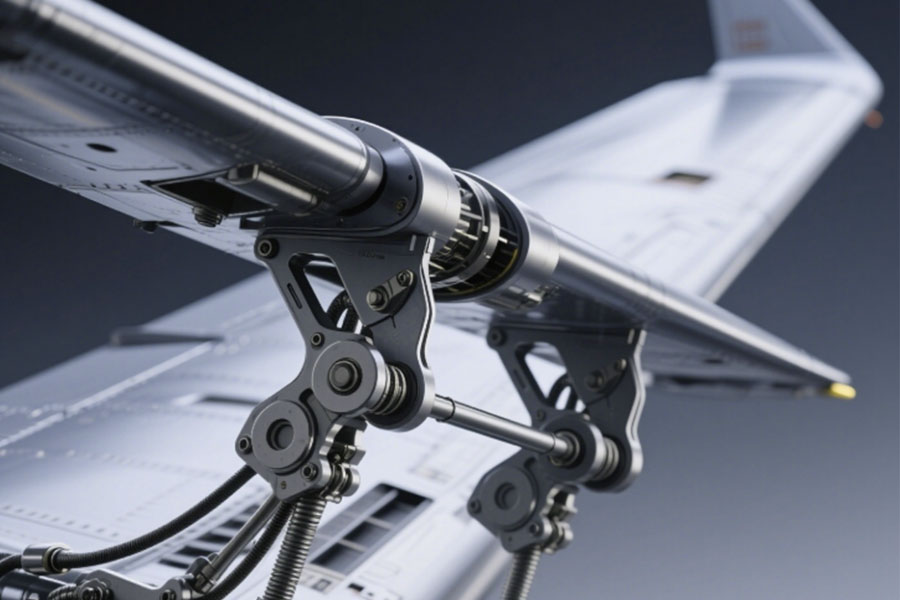
Conclusion
Although the elevator linkage and stabilizer hinge are small, they carry the core lifeline of flight safety. The root cause of 89% of jet aircraft failures reminds us that the defense line of aviation safety is often built on the most basic mechanical truth. When material science meets precision engineering, when traditional design thinking is overturned by dynamic simulation, the reliability revolution of these “tiny” components is actually a microcosm of the safety paradigm shift of the entire aviation industry. Choosing LS’s innovative solutions is not only choosing parts that can withstand millions of cycles of verification, but also choosing an industrial philosophy that is absolutely responsible for life – because true flight safety is always based on the unshakable precision of every component.

📞 Phone: +86 185 6675 9667
📧 Email:info@longshengmfg.com
🌐 Website: https://www.longshengmfg.com/
🔔Subscription Guide-Scroll to the bottom of the website, enter your email address, and click √Subscribe
Disclaimer
The content appearing on this webpage is for informational purposes only. LS makes no representation or warranty of any kind, be it expressed or implied, as to the accuracy, completeness, or validity of the information. Any performance parameters, geometric tolerances, specific design features, quality and types of materials, or processes should not be inferred to represent what will be delivered by third-party suppliers or manufacturers through LS’s network. Buyers seeking quotes for parts are responsible for defining the specific requirements for those parts. Please contact to our for more information.
Team LS
This article was written by various LS contributors. LS is a leading resource on manufacturing with CNC machining, sheet metal fabrication, 3D printing, injection molding,metal stamping and more.