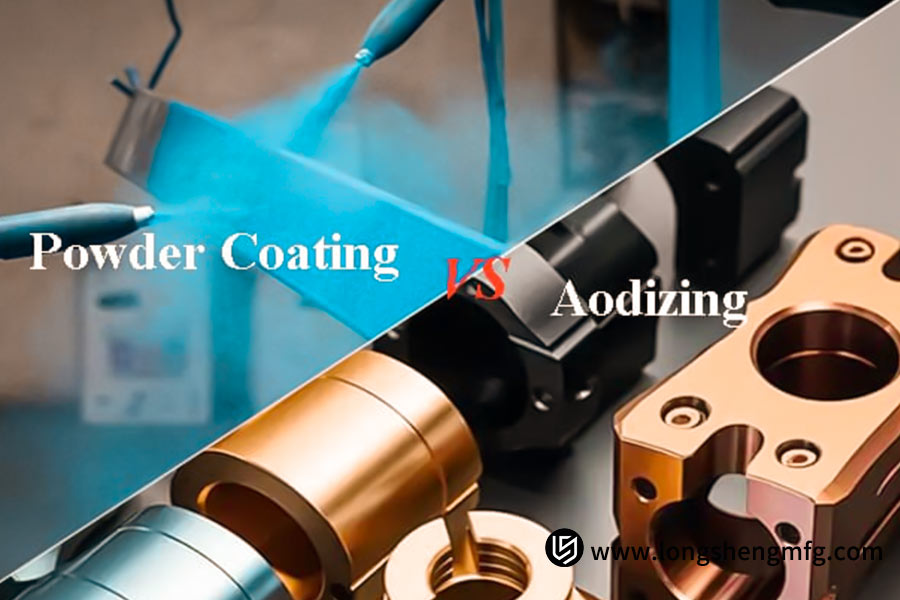
In choosing a surface finish for your aluminum extrusions, are you struggling with short-term cost versus long-term performance? Powder coating is less expensive upfront, but toughness, scratch resistance, and UV resistance become issues for future use. Based on LS’s decades of history in the aluminum extrusion industry, we can respond affirmatively to this question: for high-end projects that need optimum durability, a metal finish, and lasting protection, anodizing is most likely the better choice. Anodizing uses electrochemical processes to form a hard oxide coating that reacts with the substrate. This coating not only wears and resists corrosion far better than coatings, but it also matches the natural texture and high-quality metallic luster of aluminum, preserving its loveliness for years to come. If your project’s value lies in enduring quality, anodizing is the safest bet for certain.
Anodizing and Powder Coating Core Parameter Comparison Quick Reference Table
| Comparison Dimensions | Anodizing | Powder Coating |
| Durability | Extremely high. A symbiotic relationship with the base metal provides extremely high wear and corrosion resistance, no peeling, and a life of over 20 years. | Good. Thick, scratch-resistant paint film but may chalk and fade on prolonged exposure and peel under impact. |
| Cost | High initial cost of investment. The expensive cost of electricity and sophisticated process create a more expensive unit price than for powder coating. Low initial cost. | The comparatively inexpensive process and high utilization of raw material lead to an extremely economical option. |
| Environmental Performance | The process imposes severe environmental requirements. The demand for wastewater and waste acid treatment is high, but the end product is completely non-toxic and VOC-free. | The process is more environmentally friendly. Solvent-free, and the powder can be recycled, but the coating itself is an organic polymer and resistant to breakdown. |
| Material Limitations | Available on non-ferrous materials such as aluminum, magnesium, and titanium only. Not feasible to use with steel or non-metallic materials. | Extremely versatile. Can be used on nearly any metal substrate (steel, iron, aluminum, etc.), with endless applications. |
| Correct Applications | Luxury building curtain walls, landmark structures, precision machinery, consumer electronics (e.g., MacBooks), and marine applications. | Can be used for domestic windows and doors, interior furniture, appliance coverings, exterior guardrails, and general industrial hardware. |
For maximum strength, metallic look, and everlasting value, choose anodizing.
For rich colors, superior cost-effectiveness, and extensive application, choose powder coating.
Why Trust This Guide? Real Experience From LS Experts
Throughout my 20 years of experience, I’ve had firsthand experience of the huge impact that anodizing can make. For example, we supplied profiles for a large waterfront development, where high-salt spray corrosion resistance was a key requirement. By carefully controlled bath temperature and current density, we were able to produce a uniform anodizing film thickness well in excess of 20μm. A follow-up visit ten years later saw the surface still immaculate, while the auxiliary building, spray-coated by conventional methods, showed widespread fading and flaking. It’s these success stories in tough conditions that have made LS a byword for technology in high-technology engineering.
It’s not an accident; it’s an indication of LS’s uncompromising commitment to technology and equipment. Our vertical anodizing process utilizes a extremely accurate temperature control system of ±0.5°C that is instrumental in ensuring film uniformity and density. All data batches are charted and recorded to prevent us from not just creating a product but a promise of performance that will last for decades. We firmly believe that true value lies in decades of performance consistency, and this is the best guarantee LS provides.
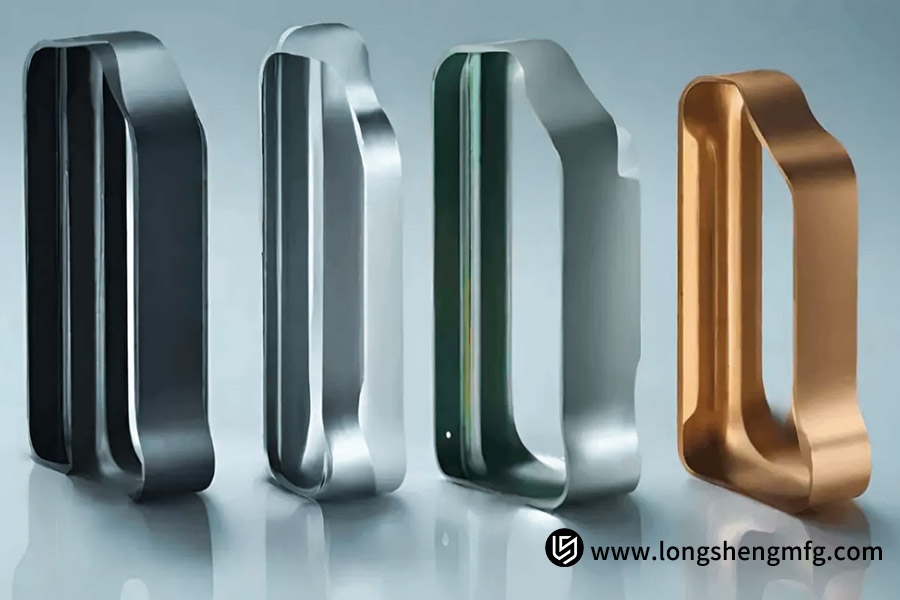
What Are The Basic Process Choices In Metal Surface Treatment Engineering?
Selecting a process for treating surfaces in metal manufacturing is more than a technical tick box; it is a strategic choice. Its very nature is to arrive at the optimum combination of performance, cost, substrate, and environmental objectives for a specific product and application, not some standard ‘off-the-shelf’ process.
Performance Requirements
This decision-making process begins with knowing very clearly what the ultimate mission of the product is. We must ask ourselves: What kind of environment will this component be subjected to? Will it be subject to long-term corrosion from sea salt spray, or to the gentle wear and tear of everyday life? Will it need to express the cool, raw character of metal, or give a rich, personal expression? For example, for developing curtain wall profiles for a sea-front landmark structure, the chief requirements are weatherproofing and cost for a lifetime. Therefore, maintaining the thickness of the film for anodizing above 20μm is the sole option, giving the building’s facade an appearance as fresh and new for decades to come. Alternatively, for interior furniture where color and expense are chief concerns, a rich, nature-friendly powder coating is the more sensible choice.
Mindful of Cost and Basic Properties
Yet better performance must be balanced in a cost-effective scenario. Cost is one limitation, yet we must be mindful of lifecycle cost overall as well. Anodizing, more costly up front, may be a longer-term investment since it can have a lifespan many times greater than usual coatings with little or no maintenance cost. Furthermore, the substrate properties are an overcome need. Different metals, such as aluminum, steel, and iron, all have their own best-process systems. Furthermore, environmentally friendly regulations are today’s paramount issue for manufacturing, which forces the industry away from older, yet environmentally friendly, processes towards cleaner, more sustainable technologies.
Successful process selection is an ongoing, systematic process that extensively tests a supplier’s technical capabilities, acquired expertise, and customer-oriented problem-solving acumen. That is precisely where the worth of LS Group lies—we do not simply provide processes, but strategic advice based on decades of practical experience that helps clients learn to navigate technology selection sophistication and make the optimal decision with the greatest long-term worth.
Why Has Anodizing Become A Favorite In The Military Sector?
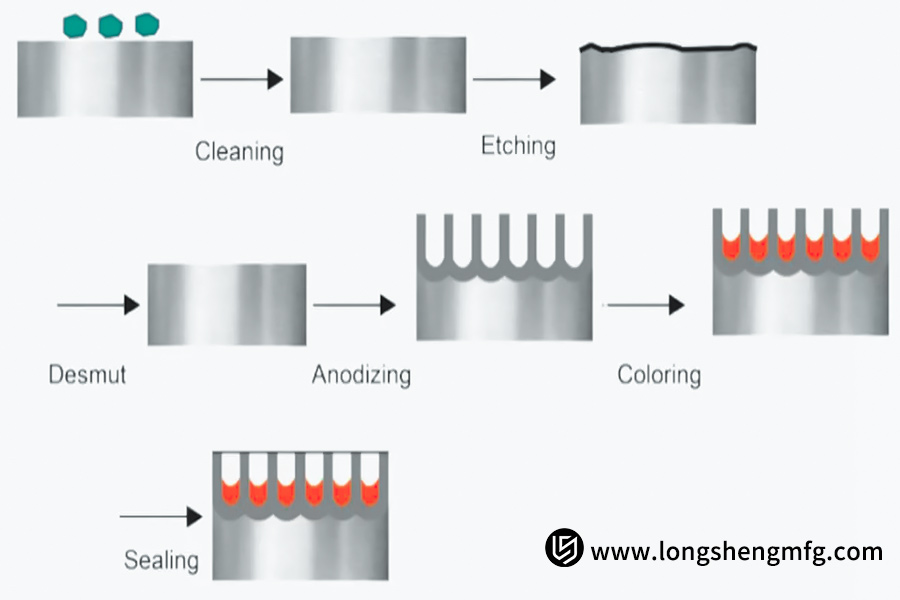
Ubiquity of anodizing as the accepted surface treatment technology for the military industry is not by accident. Rather, it is a function of its better performance, resistance to severe environmental conditions, and improving technology. Military products impose rigorous demands on corrosion resistance, wear resistance, reliability, and service life. Anodizing, through electrochemical processes, develops a hard, dense oxide film on the surfaces of light metals such as aluminum, magnesium, and titanium and meets these rigorous demands precisely.
Anodizing significantly enhances the protective properties of the substrate
This is its major advantage. Military equipment is typically subjected to harsh environments such as marine salt spray, humidity, and wide temperature ranges, presenting very demanding requirements for corrosion protection. Anodized films strongly bond to the base metal, successfully shielding corrosive media and providing long-term protection. For example, AVIC Baocheng’s high-emissivity black coating with anodizing not only can withstand high-energy ultraviolet radiation in space but also possesses excellent corrosion resistance, and it is a potential replacement for traditional thermal control paint coatings. Moreover, the extremely high hardness of anodized films significantly promotes the wear resistance of aluminum alloy parts to the condition of repeated utilization or mechanical movement of military equipment. Particularly, the hard anodizing process can achieve a microhardness of up to HV 1200-1500 for pure aluminum with the largest film thickness up to 250μm. This significantly extends the working life of critical moving parts such as pistons, bearings, and hydraulic parts.
Anodizing technology can even impart materials varied functionalities to meet the different demands of the military industry
Protection is not only necessary, but military products also require specialized physical and chemical characteristics. For example, anodized films are effective insulators with a breakdown voltage of up to 2000V upon sealing and are perfect for electrical insulation products. The film’s microporous structure is of high adsorptive capacity and can be utilized to store lubricants for further friction reduction and can also be painted with multiple colors for camouflage or military identification. More significantly, through the application of specialized electrolyte composition and treatments (e.g., AVIC Baocheng’s patented process), a high-emissivity black thermal control coating (>90%) becomes feasible. This coating can be utilized in spacecraft thermal control systems to effectively manage heat in the complex space environment.
Environmental friendliness and technological advancement of anodizing processes
This also increases its application. With increasingly strict environmental requirements, the military industry is also searching for cleaner solutions. Compared to traditional electroplating processes (e.g., hard chrome plating), modern anodizing technology, particularly progress in chromic acid anodizing, aims to reduce chromium-containing wastewater discharged, make treatment burdens easier, and more closely adhere to environmental controls and military standards. In addition, the digital control technology enables precise control of anodizing process parameters such as voltage and current with highly consistent and stable film quality and meeting the high reliability requirements of military products.
Briefly, the anodizing process can comprehensively improve corrosion resistance and wear resistance of light metals such as aluminum, magnesium, and titanium, and can freely impart special properties such as high emissivity and insulation to the materials at will. In the meantime, it also continues to evolve along the environmentally friendly and advanced route. It ideally meets the requirements of the military sector for very high levels of material performance and complex and diverse application conditions, thus establishing permanent popularity and extensive utilization.
Is PowderCoating Really Cost-effective? A Breakdown Of The Lifecycle Cost
Whether powder coating or anodizing is more cost-effective is not necessarily a matter of initial cost. The solution will depend, in large part, on your specific requirements, budget, and long-term worth. The overall lifecycle cost (LLC) covers all associated costs from initial investment to through the entire lifecycle.
Anodizing and powder coating full life cycle cost comparison table
| Cost Dimensions | Powder Coating | Anodizing |
| Initial Investment | Reasonably Low | Reasonably High |
| Maintenance Interval | Frequent, possibly constant refurbishing required | Low, usually no maintenance |
| Service Duration | Prolonged (over 15 years for high-end outdoor powder) | Very Long (longer than 20 years) |
| Environmental Impact Cost | Low (zero VOC emissions, recyclable powder) | High (requires large wastewater and waste acid treatment) |
| Applications | Building curtain walls, home furnishings, outdoor guardrails | High-end architecture, electronics, military and aerospace |
Choosing the right one: opt for the full lifecycle cost
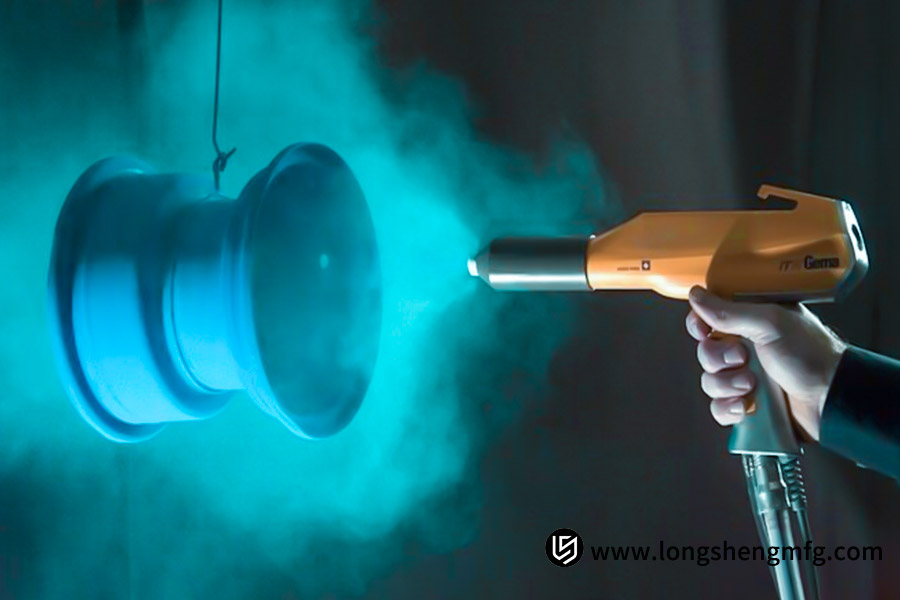
- If your project must be cost-efficient, requires a high color consistency (powder coating can produce thousands of colors), and is employed within a normal environment (not subject to intense corrosion or heavy usage), powder coating will generally be cost-effective.
- If your project demands ultimate durability, metal finish, and long-term value, and is intended for high-end architecture, landmark projects, or abusive environments (coastal environments, chemical environments, or high-wear applications), then although there is an initial larger expense, anodizing, with its long lifespan and minimal maintenance requirements, is often a better economical investment.
Environmental Egulations Force Change: Which Processes Are RoHS 3.0 Certified?
Environmental compliance is tightening, and standards like RoHS 3.0 are now industry benchmarks for most industries. In the metal surface treatment industry, two very popular processes, anodizing and powder coating, both possess distinct characteristics in fulfilling environmental needs. The below table presents their significant differences for a rapid understanding:
| Evaluation Dimensions | Anodizing Process | Powder Coating Process |
| Environmental Benefits | The oxide film is non-toxic and harmless, generally not considered to be separate from the metal substrate, and free of heavy metals or other toxic compounds. | It has no solvents to prevent VOC emissions from occurring in the first place. The powder is recyclable with a very high recycling efficiency (over 97%). |
| Core Challenges of RoHS | Traditional nickel-based sealing operations introduce the possibility of heavy metal nickel, and hence nickel-free sealing technologies must be employed. | Raw materials (additives, pigments, and resins) must be thoroughly screened to ensure that they are free from controlled substances using lead, cadmium, mercury, and hexavalent chromium. |
| Key Technical Solutions | Utilize fluorine-free and nickel-free sealers (e.g., organotin and acetates) with rigorous wastewater treatment requirements. | Use environmental-friendly polyester resins (e.g., HAA curing systems instead of TGIC) and standard-compliant pigment additives. |
| Certification Confidence | RoHS compliance is achieved through the use of compliant raw materials and nickel-free sealing. | The technology is in place, and numerous products are openly declaring that they are RoHS compliant. |
Selecting and Verifying: For RoHS 3.0, no process per se “exempt.” Compliance is through tight technical control and supply chain management.
- When selecting anodizing processes, ensure that the processor uses nickel-free sealing technology and is able to generate credible wastewater treatment certification and product testing reports.
- When choosing powder coating processes, request the supplier provide a valid RoHS Declaration of Conformity or third-party inspection certificate to ensure all materials meet specifications. The ultimate choice should also completely consider the product application environment (e.g., weather resistance and wear resistance requirements), cost, and appearance requirements.
LS Case Study: The Revival of Anodizing for Medical Bone Screws
A Customer’s Challenging Problem
The local high-end medical device manufacturer found itself faced with a challenging clinical response to its star product, the titanium alloy bone screws. Conventionally treated bone screws had microscopically irregular surfaces, which had the potential to cause suboptimal integration with bone tissue and concerns about long-term corrosion stability in the complex environment of implantation. They desperately needed a high-accuracy surface treatment solution that would significantly increase the product’s long-term safety, biocompatibility, and clinical success rate. The whole process had to address extreme cleanliness as well as traceability standards for medical devices.
LS’s Innovative Solution
Faced with such a problematic issue, the LS technical team became involved heavily, not in applying common general-purpose anodizing processes, but in designing a specialized precision anodizing medical-grade system. First, we select a specially formulated electrolyte and employ advanced micro-arc oxidation (MAO) technology to in-situ synthesize an extremely dense, porous, and active element-enriched ceramic titanium oxide film on the bone screw surface. Not only does this film create a metallurgical bond with the substrate, spalling-free, but its unique micro-nanoporous structure also provides an ideal “scaffolding” for bone cell ingrowth, significantly favoring osseointegration.
Most importantly, LS employs its own proprietary fully automatic intelligent production line to achieve millisecond-level closed-loop high precision control of electrolyte composition, temperature, current density, and oxidation time. This allows for highly uniform and stable film thickness, porosity, and composition in every batch, fully satisfying medical product traceability requirements. The entire process of manufacture is conducted within a Class 10,000 cleanroom, excluding any possibility of contamination.
Excellent Results and Rebirth of Value
LS’s revolutionary anodizing technology is utilized for the titanium alloy bone screws. They experience a qualitative leap in performance. Third-party testing determined that its corrosion resistance improved more than threefold, demonstrating superior stability in simulated body fluids. More significantly, animal tests and subsequent clinical results indicated a approx. 40% increase in bone-implant bonding force and healing rate, significantly shortening the recovery time of the patient. This new product not only established a solid position in the domestic high-end market but also gained the EU CE certification smoothly, gaining entry into the overseas market.
This case illustrates how well LS embeds cutting-edge surface treatment technology into rigorous medical quality systems, reflecting LS’s core strength in profoundly cultivating the industry and creating core value for customers through technological innovation.
3 Quality Traps Surface Treatment Equipment Firms Won’t Tell You About
During surface treatment equipment purchasing, the majority of buyers are attracted by low price and sensational core parameters without knowing the skillfully planned quality traps of the supplier. Those so-called concealed facts will be the reason for cost out-of-control, yield swing, and environmental risks on your future production.
The first trap: “Accuracy Lies” in Core Parameters
Suppliers happily advertise absurd specifications like “temperature capability up to 100°C” and “film thickness 20μm,” but they never start delivering as long as their temperature control can fluctuate up to ±10°C. This inaccuracy directly leads to uneven film thickness of the anodized and drastic color difference, product uniformity is a myth. True value lies not in how high the temperature can be taken, but how constant it remains within a ±0.5°C range for as long as time permits.
The second trap: “Cut corners” in ancillary systems
The main unit will be sleek and high-tech-looking, but the actual wastewater treatment system is minimized to a minimal bare tank collection system, with the tank being plain stainless steel instead of corrosion-resistant 316L steel. These underhanded cost-saving devices will create huge potential costs, for instance, environmental fines and production downtime due to tank ruptures, that ultimately overwhelm the savings.
The third major trap: dangerous design flaws and “pseudo-automation”
Rough hanger design causes workpieces to vibrate and crash, and poorly designed tank spacing and dripping times increase chemical carryover by 30%. This lack of process understanding turns automated equipment into a power-hungry beast with a high failure rate, sharply cutting production efficiency.
To avoid these pitfalls, use three criteria: ask for accuracy validation data, demand a whole-system solution, and go see on-site customer examples. Choosing surface treatment equipment is all about long-term process stability in production. It is only by cutting through marketing fluff and addressing underlying pain areas that equipment investment can be transformed into a good solid investment in productivity.
Recent Trends in Electroplating and Surface Treatment Technology in 2025
In general, electroplating and surface treatment technology in 2025 will continue to develop into smarter, greener, more precise, and more efficient technologies to meet the new demands of high-end manufacturing. Here is a summary table of significant trends for a quick glance:
| Trend Direction | Core Characteristics | Typical Technologies/Applications | Driving Factors |
| Digitalization and Intelligence | Data-driven, real-time management, predictive maintenance, adaptive manufacturing | AI-based adaptive plating lines; Digital Twin and Metaverse coating simulation | Increased yield, reduced cost, and customized customization |
| Green Environmental Protection and Sustainable Development | Reduction of emissions and consumption, non-toxicity, material recycling, and clean energy | Cyanide-free, fluorine-free, and other nature-friendly agents (e.g., nickel-free sealing); Hydrogen catalytic surface treatment systems; SPS additives | Stringent environmental regulations (e.g., EU EPR); Corporate Social Responsibility and Cost Pressure |
| Functionality and Precision | Micro- and nanoscale treatment, meeting specific physical and chemical specifications, cross-industry usage | High-end HDI board mSAP/SAP processes; Masking technology; Multifunctional composite coatings (e.g., corrosion-resistant + conductive) | Electronic product miniaturization, new energy cars, aviation, and other fields require extreme performance. |
| New Processes and New Materials | Shattering traditional performance boundaries, addressing industry challenges, and penetrating new fields of application | Electroplated copper replacing silver paste reduces the cost of HJT cells; new levelers; and inert anode technology | Reduce costs (e.g., photovoltaic silver paste), increase reliability, and set new limits to application. |
As a response to these trends and technological changes, business and practitioners alike may consider the following:
- Technological integration as an emphasis: The inter-integration of two or more technologies will be a major source of innovation, i.e., the integration of AI with traditional processes and the combination of new materials and new equipment.
- Augmenting green competitiveness: Environmental compliance is no longer a cost factor but a major impetus for the development of future competitiveness. Lead-use of green processes and energy-efficient equipment can effectively counteract policy risks and reduce long-term operating expenses.
- Embracing collaborative innovation: Collaborative R&D from end to end in the supply chain will become more critical. Equipment suppliers, material suppliers, processing service companies, and end-user firms must collaborate more closely in order to bridge technical differences.
- Investing in talent development: As the industry shifts to intelligent and high-end manufacturing, the need for multi-disciplinary talents (with experience in process, digitalization, and management) will rise exponentially.
FAQs
1.What type of surface treatment do I apply on exterior railings?
Anodizing is the most sought-after surface finish for outdoor railings. Due to the safety requirements of outdoor railings, the superior performance of anodizing fulfills these requirements. The LS aluminum railings customized for a beachfront villa project remain free from corrosion even after five years of exposure to ocean breezes. This is due to the oxide layer forming a symbiotic structure with the metal substrate that persists longer than powder coating’s adhesion by several folds.
2.Which is more economical for small-batch production?
The most economical in small-batch production is powder coating. LS’s automatic surface treatment facilities support orders as small as a minimum 50 pieces, supports color change within 24 hours, and reduces trial production expenses by 60% compared to anodizing. Regardless of whether you manufacture in mass production or small batches, LS is the favorite choice for the majority of factories.
3.Can anodizing be used to treat irregular shapes?
Anodized aluminum can be treated electrolytically to any angle for irregular shapes. Due to its process advantage, anodizing is highly useful in treating irregular shapes. LS uses a suspended anodizing line to provide an even 8μm coating with ±0.5μm accuracy for the custom-shaped drone frame.
4.Can the two processes be combined?
There are risks. Powder coating and anodizing are not to be used together. Not only will neither process take its individual performance advantage to the fullest, but they also affect each other, impacting product performance. LS tests show that adhesion of powder coating is decreased by 37% by anodizing. A combined solution is recommended to be developed using a surface treatment engineer.
Conclusion
The essential answer to the argument on whether anodizing is better or not than powder coating is neither “yes” nor “no” but the law of application matching, i.e., there is no best process in general but rather the one that best serves for the specific application. If your application demands ultimate durability, metallic look, and lifetime value (e.g., high-end architectural curtain walls, precision medicine equipment, or military components), anodizing‘s inorganic oxide film, which realizes a symbiotic association with the substrate, is the hands-down winner for corrosion resistance, wear resistance, and long-term stability. Alternatively, however, where the project requires emphasis on a mix of colors, early cost control, and overall environmental protection (e.g., for internal furniture or appliances), superior quality powder coating is a cost-effective and rational choice.
Don’t know what process is best suited for your specific materials and application? LS’s knowledgeable personnel now offer free surface treatment process testing and solution consultation. Simply submit a sample, and our laboratory will conduct precise performance testing and evaluation. Depending on your actual cost, performance, and appearance requirements, we’ll present an unbiased, neutral, and best-fit matching process solution, sparing you misjudgments and maximizing project value.
Contact an LS expert today or submit your design online to receive your customized, efficient solution!

📞 Phone: +86 185 6675 9667
📧 Email:info@longshengmfg.com
🌐Website:https://www.longshengmfg.com/
Disclaimer
The content appearing on this webpage is for informational purposes only. LS makes no representation or warranty of any kind, be it expressed or implied, as to the accuracy, completeness, or validity of the information. Any performance parameters, geometric tolerances, specific design features, quality and types of materials, or processes should not be inferred to represent what will be delivered by third-party suppliers or manufacturers through LS’s network. Buyers seeking quotes for parts are responsible for defining the specific requirements for those parts. Please contact to our for more information.
Team LS
This article was written by various LS contributors. LS is a leading resource on manufacturing with CNC machining, sheet metal fabrication, 3D printing, injection molding,metal stamping and more.


