Design for Manufacturing (DFM) serves as a critical bridge between innovative concepts and manufacturing realities. Designers often invest significant effort in creating designs, only to be informed by manufacturers that the product is “not feasible,” “too costly,” or requires “major modifications,” leading to project delays and budget overruns. The fundamental issue stems from a disconnect between design and manufacturing, where designs fail to adequately account for production constraints and optimization opportunities.
InLS manufacturing, DFM is deeply integrated into the whole service process and acts as your manufacturing consultant to guide you in cost reduction and efficiency improvement from design. This article will make it crystal clear that DFM is not just a design principle but a systemic engineering methodology which could help you cut costs by more than 30% and shrink project timelines by 50%.
Design for Manufacturing (DFM) Quick Reference Guide
Module Categories
Core Objectives
Implementation Points
Design Principles
Simplify the process
Reduce the number of parts and steps involved in the production
Material selection
Control cost and supply
Using materials of standard specification
Process Matching
Ensure feasible production
Design to be within the capability of existing equipment
Design for Tolerance
Strike a balance between precision and cost
Precision machining for critical dimensions, less precision for parts that are not vital.
Quality Control
Achieve batch-to-batch uniformity
Establish reproducible criteria for inspection and standards
The essence of Design for Manufacturing lies in preventative thinking. By integrating production considerations early in the design phase, it prevents potential quality, cost, and efficiency issues in subsequent manufacturing processes. Its success hinges on breaking down departmental barriers and fostering early collaboration between design and manufacturing teams, enabling comprehensive optimization of product quality, production efficiency, and cost control.
Why Trust This Guide? Practical Experience from LS Manufacturing Experts
With extensive experience across industries, LS Manufacturing has been deeply involved in high-end DFM projects such as aerospace, implants, and precision optics. We surmounted core difficulties such as aerodynamic surface machining of engine blades and biocompatibility contour matching of implants. Having delivered more than 50,000 complex parts to our customers, we developed a systematic methodology to balance functional requirements with manufacturing feasibility.
Our DFM process pays much attention to all Occupational Safety and Health Administration (OSHA) safety standards, making sure the production environment and operating processes are in line with the requirements set by international safety standards. Employing advanced management concepts of American Production and Inventory Control Society(APICS) in optimizing supply chain management, we construct a highly effective collaboration system from raw material purchase to finished product delivery and thereby effectively accelerate the speed of production response and resource utilization.
We have built up a DFM knowledge base in material properties, process parameters, and cost models based on a large number of practical data. The guide encapsulates our core solutions in5-axis machining of titanium alloys and deformation prevention of thin-walled structures with the goal of providing reliable mass-produced proven practices to engineers.
What is DFM? Why is it considered a crucial first step toward successful product launch?
DFM is not only a design principle but also a systematic and collaborative philosophy running throughout the whole life circle of product development. Its essence is to fully consider, at the very beginning of the design stage, the constraints and optimization space of the manufacturing processes and reduce mass production risks from the very start. Of course. Here is the slightly revised sentence with the keyword subtly incorporated: It is widely regarded as a key to product success because it directly determines quality, cost, and time to market. In particular, the value of DFM reflects in the following aspects:
Quality and Reliability Improvement
DFM optimizes matching among structure, materials, and processes and effectively avoids such possible problems as demolding difficulty and assembly interference, ensuring consistency in mass-produced products. For instance, in precision medical component design, we have reduced the product defect rate from 5% to 0.3% through wall thickness optimization and rib reinforcement.
Cost Optimization
DFM directly reduces material and processing costs by simplifying the number of parts and reducing special process requirements. In an industrial equipment housing project, for example, parts consolidation and standardized screw selection realized a unit cost reduction of 22%.
Completion Cycle
Feasibility verification in the pre-processing stage greatly helps reduce time spent in design modifications and trial and error later on. A similar project for an aerospace connector reduced its prototype development cycle by 50% and hastened market launch because DFM analysis began early.
We believe integrating manufacturing expertise into design through cross-departmental collaboration is crucial for creating innovative yet mass-producible solutions. This principle lies at the heart of what is DFM – serving as the vital bridge connecting creativity with market reality. Only through this systematic, forward-thinking manufacturing approach can a solid foundation for product success be established.
What are the five core design principles that should be followed to implement effective Design for Management (DFM)?
While a systematic approach to Design for Manufacturing is essential, its concepts must be translated into concrete and actionable methods. The core design principles focus on DFM best practices to guide engineers in enhancing product manufacturability, reliability, and cost-effectiveness from the outset. These core design principles, along with their key implementation points, are outlined in the table below.
Core Principle
Key Points Implementation Analysis
Simplified Design
Minimize the number of parts and intricate features, for example, by replacing several assemblies through structural integration.
Standardization
Specify the use of standard parts, common materials, and specifications to reduce the complexity of the supply chain and decrease costs.
Modular Design
Break down the product into independent functional modules in order to enhance maintainability and production parallelism.
Material and Process Matching
Select cost-effective, easy-to-process materials and their corresponding processes according to performance requirements.
Easy-to-Assemble Design
Employ error-proof structures, reduce fasteners, and optimize assembly paths and operation sequences.
The essence of the DFM best practices is to weigh functionality, cost, and efficiency systematically in the design process by flexibly applying the above-mentioned core design principles as the foundation, so that later on, products can be mass-produced with speed and quality.
Figure 1: DFM-driven production workflow for CNC parts by LS Manufacturing
What are the major steps in the DFM analysis process at LS Manufacturing?
A systematic DFM process bridges innovative design with efficient manufacturing. LS Manufacturing analysis services embed manufacturing expertise early in the design phase through standardized collaboration, ensuring optimal manufacturability and cost-effectiveness. Our approach extends beyond technical feasibility to deliver tangible business value. The core steps of this professional DFM process are summarized below:
Key Step
Core Activity Summary
Design Intent Communication
Engage deeply with the team on the functional demands of the product, performance indicators, and application scenarios.
Manufacturability Analysis
According to CNC machining and process specifications, virtually simulate to identify the processing difficulties, rational tolerance, and risk.
Optimization Solution Output
Detailed report with illustrations includes specific modification suggestions, alternative solutions, and supporting engineering rationale.
Cost and Delivery Reassessment
An accurate final quotation will be given, along with a predictable production cycle based on an optimized design.
The DFM process at LS Manufacturing is open, collaborative, and iterative. The company assures a seamless course from design to mass production, hence, enabling clients to realize considerable improvements in product quality and time-to-market while containing costs.
Which DFM techniques immediately reduce part costs for CNC Machining?
Anticipating manufacturing efficiency will save part costs at the very beginning. Following are some practical techniques that achieve immediate results. By proactively suggesting these optimization directions in design reviews with our engineers at LS Manufacturing, you will directly see the difference in your quote:
Optimize Part Orientation and Structure: The design should focus on the key features in three standard coordinate directions as much as possible to avoid the complex multi-faceted machining. For example, converting angled holes in different directions into a set of straight holes in the same direction can decrease the number of workpiece reclamping and save more than 30 percent of machine setup time.
Standardized Internal Corner Radius: If the radius of all internal cavity corners is designed to be the same, say R3, then multi-contour machining can be done with one milling cutter. This saves about 2-3 minutes of machining time for each change of tool, which is quite cost-effective in mass production.
Rationalised Tolerance Requirements: Rigorously distinguish between critical mating surfaces and non-functional ones in terms of the level of precision. Non-critical dimension tolerance relaxation from ±0.05 mm to ±0.1 mm alone can save as much as 25% in finishing time without affecting functionality.
Designing Self-Positioning Structures: Dedicated fixtures are replaced by adding locating bosses or process holes to the part body. For instance, the addition of two diamond-shaped locating pin holes in an aluminum alloy base reduced the cost of the fixture by 70% and shortened the production preparation cycle.
These CNC machining DFM techniques boil down to making the process of manufacturing less complicated by design. The inclusion of such cost-reduction considerations into your design and reviewing it with the manufacturing experts at LS Manufacturing enables us to do more than provide competitive quotes, but also to make sure there is efficient and reliable mass production.
How to avoid Common CNC Machining Quality Risks through Design-Focused Methodology (DFM) in the Design Phase?
It is during the design phase that incorporation of DFM principles can effectively and economically prevent quality risks. The key to the full realization of the benefits from DFM lies in converting manufacturing experience into a set of prospective design constraints that avoid the possibility of defects. Following are some common quality problems and their respective DFM prevention strategies.
Thin-wall structure deformation control
In cases of thin-wall features with low rigidity, stress in the design phase of a process should be balanced by adding reinforcement ribs or optimizing wall thickness transitions. For instance, triangular reinforcement ribs added at an aluminum alloy cavity at the joining point of a sidewall and a bottom surface effectively disperse the cutting stress and control machining deformation within 0.05mm.
Systematic treatment of sharp edges and burrs
Clearly state the requirements for critical area de-burring. In the design, internal hidden intersecting holes can be designed with a 0.2mm chamfer or rounded corner to replace sharp corners, so that it will be easier to achieve burr control. By predefining an edge treatment scheme, instability in the course of subsequent secondary manual processing is able to be reduced.
Deep Hole/Fine Thread Machining Optimization
Designing blind holes whose depth is over 8 times the diameter or fine threads below M3 should be avoided. If there is a need to make deep holes, design in sections or with a relief groove to assist chip removal and maintain rigidity of tools. This greatly reduces the possibility of breakage and defective threads.
Critical Surface Scratch Protection Design
For panel-type parts with appearance requirements, design an independent process clamping area or allowance for protective film application; apply the clamping force at the non-critical surface so that no indentation or scratch will appear at the finished surface when processed.
LS Manufacturing DFM analysis service features an advanced quality risk prediction module that identifies potential defect patterns through process simulation and historical data comparison. This proactive approach demonstrates the essential DFM value by not only mitigating quality risks but also reducing rework costs by over 20%.
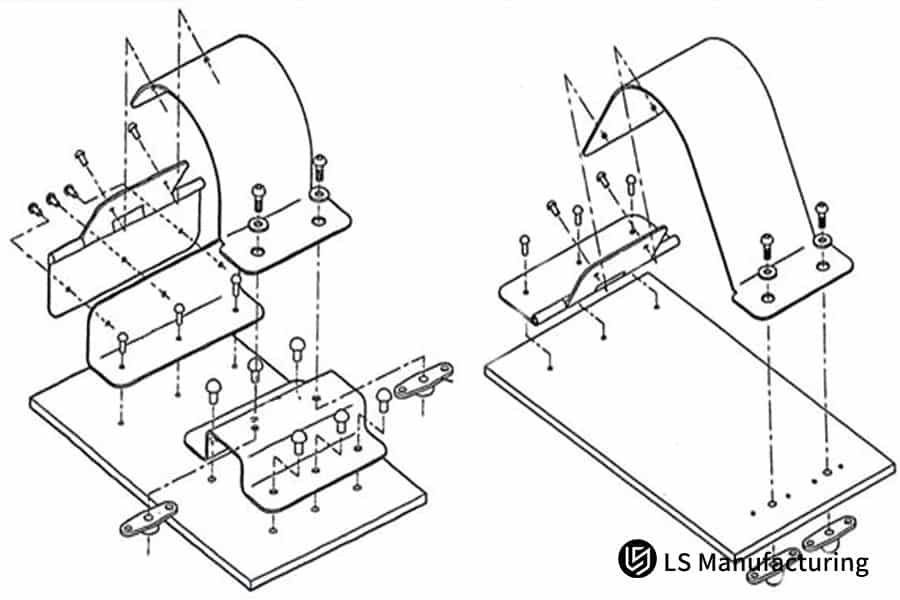
Figure 2: DFM-optimized precision sheet metal assembly blueprint by LS Manufacturing
Application of DFM Cost Optimization for Precision Aluminum Alloy Fixtures in the Medical Device Industry
Translating innovative designs into stable and reliable products in manufacturing precision medical devices requires deep knowledge and systematic application of DFM in product design. The following case study will highlight how technical risk is reduced and significant value is contributed by the DFM process:
Client Challenge
A medical device company developed an aluminum alloy fixture for new diagnostic equipment. While functionally sound, the initial design posed significant CNC machining challenges: extensive thin-walled structures and irregularly shaped holes with 8:1 depth-to-diameter ratios resulted in costs exceeding budget. Suppliers also reported deformation risks in thin-walled areas and low deep-hole machining yield, jeopardizing both project timeline and product reliability.
LS Manufacturing Solution
Our engineering team conducted proactive DFM analysis before CNC machining. Based on DFM guidelines, we optimized the integrated structure into a modular assembly, strategically redistributed reinforcement ribs for improved rigidity, and converted non-standard deep holes to standard through-holes with medical-grade plugs. This solution exemplifies DFM best practice in balancing manufacturability with cost-effectiveness.
Results and Value
The optimized solution reduced the processing cost by 40% and the production cycle time by 50%. In addition, deformation risk was completely avoided. This guarantees not only performance but establishes an efficient development paradigm. That is to say, this case proved that the inclusion of DFM best practices into each stage of product design was considered an important guarantee for fulfilling technological innovation and market success.
It involves the integration of principles and methods of DFM guidelines into the whole process of DFM in product design, optimally balancing cost, efficiency, and quality, ensuring quality, and reliably guaranteeing innovative development in high-end medical devices.
Get your instant quote now, including your custom solution for FDM optimization!
What are the unique advantages of LS Manufacturing as your DFM partner?
By choosing LS Manufacturing DFM partner, you gain not just a service but a strategic ally that deeply integrates manufacturing expertise with design innovation. Our unique advantages in outsourced DFM analysis and DFM consulting stem from systematic capabilities honed through cross-disciplinary practice, securing your product’s competitive edge from concept to reality. These core competencies are demonstrated in three key dimensions:
Experienced Cross-Industry Engineering Team
Our engineering team has rich experience in high-end fields like medical devices, aerospace, and precision electronics, enabling us to integrate advanced DFM concepts and solutions from different industries. Therefore, we are able to offer you more forward-looking and creative design optimization suggestions.
Advanced Manufacturing Capabilities and Process Understanding
With our own 5-axis machining centers, precision measuring devices, and other advanced equipment, we are well aware of the limits and possibilities of different manufacturing processes. That is why we can suggest bold optimization solutions from the design phase with a guarantee of reliability and much-improved efficiency.
Seamless one-stop service
Starting from DFM analysis, precision machining, and surface treatment to quality inspection, we offer end-to-end services that ensure the optimized design executions are brought accurately into the production process and perfectly realize the design intent with guaranteed consistent product quality.
Our unique advantages are reflected not only in professional technical support but also in offering end-to-end solutions, from design to mass production, which will bring considerable quality improvements and cost optimizations for your products.
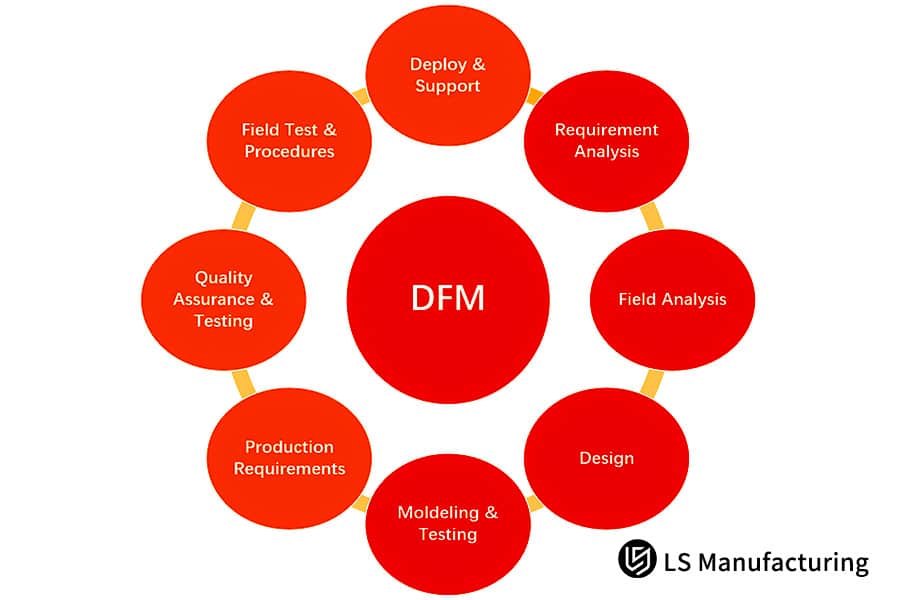
Figure 3: Circular flowchart of essential DFM components by LS Manufacturing
Why does introducing DFM earlier provide higher ROI to the project?
In engineering economics, early introduction of DFM represents one of the most effective strategies for enhancing a project’s return on investment. The design phase offers high decision-making freedom with low modification costs, creating optimal conditions for DFM to deliver maximum leverage. When issues are addressed during production, correction costs grow exponentially. The value of early DFM adoption manifests across three critical dimensions:
Cost Control Leverage: Every 1 yuan invested in the design stage of DFM can save 10-100 yuan of modification costs in the mass production stage. For instance, by reducing the number of assembly steps through the integration of parts, a company will simultaneously save money on mold investment, labor cost, and quality risk.
Cycle Compression Multiplier Effect: DFM prevents design iterations and hence cuts down the product development cycles by over 25%. Faster time to market means earlier revenue generation and, directly, improvement in ROI.
Risk Avoidance Redundancy Value: By finding such potential problems as inability to demold or interference well in advance, DFM avoids huge losses from production stoppages and rectification during mass production. These implicit benefits brought about by this risk avoidance often far exceed the initial investment.
Early introduction of DFM is not a delay tactic but rather an investment strategy, like “sharpening the axe before chopping wood.” Therefore, what could become huge costs and wasted time later gets transformed into an upfront, manageable, small investment that’s a key decision for maximizing project ROI.
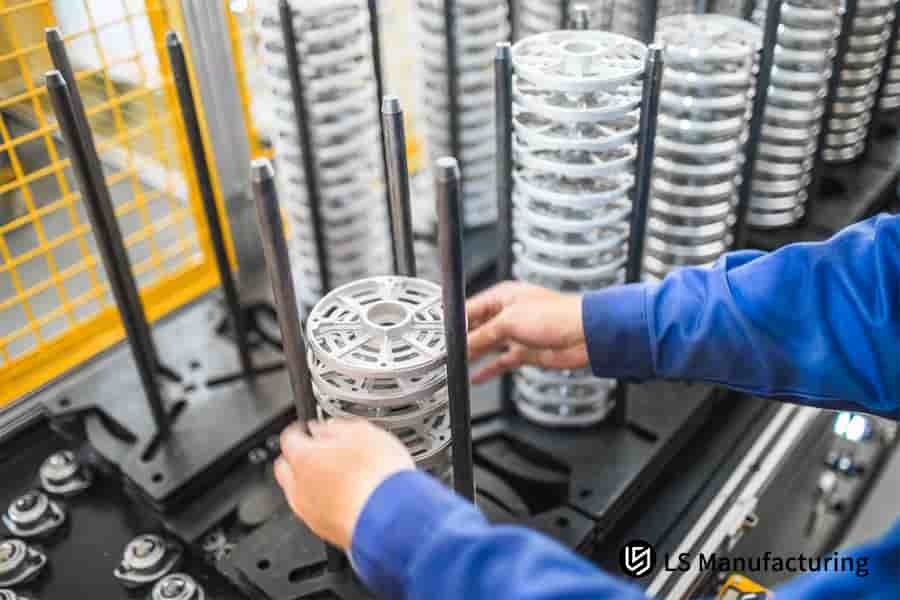
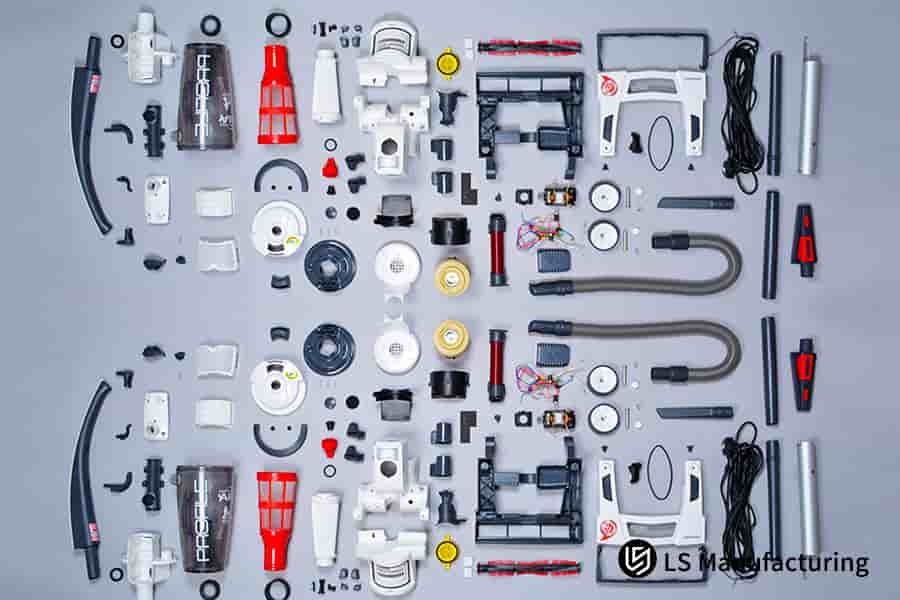
Figuire 4: Manufacturing solution for DFM-centric vacuum assembly by LS Manufacturing
How to Start Your First Professional DFM Analysis?
In any case, initiation of professional-level design for manufacturing analysis is not complicated. It’s an easy first step in optimization because LS Manufacturing has minimized the threshold of such services. Our free DFM analysis service makes it possible for each engineer to experience value from professional manufacturing assessment at zero cost. Such effective collaboration may be initiated within three simple steps. The concrete process will go in the following way, clearly and transparently:
Upload Design Data: Only submit your 3D model with basic technical requirements via email or via the platform. The system will then automatically encrypt and store the data to guarantee intellectual property security.
Efficient Technical Communication: Our DFM professionals will proactively schedule a 15-minute online meeting to focus on the key process nodes and cost drivers for aligned discussions.
Professional Report: You will receive a detailed solution within 24 hours, which includes a manufacturability review with optimization suggestions, and an exact quote to base your decisions on.
This complimentary DFM analysis serves not only as technical diagnostics but also as the starting point for our potential partnership. As your professional DFM service supplier, we invite you to validate solution feasibility risk-free while we demonstrate value through expert insights. To begin cooperation, simply upload your drawings and let’s transform your design into a more competitive product together.
FAQs
1. Is the DFM analysis free?
For projects with a clear intention of manufacturing, LS Manufacturing offers completely free DFM analysis services. This added value service is designed to support clients in optimizing product design andreducing overall costs by doing professional manufacturing reviews which can ensure manufacturability and economic viability of the project right from the very beginning.
2. Will doing DFM analysis extend early stages of the project?
It caneasily catch and prevent most of the manufacturing issues upfront, which would otherwise have been fixed for weeks during mass production by spending 1-2 days on DFM analysis early in the process, hence reducing the overall product development time significantly.
3. Will your DFM recommendations change the core functionality of my product?
No, definitely not. All DFM recommendations are made in strict adherence to the set core functions and performance indicators for the product. Feasibility, economy, stability in the quality of the product are the focus points during manufacturing process optimization.
4. Besides CNC machining, what other processes can DFM principles be applied to?
Yes, DFM is a universal concept. Our professional team is also proficient in DFM principles of various manufacturing processes, including but not limited to sheet metal forming, injection molding, and 3D printing, to offer comprehensive design and manufacturability optimization solutions across processes.
5. If my design is already mature, is it necessary to still do DFM?
Absolutely necessary. Even for mature designs, DFM review can still reveal new opportunities to optimize cost, improve process, or proactively mitigate potential compatibility andquality control risks when switching to new suppliers.
6. How is the security of my design drawings protected?
We value the intellectual property rights of our clients above everything. In addition to making them sign legally binding confidentiality agreements, we also employ encrypted file transfer and storage systems to ensure that your design data receives the best security protection.
7. What level of DFM are you able to manage in part design?
From simple structural components to highly complex parts featuring intricate surfaces, internal flow channels, or minute features requiring 5-axis machining, the corresponding analytical capability and successful case experience lie within our engineering team.
8. What is the next step after receiving the DFM report?
Right after confirmation of the final optimization plan, we will give a precise quotation and start the pilot production process. There is a dedicated project manager who coordinates the whole process to ensure that the transition from design optimization to mass production is smooth.
Conclusion
DFM is much more than a technical process; instead, it’s a strategic way to turn manufacturing intelligence into business advantage. By systematically integrating manufacturability considerations in the earliest phases of design, companies can head off mass production risks at their outset, achieve precise cost control, significantly shorten product development cycles, and ultimately place themselves ahead in the fierce market competition.
Don’t let manufacturability issues stand between you and success. Click the button below to upload your design drawings and experience LS Manufacturing’s professional free DFM analysis service. Let us provide practical optimization solutions to give your next project a solid cost and quality advantage.
The content appearing on this webpage is for informational purposes only. LS Manufacturing makes no representation or warranty of any kind, be it expressed or implied, as to the accuracy, completeness, or validity of the information. Any performance parameters, geometric tolerances, specific design features, quality and types of materials, or processes should not be inferred to represent what will be delivered by third-party suppliers or manufacturers through LS Manufacturing’s network. Buyers seeking quotes for parts are responsible for defining the specific requirements for those parts. Please contact to our for more information.