Vacuum casting is one of the most important processes in terms of realizing optimum cost-effectiveness in small-series production and rapid prototyping. The selection of vacuum casting resin is a major factor in determining part appearance, mechanical properties, and overall production cost. A poor choice can not only result in wasted parts and project timeline delays, but even in budget overruns.
This article systematically explains how to scientifically select a casting resin. In certain uses of polyurethane casting, for instance, the right choice and process optimization have even reduced the cost of production by 30%. As a leader in the industry, LS Precision Manufacturing leverages its extensive experience in materials application to advise clients on suitable resins and manufacturing solutions.
At LS Precision, we know that the value of a material is not only the cost but also the value added to your project overall. Let us help you with the most economical and reliable solution. To save you time, here is a recap of the key findings:
Vacuum Casting Resin Selection And Cost Reduction Key Quick Reference
| Consideration | Decision Points | Cost Impact |
| Material Type | Polyurethane resin: optimal cost savings, widest performance versatility, and greatest number of applications. Epoxy resin: Apply it only for targeted high-performance uses. | Removal of excess performance is the greatest cost-saver. |
| Major Costs | Cost per kilogram + Mold Life: Parts produced by a mold are directly proportional to cost per part. | The longer the mold life, the cheaper per part. |
| Critical Factors | Operating Time: Too little time will create higher scrap rates, therefore higher cost indirectly. | Optimizing operability is the optimal way to manage hidden costs. |
| Selection Principles | Required Matching: Select only on end use of product (e.g., strength and appearance). | Correct matching prevents batch scrap and total cost savings. |
| Cost Savings Example | Drone Shell Project: 28% cost savings with correct material substitution. | Professional selection leads to easy economic benefits. |
| Supplier | Choose LS Precision: Offers total material solutions and optimization recommendations based on expertise. | Take advantage of experience to lower your total cost. |
The path to vacuum casting cost control isn’t selecting the cheapest resin, but right selection—making the resin performance exactly match your product needs, not wasting money through over-performance. Process optimization (e.g., extended mold life) can also lower the overall cost per part.
Employing a partner such as LS Precision enables them to convert their potential into tangible economic returns.

Why Trust This Guide? Practical Experience From LS Experts
Material and methods applied in this guide are based on the ten-year real-world experience of LS Precision Manufacturing. We have successfully provided vacuum casting services for more than 200 clients and strongly feel the close relationship between resin decisions and cost management.
For instance, for a home automation project, the client initially chose a generic resin because of its low cost per piece. This ended up reducing the mold life drastically to 15 pieces, and the cost per piece ultimately went up. By matching their basic product requirements, which were simply an acceptable surface finish and some durability, we identified a specific polyurethane casting resin, thereby taking the mold life up to 35 pieces. The faster demolding characteristic of the resin also decreased the cycle time of production, ultimately enabling the customer to attain 25% cost savings overall.
This objective assessment, based on years of real-world experience, is the greatest value LS Precision can offer. We don’t simply sell material but also tested-and-proven, cost-reducing solutions.
How Does Resin Selection Become The “Invisible Hand” That Influences Vacuum Casting Costs?
Choosing a vacuum casting resin is not a matter of simply selecting a product but a methodical process that influences the bottom line. Decision-makers often look only at the unit cost of the resin and do not take into account the ripple effect on the entire production chain. The four important dimensions of resin choice presented here can make costs vary significantly:
1. Material Utilization and Waste Control:
Low viscosity vacuum casting resins are more fluid, and they can fill complex mold geometries fully and almost totally avoid scrap due to air entrainment and material shortage. This directly saves material consumption and reduces waste at the source.
2. Scrap Rate and Quality Stability:
If the curing behavior and working time of the resin are not compatible to the production cycle, it can easily lead to partial or incomplete curing, which results in batch scrapping of parts. The right choice of resin is essential to ensure consistent quality and control hidden costs.
3. Post-processing Difficulty and Labor Costs:
Using a low-shrinkage resin of excellent surface quality after curing can significantly reduce the quantity of follow-up sanding, repair, and polishing processes, cutting substantial labor and time costs directly and shortening delivery cycles.
4. Cost of Production Cycle and Mold Amortization:
A reduced demolding cycle means the same mold of silicone makes more parts over its life, distributing the cost of the mold over more products and effectively reducing the cost per part.
The choice of a vacuum casting resin is a systematic cost decision-making process. Best choice of the appropriate resin entails simultaneous optimisation in numerous dimensions like material usage, scrap rate, post-treatment efficiency, and amortization of the mold, thereby leading to optimized total cost management.
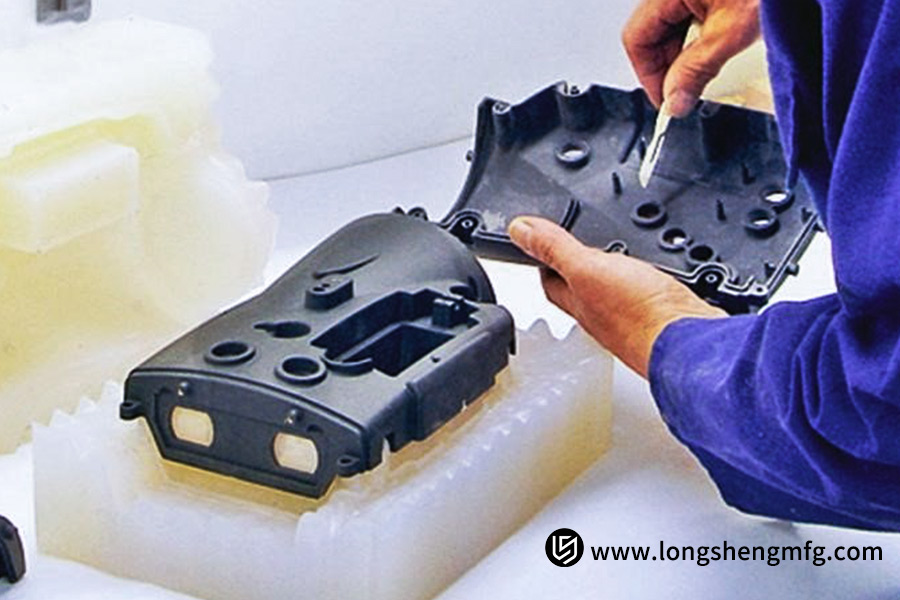
Polyurethane Resin vs. Epoxy Resin: Performance, Cost, And Application Scenarios
The decision between polyurethane and epoxy resin is a common crossroads when choosing a vacuum casting resin. Their comparative properties directly govern part performance, life, and final cost. Blindly selecting one or the other of these two resins wastes resources and may lead to project failure.
Below is a comparative summary of the inherent characteristics of the two resins:
| Property Dimensions | Polyurethane Resin | Epoxy Resin |
| Mechanical Properties | Excellent toughness, excellent tear resistance and impact, and excellent wear resistance, thus it can be applied in moving parts and enclosures. | Excellent hardness and excellent rigidity, but overall, it is brittle and has poor toughness. |
| Temperature Resistance | Average, with standard running temperatures typically below 80°C, but for higher temperature models up to 120°C. | Excellent, with long-term operation temperature resistance greatly in excess of 120°C, even up to over 200°C, so suitable for use in high-temperature conditions. |
| Shrinkage | Relatively high shrinkage (typically 0.1%-0.5%) may be encountered on oversized or very accurate workpieces. | Very low shrinkage (less than 0.1%) offers very high dimensional stability and replication accuracy. |
| Cost and Operability | Low cost, wide operating window (operating time), easy demolding, relatively easy post-processing, and high overall cost-effectiveness. | They are more expensive overall, and there are some models that require heavy handling, can lead to sticking in the mold, and require more labor-intensive post-processing. |
| Main Uses | Very versatile, they are widely used in polyurethane castings for functional parts, housings, clips, soles, soft-touch parts, and others. | In technical uses, they are ideally suited for those components requiring high-temperature stability and very high dimensional stability, such as engine peripheral components, mold masters, and electronic packaging. |
- Preferred Polyurethane Resin: The clear first preference for the overwhelming majority of rapid prototyping and low-volume production uses is polyurethane resin due to its outstanding toughness, wide performance range, and higher cost-effectiveness. It can meet over 90% of application requirements.
- Choose Epoxy Resin with Care: Unless your product requires extremely special high-temperature resistance or near zero deformation dimensional stability, do not choose an epoxy resin by its “high-performance” designation, as this will probably cost you more than you require in performance.
Selecting polyurethane or epoxy resins is really a matter of identifying the best cost vs. performance solution. Keeping the “pick the right one, not the costly one” rule in mind and making decisions based on needs, not habits, is an important step to the achievement of cost savings.
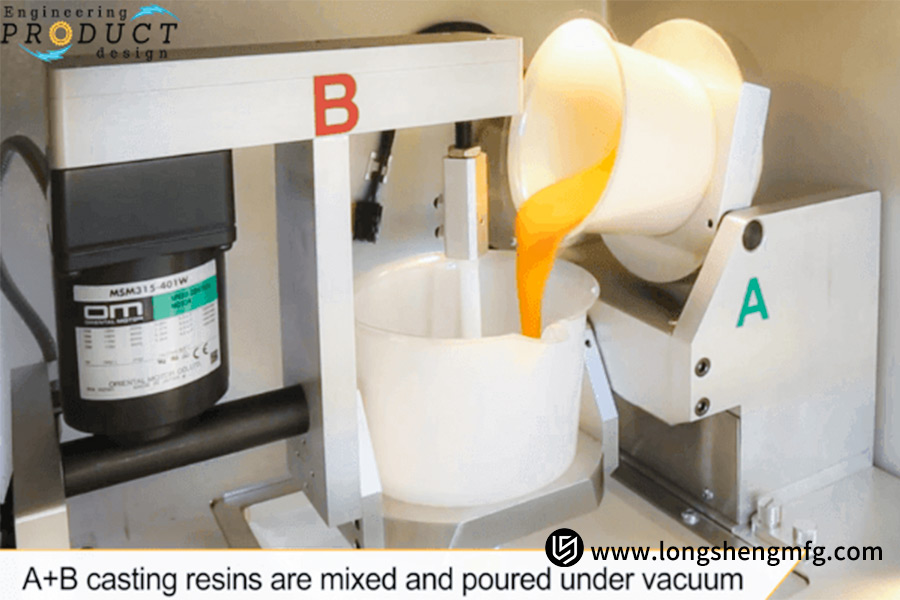
How To Interpret Resin Data Sheets For Precise Cost Control?
When selecting a casting resin, your best guide is the data sheet. But pursuing the “highest” performance involves wasteful cost too frequently. True cost savings result from understanding the underlying data and selecting a resin that precisely meets your product needs, without premium cost for performance you do not need. Below are some of the most critical parameters and their inherent relationship to cost:
1. Mixed Viscosity (mPa·s):
- What is it: The resistance to flow of the mixed resin.
- Cost Relevance: Low-viscosity resins flow more easily, readily entering the fine details of complex molds, reducing rejects due to bubbles and underfill efficiently, improving yield directly and lowering waste of material. High-viscosity resins might be costly to pump through vacuum infusion equipment.
2. Pot Life (min):
- What is it: How long a mixed resin can be left available for casting.
- Cost Relevance: Too short an interval necessitates speeding up, with the possibility of errors and rejects; too long an interval increases manufacturing cycle time and decreases efficiency. Choosing a curing time in relation to product size and process operation is key to consistent manufacturing and maintaining concealed costs at bay.
3. Curing Shrinkage (%):
- What is it: The proportional volumetric shrinkage as the resin changes from liquid to solid.
- Cost Implications: Excessive shrinkage can lead to part dimensional variation, deformation, or cracking, which is particularly destructive in assembly parts. This could lead to batch scrapping or costly post-processing adjustment. Low-shrinkage resins offer dimensional stability, eliminating risks at their root.
4. Hardness (Shore D):
- What is it: The ability of the material to resist indentation, a measure of hardness.
- Cost Implications: Blindly selecting a high-hardness resin (e.g., Shore D 80) to create a typical housing (where Shore D 60-70 may only be required) is an instance of “overperformance.” Higher-hardness resins tend to be more expensive and may be more brittle. Choosing hardness on actual structural necessity is the finest direct cost saving.
Choosing a casting resin is mostly point-to-point match of needs to specifications. The object of reading a technical specification sheet is not to find the perfect solution, but the best one—that which delivers performance you need at the most favorable cost, pragmatically managing total cost.
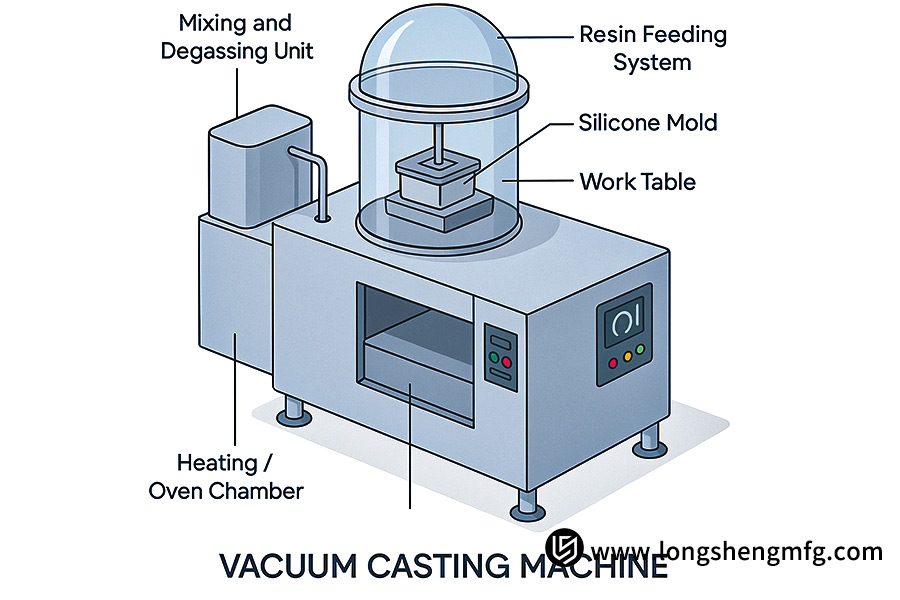
What Are Your Product Requirements?
When choosing a vacuum casting resin, the most important, though most frequently ignored, action is to concentrate on your product. Selecting a silicone mold resin is not a random decision; it is precisely determined by your product’s final application, operating conditions, and mechanical needs. Defining your requirements is the first step toward avoiding cost overruns and performance shortcomings.
Based on your project, please respond to the following three key questions to decide on the ideal resin to utilize:
1. Define the end use: Is it appearance, functionality, or the final part?
- Appearance prototypes: Surface finish is most important, followed by color duplication and delicate texture. Choose resins with low shrinkage, high transparency, or easy coloring to impart aesthetics and control cost.
- Functional test articles: Replicate the mechanical properties of the ultimate part. Proper duplication of the resin’s mechanical parameters to the test items (e.g., toughness, stiffness, and wear resistance) is critical to avoid biased test data.
- Low-volume ultimate parts: Highest demands call for balance between visual appearance and long-term stability. The aging and fatigue resistance of the resin are primary selection factors.
2. Evaluate the operating environment: In what environment will the part operate?
- Indoor/Outdoor: Sun exposure and outdoor use require that the resin offers excellent UV aging resistance to prevent yellowing and loss of function.
- Chemical exposure: Where the component will be exposed to oil, grease, solvents, or detergents, a chemically resistant resin needs to be selected, or else it can cause cracking or warping.
3. Define mechanical requirements: What forces will the part need to withstand?
- Stiffness/Hardness (Shore D): Those parts which are required to maintain their shape, such as housings and brackets, should possess high modulus and hardness.
- Toughness/Impact Resistance: Clips, handles, or those parts which are dropped and struck require high impact strength and elongation at break to prevent brittle fracture.
- Wear Resistance: In the case of gear and pulley moving parts, wear coefficient is a significant indicator.
Selecting a vacuum casting resin is actually a reverse engineering procedure: beginning with your requirements of product and tracing those back to the desired material characteristics.
LS Precision’s experts follow this process to take your loose requirements and convert them into an exact resin grade so that each dollar spent is worthwhile and there is no wastage.

How Does The Lifespan Of Silicone Molds Indirectly Affect Your Unit Cost?
In silicone mold casting endeavors, cost accounting needs to be more than just the calculation of the cost of material for a single pour. One key cost driver that’s often underappreciated is the length of the silicone mold’s life, and the choice of resin absolutely determines the number of qualified parts that the mold will produce. Choosing a silicone mold resin is actually an investment in and protection of this valuable resource.
The volume of wear that happens on the mold varies significantly between resins, influencing unit cost primarily through the following mechanisms:
1. Exothermic Heat:
- Impact: Some resins (most notably some rapid-curing epoxies) release a great deal of heat during reaction. Excessive exotherm will cause the silicone mold to “bake” continuously, leading to early aging, brittleness, and cracking, essentially shortening the mold life.
- Key Selection: Low or mild exotherm resin selection is the primary guideline for mold protection and mold life extension.
2. Hardness & Toughness:
- Impact: Highly hard or overly tough resins will apply more stress and friction on the mold cavity when demolding. Repeated demolding over time can cause this mechanical abrasion to the point where it starts to disintegrate the mold’s fragile structure, causing higher burrs and eventually failure.
- Key Selection: In maintaining product performance, the selection of a resin with proper hardness and smooth demolding can be very effective in reducing physical damage to the mold.
3. Chemical Compatibility:
- Impact: Certain active components of the resin system might react mildly with silicone or swell. Long-term accumulation of these effects can compromise the dimensional stability and surface texture of the mold.
- Key Selection: Selecting a brand of resin that has proven to be compatible with silicone mold materials is decisive in ensuring stable production.
The choice of a silicone mold resin is an integrated decision. Extension of mold life is the most effective means to reduce unit cost.
Choosing a compatible and mold-friendly resin enables you to amortize the cost of the same mold over more parts, yielding wonderful cost advantages when replicating in large volumes. That is the reason why at LS Precision, we always recommend products from an entire process thinking.
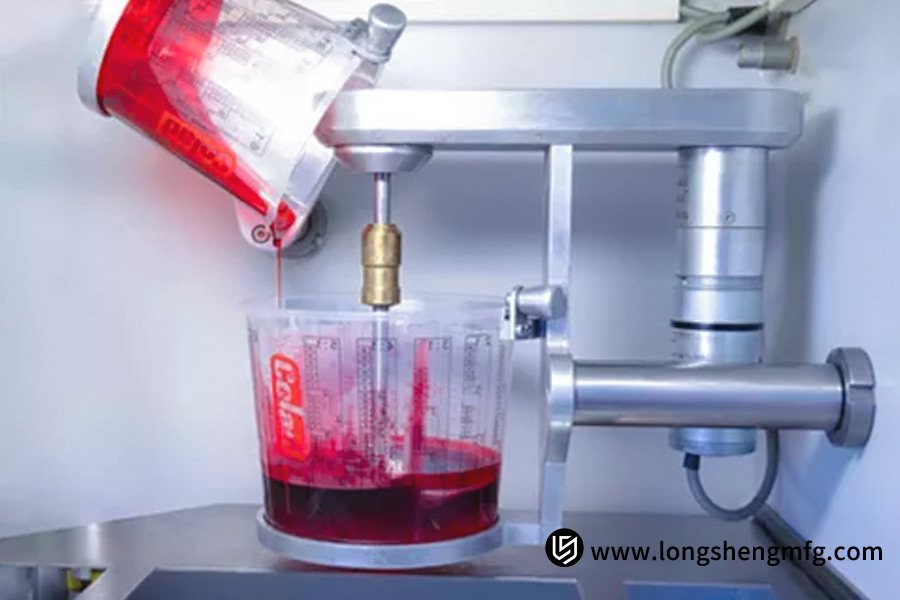
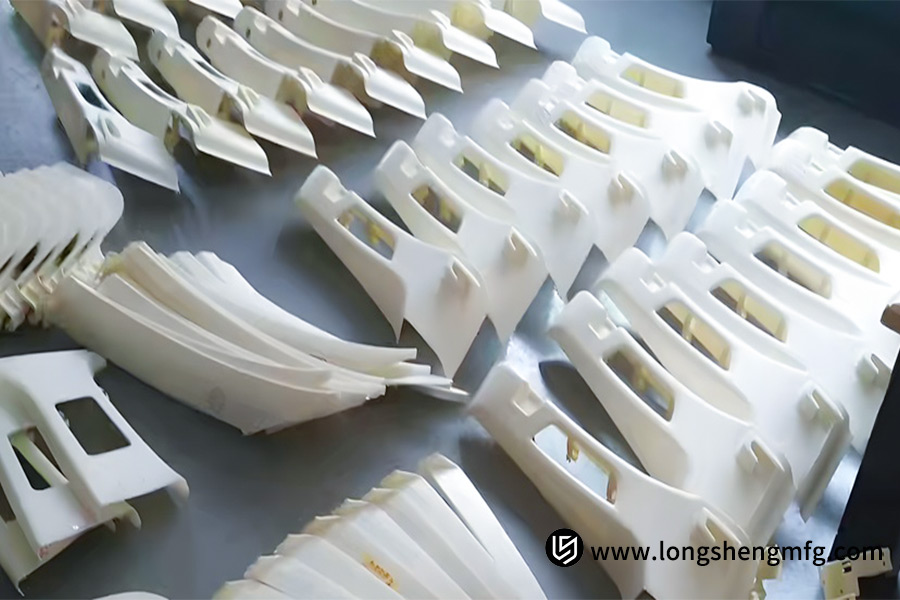
How Did You Save 28% On A Drone Casing Project By Changing Resin?
In vacuum casting manufacturing, a considerate material replacement proposal can often lead to amazing cost savings. Following is a real cost savings case study that LS Precision achieved for a drone customer.
1. Client’s Dilemma:
The client had been using a high-end imported epoxy resin to produce prototypes and small-batch trial production samples of their drone casings:
- This material gave better performance and thermal resistance, but was extremely expensive.
- This resulted in extremely high offers for trial production in small lots, with no market cost advantage.
- The client recognized “overperformance” possibility but experienced challenge to find a credible alternative.
2. LS Precision’s Solution:
LS Precision’s engineers conducted intensive exploration of the client’s component:
- Redefining the requirements: This casing was generally meant for structural assembly and ground testing and did not need to endure exposure to the extremely high temperatures that surrounded the engine and, therefore, extremely high temperature resistance was not a necessity.
- Performance Match: LS Precision recommended a high-performance polyurethane resin whose toughness, strength, and surface finish perfectly matched the mechanical as well as the cosmetic requirements of the drone shell.
- Process Optimization: LS Preicision Manufacturing also optimized the cast process with this polyurethane resin to further reduce demolding defects and losses.
3. Results:
- 35% reduction in direct material cost per part: Cost advantage of polyurethane resin was realized from day one.
- Improved Mold Life: Since the new resin flows out smoother and puts less wear and tear on silicone molds, overall mold life was improved, indirectly contributing to reduced mold amortization costs per part.
- 28% reduction in total production costs: Through deep material and process optimization, LS Precision achieved nearly one-third total cost reduction.
- Qualifications: All parts produced passed the customer’s rigorous functional testing, upholding uncompromised quality.
Need to discover the most cost-effective option for your project? Contact LS Preicision today and take advantage of our free resin selection and cost estimate!
Why Does Choosing LS Precision Mean Lower Overall Costs?
Supplier selection is not just a game of comparing material unit prices. Choosing LS Precision Manufacturing means choosing a dive-into-the-depths ally. We will provide full-scope professional service to optimize your project’s total cost of ownership (TCO), not just a seemingly low front-end price quote.
LS Precision’s value lies in three core aspects:
1. Extensive Material Database and Trial-and-Error Experience:
LS Precision maintain a library of polyurethane casting and epoxy resins from all leading suppliers, and have compiled test results on thousands of projects. This results in being able to precisely match you up with the best fitting vacuum casting resin, minimizing material waste and project time loss due to improper selection—the “try-it-and-see expenses” otherwise inevitable.
2. Extensive Process Experience Ensures Ultra-High Yield:
Achieving consistent resin performance requires a steady process. LS Precision’s engineers are skilled at understanding the characteristics of various vacuum casting resins and can provide comprehensive process optimization, such as mold design, pouring, demolding, and post-processing, significantly reducing scrap rates in production. The optimum yield is the best method of managing hidden costs.
3. One-Stop Service Saves You Time And Management Costs:
LS Preicision offer a turnkey, closed-loop service, from the creation of silicone molds and polyurethane casting to rigid post-processing and spray coating. You don’t need to deal with numerous suppliers, reducing substantial communication, management, and logistics costs, allowing you to focus on your core business and shorten your time to market.
LS Precision’s experience assures the overall quality and productivity of your project, effectively optimizing your total cost of ownership (TCO). That is precisely why our customers keep coming back to us and realize long-term cost savings and revenue growth.
LS Precision does not just provide materials; it provides a low-cost, high-success-rate manufacturing solution with a proven track record.
FAQs
1. Can polyurethane castings achieve the strength of injection-molded plastic parts?
Through proper formulation and processing, advanced polyurethane resins can be formulated with mechanical properties (e.g., tensile strength and impact resistance) that approach or actually match the levels of certain engineering injection-molded plastics (e.g., ABS and PP). These polyurethane products generally have good wear and chemical resistance, hence being applicable to functional prototyping and small-batch manufacturing.
2. Do I need to provide samples to match color and material?
Yes. Providing physical samples is the most accurate method. LS Precision Manufacturing color and material experts will create color and material matches under ambient illumination, taking into account your product’s specific process (e.g., injection molding, blown film) and material, to perfectly replicate your target look, color, and surface texture. This minimizes color variances caused by changes in lighting, thickness, and surface finish.
3. Does the choice of resin affect the reproduction of surface details?
Yes. Low-viscosity, high-flow resins fill cavities in molds more fully and replicate fine detail textures. Moreover, low-shrink resins retain molded dimensions and maintain surface accuracy.LS Precision will recommend the appropriate product based on your requirements for surface detail (e.g., leather grain).
4. How do I get started and receive my cost-saving plan?
Just inform us your part’s application, performance requirements (e.g., strength, heat resistance), and budget, or fax in a 3D file. Depending on your needs, LS Precision will provide you with optimized resin recommendation, process solutions (balances mold cost and production volume, e.g., polyurethane casting or injection molding), and upfront quotes to allow you to get maximum cost-effectiveness.

Conclusion
Vacuum casting project success and cost control begin with a proper balance and intelligent choice of material characteristics, defined requirements, and manufacturing goals. A professional manufacturing partner will be in the position to provide you with key technical experience and optimization options to actually reduce costs and enhance efficiency.
LS Precision looks forward to being your most trusted collaborator with its deep industry expertise and broad range of project experience. If you are suffering from product development and manufacturing problems, contact LS Precision today! Simply describe your project requirements or forward us your design files to receive a free, customized Cost Savings Plan. Let’s do it together and efficiently bring your ideas into reality.
📞Phone:+86 185 6675 9667
📧Email:info@longshengmfg.com
🌐Website:https://www.longshengmfg.com/
Disclaimer
The content appearing on this webpage is for informational purposes only. LS makes no representation or warranty of any kind, be it expressed or implied, as to the accuracy, completeness, or validity of the information. Any performance parameters, geometric tolerances, specific design features, quality and types of materials, or processes should not be inferred to represent what will be delivered by third-party suppliers or manufacturers through LS’s network. Buyers seeking quotes for parts are responsible for defining the specific requirements for those parts. Please contact to our for more information.
Team LS
This article was written by various LS contributors. LS is a leading resource on manufacturing with CNC machining, sheet metal fabrication, 3D printing, injection molding,metal stamping and more.


