For metal casting procurement, decision-makers never seem to have a familiar choice: risk of low price and poor quality, or high price for high quality and prompt delivery. That kind of price, quality, and delivery balance has become the norm.
But the master procurement strategy is not about sacrificing one metric only. Its spirit is to find a partner that can achieve the best balance, pursuing the best total cost throughout the product life cycle. This implies completely balancing the combined value of quality stability, production disruption risk, and time efficiency throughout the product life cycle.
LS Manufacturing is a master at solving this paradox. Using the latest manufacturing technology, open processes, and rigorous project management, we help customers precisely balance these three factors. Without compromise, they are able to gain the complete value of supply chain stability and efficiency, a genuine win-win result. To save you time, here’s a quick overview of the core conclusions.
Metal Casting Transaction Core Quick Reference
| Dimensions | Key Considerations | Common Risks |
| Price | Unit price, mold fees; Payment method and payment terms; Minimum order quantity (MOQ); Total cost of ownership (TCO). |
Hidden costs (e.g., modifications, rework); Cutting corners at low prices; Exchange rate variation influence (foreign transactions); |
| Quality | Material certification(e.g., ISO, ASTM); Process capability and precision (CT grade); Quality inspection system (X-ray, spectroscopy, etc.); First article inspection (FAI) and process (PPAP). |
Internal faults (porosity, shrinkage); Dimensional variations; Unstable batch quality; Unclear after-sales quality responsibility. |
| Delivery Time | Mold production cycle; Standard production cycle; Capacity status and schedule of production; Logistics and transportation methods and times. |
Delays in delivery resulting in production stoppages; Unnecessary rush order premiums; Discontinuity of information as a result of ineffective communication. |
Price, quality, and lead time form a dependent “iron triangle” in metal castings business. Best procurement is not the pursuit of excellence in one dimension but getting the best compromise among the three through careful assessment, transparent communication, and supplier ability.
Choosing a supplier like LS Manufacturing, with expertise in process control and lowest total cost, is the best means of sidestepping the “Balanced Triangle” pitfall and attaining stable long-term supply.

Why Trust This Guide? Practical Experience from LS Manufacturing Experts
LS Manufacturing has extensive experience in metal casting for decades. We face the toughest challenges from customers in diverse industries globally on a daily basis—from overcoming molding difficulties for intricate thin-walled castings to enhancing consistency of performance for high-stakes parts; from streamlining processes to lowering total costs by 15% for customers, to guaranteeing continuity of the supply chain for expedited orders.
LS Manufacturing firmly believes that true expertise can be acquired only by actual production. The “Balanced Triangle” strategy presented in this article is the creed and philosophy governing our working that has allowed hundreds of customers to resolve successfully procurement issues and achieve maximum total cost. We do not merely offer theory, but illustrate the solutions and true results we produce on a day-to-day basis.
To believe in LS Manufacturing is to choose a partner with the capability to translate their vast experience into an actual competitive advantage.
Why are “lowest-price” metal casting quotes often a trap?
When searching for a metal foundry, customers are immediately attracted by the alluring “lowest-price” bid. Those economically sounding metal casting prices, however, typically contain many traps and instead of reducing overall costs they end up increasing them. The real reasons are typically the following:
1. Cutting back on raw materials and processes:
For being cost-effective, some foundries may use inferior or non-standard raw metal materials and reduce or entirely omit required post-processing operations such as heat treatment. This results in poorer-casting performance and a high risk of premature failure directly.
2. Missing quality inspection:
Strict quality checks (such as spectroscopy and X-ray analysis) require expensive machinery and time. Low-ball estimates are likely to reduce investment in this activity significantly, resulting in defective castings being released into the customer’s line unsuspectingly and causing even greater losses.
3. Cutting corners in mold design:
While it is also a fact that poor mold design saves capital on initial mold-making costs, it can greatly impact consistency of casting quality and manufacturing efficiency and quickly degrade mold life, thereby increasing long-term repair and replacement costs.
The best choice is to seek beyond the up-front quotation and concentrate on the cost of ownership, which consists of product quality, production effectiveness, and stability of supply. This is the secret of how outstanding metal foundries build core value for their clients.
Going after the lowest metal casting price quite frequently translates into a very expensive price in terms of product quality, delivery performance, and maintenance.
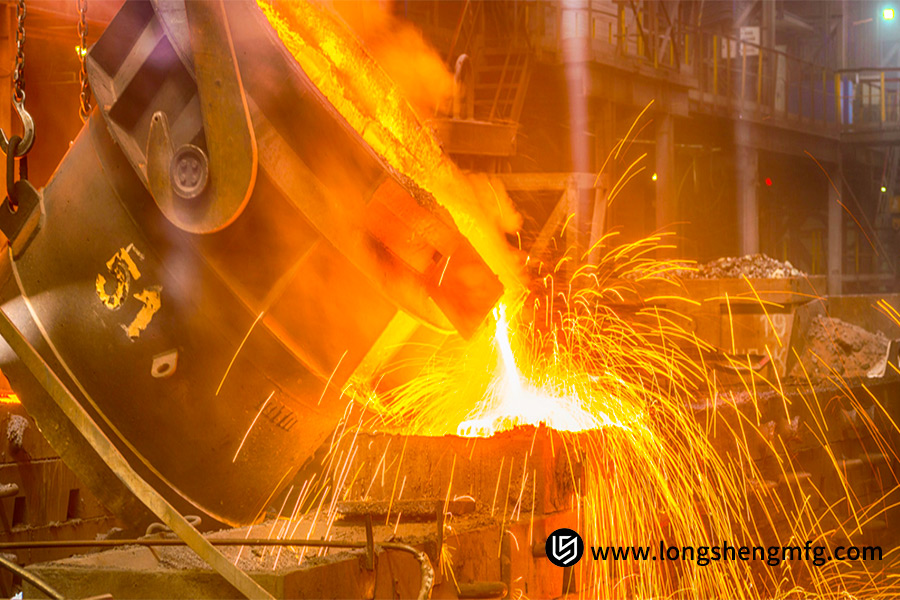
How do you define truly “high-quality” metal casting parts?
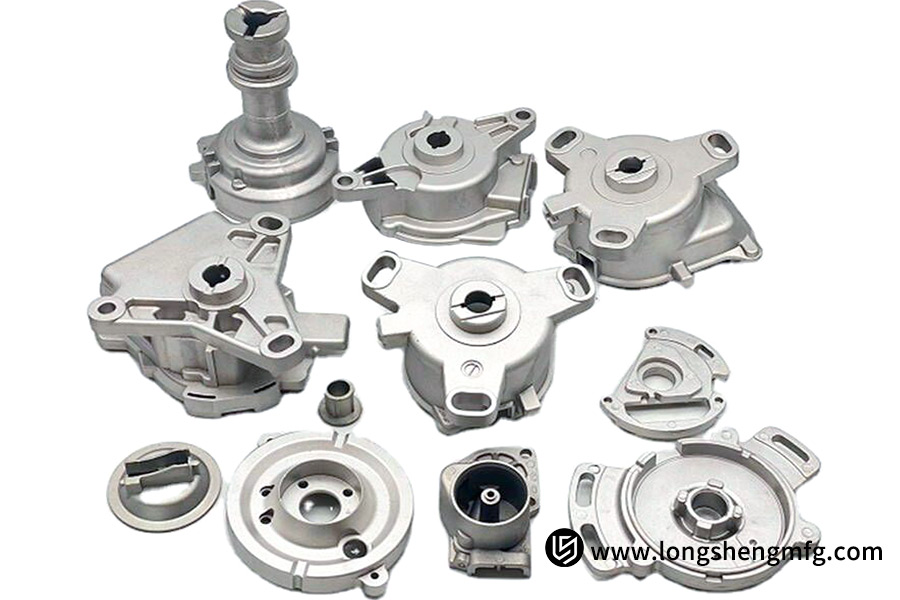
High-quality metal castings for critical parts demand a much larger set of things than being beautiful. It is a total system of internal performance and external precision, which has a direct influence on the final product’s reliability and life expectancy. True “high quality” is revealed in the following measurable and verifiable parameters:
- Stable and competent mechanical properties: This is the key principle. Metal casting processes of quality need to ensure castings possess the required principal mechanical properties, such as strength, hardness, and toughness. This can be achieved by close control over material composition and a stable heat treatment process.
- Accurate and consistent dimensional tolerances: The components would fit together with ease and perform the desired functions. That would require extremely high repeatability within the casting process so that each product within mass production fits within the tolerance range sketched.
- Dense and uniform internal structure: Imperfections like pores and shrinkage need to be eliminated in order to ensure safe operation of components under pressure or dynamic loading. This requires process design and optimization of process control.
We at LS Manufacturing deploy the latest spectral analysis to ensure material composition accuracy, coordinate measuring machines for full-dimensional inspection, and real-time X-ray imaging systems to entirely quantify and digitize such quality indicators.
Definition of high-quality metal casting parts must move from “compliance to specifications” to “data validation.” It is a result of advanced metal casting processes and high-quality control systems, and it serves as the basis of long-term product reliability and lowest cost of ownership.
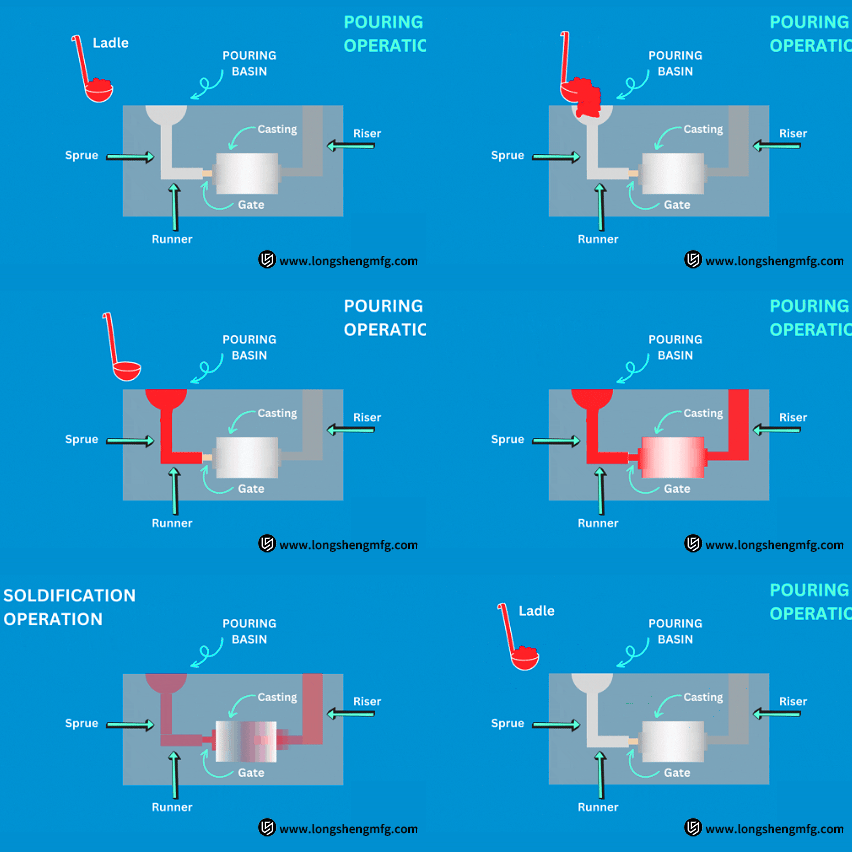
How do reliable foundries ensure delivery schedules through process optimization?
In single-shot metal casting orders, delivery delays usually are the result of in-house issues such as mold rework, process instability, or poor production scheduling. The merit of a solid metal foundry not only lies in the ability to manufacture but in process optimization on a consistent basis, leading to on-time delivery as an expected event. We ensure delivery reliability through the following critical initiatives:
1. Standardization of Molds and Processes:
In the first time a project is initiated, LS Manufacturing optimizes product designs through state-of-the-art DFM (Design for Manufacturing) analysis and applies well-tested standard process parameters. This reduces trial-and-error and setup during manufacturing, eradicating batch delay caused by process issues.
2. Digital Control of the Production Process:
LS Manufacturing employs an electronic production management system that provides visibility and transparency to all stages of the order process, ranging from mold preparation, molding, melting, cleaning, to quality inspection. Not only does it enable scheduling correctness but also real-time tracking of progress, with early warning and intervention before delays can occur.
3. Flexible Capacity Planning:
LS Manufacturing is sensitive to the unreliability of market demand. With scientific capacity analysis and reserved flexible capacity, we can adaptively adjust production plans in a flexible manner, respond quickly to customer urgent needs, and ensure on-time progress for key projects.
Rooted in the industry as a metal foundry, LS Manufacturing is committed to systematic process refinement to guarantee that every custom metal casting project arrives at customers with consistent output on schedule, effectively guaranteeing a stable and smooth supply chain.
How do different metal casting processes affect price, quality, and delivery?
Choosing the correct metal casting process is the initial decision in balancing cost, quality, and delivery. Different process routes differ significantly with regards to initial investment, rate of production, and part performance, finally determining the final metal casting cost and project feasibility. An overview comparison of three common processes follows:
| Process Type | Tool Cost | Cycle Time | Part Accuracy/Surface Quality | Typical Applicable Quantity |
| Sand Casting | Low | Shorter | Average precision, coarse surface | Small to large lots |
| Die Casting | High | Very rapid (once the mold is complete) | High precision, smooth finish | Large lots |
| Investment Casting | High | Longer | Extremely high precision, great surface | Small to mid-size lots |
1. Tool Cost Determines Initial Investment:
Investment casting and die casting have high tooling costs and are suitable for established, long-term, high-value or high-volume products; sand casting has low tooling costs and is economical for prototypes and small batches.
2. Process Characteristics Determine Quality and Accuracy:
Die casting and investment casting are better for near-net-net shape and high surface finish. But their tooling expense significantly affects the price of a single piece of metal casting in small lots. Sand casting is more versatile, but the cost of the follow-on machining may be extremely high.
3. Production Pace Affects Delivery Time:
Die casting yields extremely high production efficiency after completion of a mold, and hence it is best suited for priority, high-volume orders. Investment casting entails a long process and longer cycle time. Sand casting tends to be faster in mold creation and production setup.
LS Manufacturing’s worth lies in being your consultant. Depending on your part complexity, your annual demand, and quality requirements, we conduct a complete metal casting price and performance study, recommending the most cost-effective route of metal casting process, and placing your project in optimal balance between cost, quality, and schedule.

What strategies can be implemented during the design phase to optimize total cost?
In metal casting custom work, up to 80% of the total cost of the product is determined at the design phase. Optimizing design for manufacturing (DFM) before the approval of drawings is therefore the cheapest step to bring about reductions in metal casting costs. Clever design changes can significantly minimize costs and enhance quality from the outset.
- Appropriate draft angle: Proper and uniform draft angle allows for easy part removal from the mold, preventing defects such as sticking and strain, significantly reducing mold wear and waste, as well as ensuring smooth production.
- Uniform wall thickness design: Symmetrical wall thickness is important to quality castings. This effectively prevents internal defects such as shrinkage cavities, porosity, and strain caused by non-symmetrical cooling, directly improving product yield and performance consistency.
- Appropriate corner radius transitions: Replacement of sharp corners by proper rounded radius not only decreases stress concentration significantly and improves part structural strength, but also provides improved molten metal flow within the mold, thereby reducing possibilities of casting defect.
These seemingly small design enhancements can collectively yield big dividends: they all decrease mold complexity and cost of manufacture, while improving production efficiency and product yield.
At LS Manufacturing, we proactively provide thorough Design for Everything (DFM) analysis reports at the start of each custom metal casting project, helping you streamline your design right from the beginning and achieve the optimum balance between part performance and cost of metal casting.
Do “online quotes” truly accurately reflect the final cost of metal casting?
Most internet metal casting businesses nowadays have simple instant quote functionalities that enable early project budget analysis. Remember, however, that these computerized estimates typically are based on simplified parameters and are not typically a true reflection of the ultimate price of your metal casting project.
1. Difficulty assessing design complexity:
Computer systems struggle to recognize intelligently design complexities in your drawings that can lead to mold complexity and increased scrap rates, such as unrealistically thin-walled components, sharp internal angles, or complex shapes.
2. Inability to account for special requirements:
Requirements for specialty certifications in material grades, penetrant testing in high-risk locations, or additional post-processing such as heat treatment may have significant cost impacts but are typically variables not found in common online standard forms.
3. Lack of customizable process routes:
The cheapest process solution is highly reliant upon your batch size, accuracy, and performance requirements. Computer software can’t recommend the most favorable combination of metal casting services, such as setting a variety of processes against one another to balance mold cost and per unit value.
For LS Manufacturing, price accuracy on metal casting comes from a deep understanding of the project. After we get your accurate drawings, we promise that we will perform a professional analysis by our experienced engineers and provide you with a clear, accurate, and actionable optimization suggestion, so that you can get the most for your money.
Quotes of metal casting conducted online are fitting for initial screening, but they are in no way definitive of final costs.
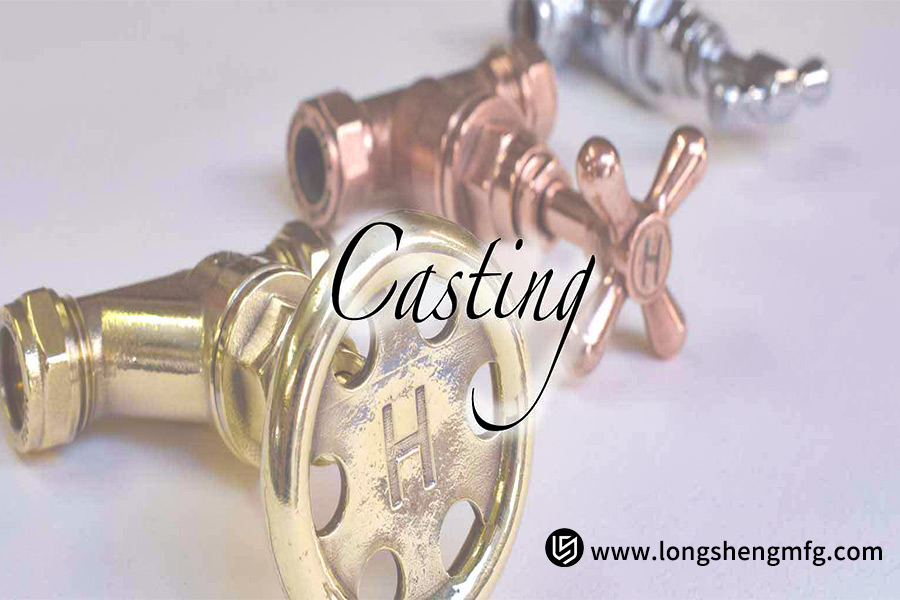
How does LS Manufacturing help medical device clients overcome the “quality-cost” dilemma?
To device manufacturers, quality in their base metal casting components is crucial to patient safety and regulatory approval, but unnecessary costs add a tremendous burden to companies, especially startups. Our consulting experience has involved a medical device startup company that was facing the following dilemma:
1. Client’s Dilemma:
A medical company, with the necessity of stringent demands of biocompatibility, mirror-finish quality, and micron-level tolerances for an implantable stainless steel casing, received quotes way over budget or vendors simply said they were unable to guarantee medical-grade quality stability.
2. LS Manufacturing’s Customized Solution:
Faced with the above dilemma, our team of custom metal casting experts did more than provide a quote and undertook an intense collaborative process with the client:
- Through multiple rounds of meticulous DFM (Design for Manufacturing) examination, we optimized the venting and gating system design to improve quality consistency at the source.
- By leveraging our deep experience with medical materials, we recommended a medical-grade stainless steel of comparable performance but lower procurement cost.
- We selected precision investment casting technology in the metal casting process with added polishing and electrolytic passivation after-treatments specifically for medical needs. This ensured the part met all performance requirements in addition to having very good corrosion resistance and biocompatibility.
3. Results and Value:
Through this series of correct optimizations, not only were we able to reduce the final cost of this top-of-the-line medical metal casting part by 20% and achieve stable mass production but also get all the products through rigorous medical regulatory certifications the first time around. This enabled the customer to reinvest valuable budget back into necessary R&D, significantly reducing time to market and solving the industry enigma of balancing cost with quality successfully.
Is choosing a “nearby metal foundry” still important today?
When a partner is being selected, prioritizing a “nearby metal foundry” does make sense, with reduced transportation distances and the potential for personal communication. But in today’s globalized digital world, merely having location as a criterion for screening might not be the best approach. A good metal foundry‘s overall capability is much more critical than the metal foundry’s geographical location.
1. Pros and Cons of Proximity:
Local vendors certainly enjoy some advantage as far as sample delivery is concerned as well as meeting at short notices. But if their technical capabilities, quality practices, or production capacity do not live up to your top-level priorities, this local proximity can lead to ineffective working due to incessant project alteration, delay in delivery, and quality issues.
2. The Modern Value of High-Quality Remote Suppliers:
A remote metal foundry with strong digital coordination capacity and logistics management is able to work beyond geographical limits. Through video conferencing, real-time project management systems, and shared digital inspection reports, communication can be as simple and open as talking with a neighborhood neighbor. Moreover, sophisticated logistics solutions assure reasonable transport costs and timelines. The technical expertise, quality uniformity, and affordability they offer typically surpass those of an average nearby supplier.
Therefore, location may become an advantage but not a determining aspect. As your strategic business partner, LS Manufacturing may be far removed from some of our customers, but in a sophisticated digital collaboration process, we have maintained efficiency and transparency in the entire process, be it technical review or monitoring production. This provides you with convenience and reliability that you deserve while choosing a metal foundry in this new age.
What key questions should you ask when approaching a foundry to assess its capabilities?
When screening partners, straight questioning of potential metal foundries is the ideal way of gauging their competency and willingness. Having a list of well-formulated questions can allow you to quickly separate the best and worst. The following are critical key questions:
1. Regarding Technology and Collaboration:
“Could you demonstrate some particular DFM (Design for Manufacturing) analysis capabilities and optimization recommendations for our pieces?” This inquiry effectively establishes the engineering staff’s technical proficiency and capability to collaborate with you so your metal casting operation will be optimized right from the outset.
2. Regarding Quality and Standards:
“How do you ensure trustworthy sources of materials and provide complete certification reports including mechanical properties and non-destructive testing (such as X-rays)?” This assures traceability and integrity of their quality assurance system, the cornerstones of quality metal casting parts.
3. Regarding Project Management and Delivery:
“Is your production planning system computerized? How do I see real-time order status and get advance warning of any delays?” It assesses the ability of the supplier’s internal management and customer service awareness so that the collaboration process is understandable and tractable.
LS Manufacturing does not mind such questions and remains open to such questions since day-to-day operations and managerial styles better answer such queries. We look forward to demonstrating an actual reliable partner with open communication.
FAQs
1. How can I quickly obtain an accurate quote for metal casting parts?
Include detailed drawings (STEP format is ideal) with material details, yearly demand, critical tolerances, and quality requirements. LS Manufacturing’s online RFQ system will automatically offer an initial estimate in real-time. Moreover, our technical team will offer you an exact, final quote and actionable optimization suggestions within 24 hours based on a proper assessment of the metal casting process complexity and post-processing requirements, along with cost transparency and a guaranteed solution.
2. Do small-volume custom orders receive the same quality attention as large orders?
Absolutely. LS Manufacturing adheres to the “quality without discrimination” policy and adheres to the same strict system of quality control on all orders. Regardless of large or small batch size, each individual custom metal casting piece is subjected to stringent material inspection, process control, and final testing. We feel that only by providing every order with the same level of care can we earn our customers’ trust in the long term.
3. How do you ensure consistent quality throughout mass production?
Consistency is ensured by LS Manufacturing through rigorous quality control throughout the entire process. We identify points of quality control in key processes such as melting, molding, and heat treatment, and apply SPC statistical process control (SPC) methods to monitor process parameters in real-time. This system ensures highly consistent dimensional accuracy, mechanical properties, and internal quality of all metal casting components, ranging from piece number one through piece number ten thousand.
4. If my design requires optimization, can you provide support?
Of course. Professional Design for Manufacturability (DFM) analysis as part of our standard service is included. LS Manufacturing engineers will inspect such aspects as uniform wall thickness, draft angles, and corner radius from the perspective of metal casting process, with recommendations for optimization to facilitate improved product functionality, reduce manufacturing cost, and speed up the production cycle.

Conclusion
In metal casting procurement decisions, the “price, quality, and delivery triangle” is not an unsolvable dilemma. The actual solution is to consider more than low-cost comparisons and choose a strategic partner with deep process experience, a rigorous quality assurance process, and a committed focus on customer success.
LS Manufacturing, with its huge infusion of experience and technology, intends to be the most value-added and reliable connection in your supply chain. We do not just provide quality castings but also complete solutions from start to finish that ensure product competitiveness and project success.
You are no longer required to compromise or make concessions between important factors. Contact LS Manufacturing now and upload your part drawings and requirements to our expert team to receive a free, customized “Comprehensive Solution.” Let us demonstrate with technical action and concrete information that obtaining the perfect mix of price, quality, and delivery time in metal casting deals is achievable and within reach!
📞Phone:+86 185 6675 9667
📧Email:info@longshengmfg.com
🌐Website:https://www.longshengmfg.com/
Disclaimer
The content appearing on this webpage is for informational purposes only. LS Manufacturing makes no representation or warranty of any kind, be it expressed or implied, as to the accuracy, completeness, or validity of the information. Any performance parameters, geometric tolerances, specific design features, quality and types of materials, or processes should not be inferred to represent what will be delivered by third-party suppliers or manufacturers through LS Manufacturing’s network. Buyers seeking quotes for parts are responsible for defining the specific requirements for those parts. Please contact to our for more information.
LS Manufacturing Team
This article was written by various LS Manufacturing contributors. LS Manufacturing is a leading resource on manufacturing with CNC machining, sheet metal fabrication, 3D printing, injection molding,metal stamping and more.



This content 💎 deserves all the recognition and appreciation it can possibly get today