Metal rapid prototyping redefines manufacturing with geometric freedom, overcoming the traditional design-time-cost trilemma. Without toolpath and mold constraints, designers can devise hitherto unthought-of topologies such as lattice structures and integrated channels, redefining the limits both in design possibilities and product performance.
With this capability, LS Manufacturing‘s integrated solution of “design-iteration-production” can shrink development cycles from months to days. It can realize fast iteration, functional verification, and agile innovation in small batches without costly mold investment. The paradigm shift transforms manufacturing constraints from a design limitation to a final consideration.
We will look at how this manufacturing freedom can empower your next breakthrough product. To save you time, here’s a quick overview of the core conclusions.
Metal Rapid Prototyping Quick Reference Table
| Module | Core Content |
| Technical Principles | Manufacturing of components without molds, relying on the digital model for the production, by selectively melting metal powders layer by layer, for example, SLM. |
| Design Freedom | Fully breaks geometric constraints, therefore opening up new, ground-breaking design avenues such as internal topological lattices and complex integrated structures. |
| Time Efficiency | It compresses traditional development cycles of several months into just a few days, which can then enable fast verification of prototypes, low volume production, and accelerate the time to market. |
| Economy | Saves high mold costs, greatly reducing the manufacturing cost of small batches and complicated parts, agile trial and error possible. |
| Product Performance | The formed parts have high density, and the main mechanical properties, such as strength and fatigue life, can reach a level comparable to forging. |
| Applicable Scenarios | The technology is especially fit for many complex and customized needs in manufacturing lightweight aerospace components, medical implants, and innovative automotive functional parts. |
| Selection of Technology | The appropriate metal prototyping methods have has to be identified based on part complexity, batch size, budget, and performance needs. |
Metal rapid prototyping allows one not only to manufacture designs that previously could not be realized but also significantly shortens the R&D cycle and lowers the threshold for innovation in enterprises, enabling strong agile innovation capabilities and market competitiveness; it is becoming a key driver of breakthrough product innovation.
Why Trust This Guide? Practical Experience from LS Manufacturing Experts
In this information-saturated era, information abounds regarding metal rapid prototyping; what sets this guide apart is that the content doesn’t appear as theoretical deductions but emanates from long-term, practical experience of our LS Manufacturing team on the front line on the shop floor.
In recent years, the technology of metal rapid prototyping has enabled the team to successfully deliver tens of thousands of complicated parts with different functions. Each iteration deepens the understanding: how to set optimal laser melting parameters for metal powders with different properties, how to effectively control internal stress and deformation while ensuring density, and how to find the best balance among precision, efficiency, and cost based on the requirements of the end-users.
Every insight shared in this guide is the condensation of a myriad of successful printings and early trial-and-error experiences. The pitfalls we stumble upon are meant to pave the way for you. There are no empty theories, but practically validated solutions.
Overcoming Geometric Constraints: How Does Metal Rapid Prototyping Achieve “Manufacturing as Design”?
What is Metal Rapid Prototyping? It enables single-piece printing of complex assemblies, demonstrating core benefits of metal rapid prototyping through error reduction and enhanced structural integrity. It truly achieves “manufacturing serving design,” its core being the unprecedented design freedom it grants to products. The following case studies illustrate this transformation:
1. Integrated Functionality:
While the advantages in layer-by-layer manufacturing can allow a complex component that has been assembled from dozens of parts originally to be printed directly into one single integral structure in just one step, this will not only eliminate the assembly errors, but also enhance rigidity and reliability for a product as a whole. For this reason, it will basically simplify its supply chain and reduce management costs.
2. Performance-Driven Lightweighting:
Biomimetic structures, like lattice and mesh frames, are generated automatically by using generative design based on topological optimization algorithms in regard to strength requirements for light weight. It is just such performance-driven shaping that can cut weight by up to 60% without losses of key mechanical properties, which is very important for aerospace and high-end equipment fields.
3. Function-Embedded Design:
The technology can build conformal cooling channels, directly fitting the product shape, whether in parts or integrating a complex internal channel into the structure. Examples include embedding conformal water channels in injection molds to improve cooling efficiency by up to 35%, while optimization of flow channels in valve bodies contributes to a 50% reduction in pressure loss, meeting the ultimate ideal in design: “function determines form.”
Rapid pratotyping technology transfers “manufacturing constraints” from the front to the end of design activities. History may witness this as the first time that designers can be freed from traditional process constraints and purely design from the functional, performance, and lightweight requirements of the product, and truly enter a realm of free innovation: “what you think, you can build”.

2025 Technology Frontier: Breakthrough Application Scenarios of Mainstream Metal Rapid Prototyping Technologies
Currently, the metal 3D printing technology has moved into the manufacturing of an end product from prototype manufacturing. Each different technological route has its advantages and accurately expands the boundary for each respective application. The breakthrough development in three mainstream processes is listed below for the year 2025:
| Technology Type | Breakthrough Advantages | Frontier Application Scenarios |
| SLM | Achieving ultra-high precision at the micron level, which is comparable to forging | It produces complex fuel nozzles for aerospace engines and personalized medical implants with a bone-integrated microporous structure. |
| Binder Jetting | Realizes orders-of-magnitude efficiency gains while greatly reducing unit costs. | It’s able to manufacture small batches of highly complex gears, bespoke shells for luxury goods, and other end parts at unprecedented speeds that break traditional small-batch manufacturing models. |
| DED | It was excellent in the manufacturing of ultra-large components; moreover, it did the repair of service-damaged parts efficiently. | Some of the major mould repairs are: surface strengthening repair of big moulds that cost several million; directly manufacturing several meters-sized titanium alloy aircraft load-bearing frames. |
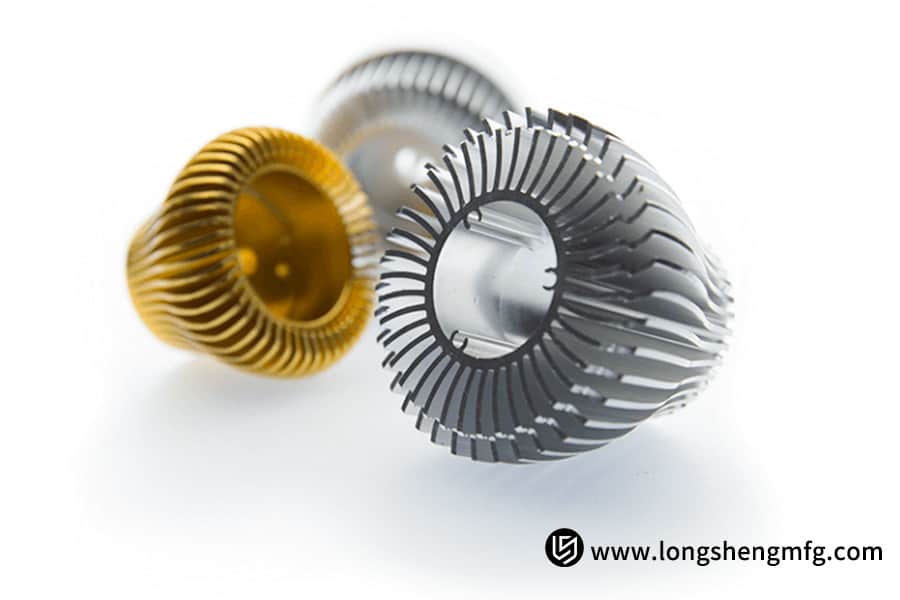
SLM stands for cutting-edge manufacturing with the highest precision and performance, binder jetting reshapes the logic of small-batch production with unprecedented speed and cost advantages, while DED solves problems in large-scale equipment manufacturing and remanufacturing.
From Technological Advantages to Commercial Value: How does Design Freedom directly improve your ROI?
Translated via a clear business rationale, the major benefits of metal rapid prototyping are measureable returns on investment in the following key dimensions:
1. Cost Optimization:
RM enables the integration of complex components, originally composed of dozens of parts, into one printing to create a single integral structure. This directly brings about a “subtraction” effect: greatly reducing assembly processes, labor time, and the quantity of bolts, welds and other connectors. The deeper value lies in the “addition”: greatly reducing the complexity of the supply chain and the quality risk brought about by managing multiple suppliers, optimizing the overall manufacturing cost at the system level.
2. Performance Premium:
Generative design can realize bionic topological structures, with weight reduction as much as 60% without losing strength, thus saving these valuable metal raw materials directly. More importantly, lightweight brings the most important performance improvement; for example, improved fuel economy in aerospace or faster mechanical responses in high-end equipment. This performance advantage constitutes a strong market differentiation advantage of the product and hence brings a brand premium.
3. Risk Control:
Consequently, rapid tooling iteration becomes possible without molds, enabling the designer to validate and optimize a design solution completely in advance of mass production. An “agile development” model like this may expose and correct potential design flaws well in advance, fundamentally avoiding huge losses from later design changes or product recalls, while keeping the cost of innovation trial and error at a minimum.
Metal rapid prototyping consequently directly reduces explicit spending due to cost optimization, creates new points of revenue growth courtesy of performance premiums, and secures investment thanks to risk control. It is in this interaction among the three factors that the most important financial indicator for a company improves: Return on Investment, or briefly ROI.
Speed is Everything: How to Compress the Concept-to-Market Cycle from Months to Weeks?
Speed in product development is a prerequisite to competitiveness within the framework of today’s fast-changing market. Speaking generally, traditional metal prototype depends on molds, has complex programming, and has long cycles that are highly risky. Agile manufacturing using 3D printing has restructured the procedure and enabled a qualitative leap in efficiency:
| Phase | Traditional Path (6-9 Weeks) | Agile Path (2-3 Weeks) | Agile Advantage |
| 1. Design & Planning | Linear, detailed final design. No room for change. (1 week) | Optimized for speed; core functions are prioritized. (3 days) | Faster start.Focus on “good enough” to learn quickly. |
| 2. Prototype Creation | Slow, high-investment tooling/molding.(2-4 weeks) | Rapid prototyping methods like 3D printing (encompassing key metal prototype making methods). (2-5 days) | Massive time savings.Allows for physical validation without costly molds. |
| 3. Validation | Trial production run reveals major flaws. (1-2 weeks) | Immediate, real-world testing with prototypes. Feedback is gathered in days. (3 days) | Front-loaded risk.Fail fast, learn fast. Changes are cheap. |
| 4. Final Preparation | Costly and time-consuming adjustments to tools/molds. (2 weeks) | Quick ramp-up using digital files for small-batch production. (5-7 days) | Faster to market.Final product is refined based on real feedback. |
The value of the new metal prototyping methods lies in changing the risk management model in the process by compressing the cycle by over 70%. The largest risks in the traditional path are in later stages when huge investments are made, whereas in the agile path those are mitigated in the early stages with minimal investment through rapid iteration.
Innovation Catalysts: What kind of disruptive products can only be born from metal rapid prototyping?
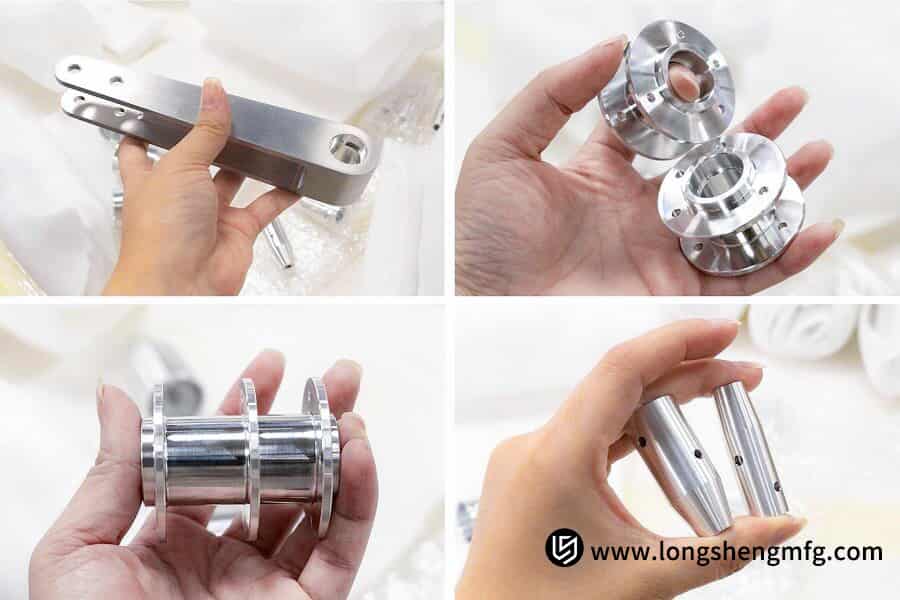
Metal rapid prototyping broke through traditional manufacturing barriers and brought a series of disruptive products that just became “inevitable.” Applications of rapid metal prototyping are included in the following three typical areas:
-
- Advances in the Medical Field: With precise computed tomography data of patients, personalized orthopedic implant printing can make implants that completely match the defect site. The porous surface structure of them has been proved effective in promoting bone cell ingrowth and thus realizing biomechanical integration, hence effectively raising the quality and speed of healing.
-
- Aerospace Innovation: These integrated fuel nozzles consolidate dozens of parts into one piece, with an internally complicated conformal cooling channel system, enabling super-efficient fuel injection and cooling at the most extreme operational conditions-upping engine performance, fuel efficiency, and lifespan by leaps and bounds.
-
- Transformation of Industrial Equipment: Ultra-high efficiency fractal flow channel heat exchanger embodies biomimetic fractal flow channel design, optimizes the shape and layout of the flow channel to minimize the thermal resistance of heat transfer between flows.
Rapid metal prototyping will be able to fabricate theoretically ideal structures and let the function of a product drive its design instead of letting manufacturing capabilities constrain it. This way, it actually enables disruptive next-generation products.

How does LS Manufacturing contribute to fuel cell breakthroughs for the new generation of energy companies?
The speed of technological innovation has become a direct determinant of the market position in the new energy industry. Based on the core capabilities of LS Manufacturing metal prototyping, we solve the manufacturing problem of the key component “bipolar plate” for an innovative fuel cell company. The following is a detailed analysis of the case:
1. Customer Issues:
Technical barriers of traditional process: The company requires bipolar plates with micron three-dimensional flow channels for its new generation fuel cells so as to optimize gas distribution and drainage efficiency. However, such internal complex structures are not achievable by the traditional CNC machining method. Moreover, the mold opening cost is over 2 million yuan, and once determined, it cannot be optimized. Thus, that affects the product iteration badly, and the improvement of performance cannot be achieved either.
2. LS Manufacturing Solution:
Faced with these challenges, our team’s adopted methods include the following:
-
- On the design side: the use of DFAM principles for topological optimization of the flow channel has greatly improved uniformity in the distribution of reactant gases.
-
- On the manufacturing side: we used metal binder spraying technology to fabricate a functional prototype whose accuracy in the flow channel reached ±0.1mm within 7 days.
-
- On the production side: combined with rapid soft mold technology, it efficiently supported the customer’s initial small-batch trial production needs of 500 sets, perfectly connecting the prototype process to initial mass production.
3. Results and Value:
The benefits of this collaboration are as follows: battery output power density at the product level increased by 35%, reaching a leap in performance. At the development level, the overall cost was reduced by 60%, therefore hugely economizing on R&D investment. With a high-performance functional prototype, the customer got 100 million in Series B funding smoothly and laid a solid foundation for large-scale mass production.
In other words, this case study represents in full detail the overall value of the LS Manufacturing metal prototyping capability in its entirety. We enable companies to quickly turn advanced designs into high-performance, investment-attractive product prototypes and therefore break through technological bottlenecks, grasp market opportunities, and finally realize commercial success from technological advantages.
From “Printed Parts” to “Forging-Grade”: How Does Post-processing Define the Ultimate Performance Ceiling?
Printing is just the first step in the process for metal additive manufacturing. Demanding aluminum prototyping will rely heavily on sophisticated post-processing, since parts will have to progress from “usable” to “superior” and even “forging-grade” performance, which determines directly the ultimate performance ceiling of the product:
1. Performance Assurance:
Inside, HIPed metal 3D printed parts can have micropores that can create fatigue failure. Internal defects at high temperature and pressure are removed with our HIP post-processing, and the density of a part can reach over 99.9% to improve the key mechanical properties of fatigue strength and lifespan to the same level as traditional forgings.
2. Precision and Surface Finish:
Our composite finishing strategy integrates 5-axis CNC machining, which offers high accuracy in the finishing of essential reference surfaces and holes, with dimensional tolerances according to assembly and functionality requirements. Meanwhile, surface treatments include sand blasting, grinding, and electropolish to offer optimized surface roughness to Ra < 0.8μm, meeting diversified requirements from appearance to fluid performance.
3. Quality Certification:
Our traceability system records all the data from the very start down to the end, right from printing parameters to post-processing, so that the history behind the making of every product can be traced. In addition, we provide mechanical performance test reports issued by authoritative third-party institutions. This comprehensive quality assurance system strongly supports the demands of strict certification within industries like medical and aerospace.
This rigorous chain guarantees that any aluminum prototypingis of shape conformance to the design, while also outperforming or at least meeting traditional manufacturing standards on internal quality, dimensional accuracy, and surface integrity with document traceability.
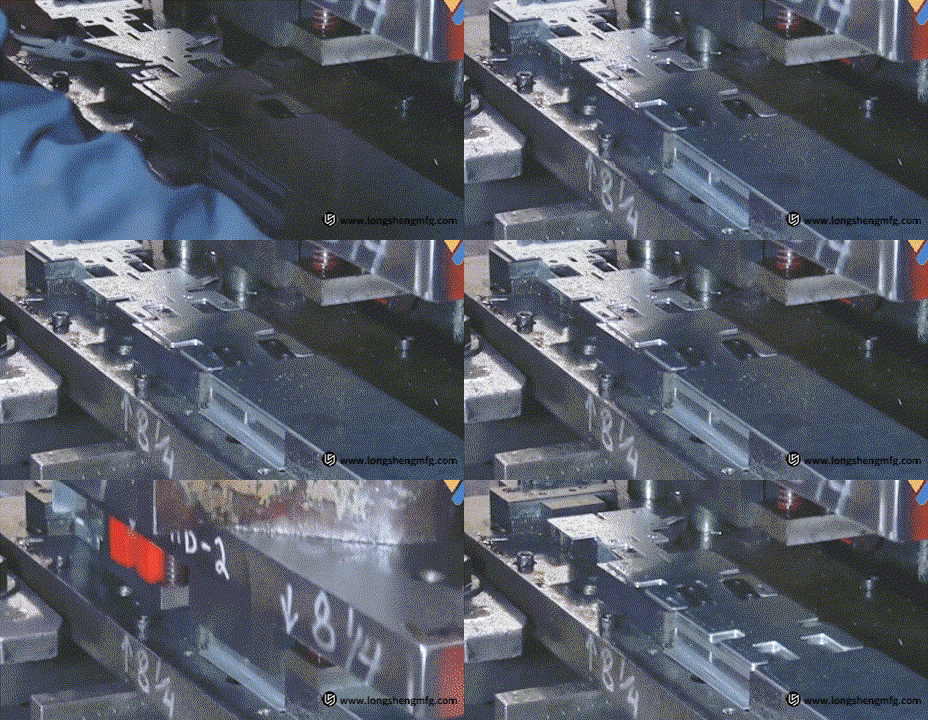
Figure 3: Technicians at LS Manufacturing are performing sheet metal prototyping.
A New Cost
Perspective: How to Scientifically Evaluate the True Return on Investment in Metal Rapid Prototyping?
Well, when comparing manufacturing solutions-especially those involving rapid tooling comparison is very one-sided. Its actual cost-effectiveness must indeed be framed in a more holistic model. We recommend a scientific evaluation from the perspective of total cost throughout the product lifecycle. It involves three dimensions:
1. Time Cost:
Traditional mold-making cycles are several weeks to months. With rapid metal prototyping, development time is decreased by over 70%. Assessments need to be made to determine what the loss of sales and erosion of profit is due to a one-week delay in the launch of a product. For products in which the market window is short, this cost often exceeds that of the mold itself.
2. Opportunity cost:
Traditional processes have constantly forced engineers to make compromises on performance since design is limited. It needs to consider the loss in market share that accrues from reduced energy efficiency, insufficient reliability, or a poor user experience brought about by inability to achieve optimum lightweighting or functional integration. This is a hidden cost that normally is not considered.
3. Innovation Value:
Rapid metal prototyping can create complex structures that competitors are unable to imitate; hence, build technological barriers. The following assessment should be made: how much excess profit can be generated by establishing a market-leading position, a high-end brand image, and the resulting pricing power through unique products?
The real cost effective gains from the processes of metal rapid prototyping and rapid tooling lie in the optimization of the “total cost of ownership.” In this process, complex parts and small-batch, high-added-value products increase upfront manufacturing cost but usually come with returns in excess through huge reductions in time and opportunity costs, creation of considerable innovative value.

Pitfalls to Avoid: The “5C” Golden Rule for Selecting a Metal Rapid Prototyping Partner
Once the decision to use LS Manufacturing metal prototyping has been made, the choice of partner will directly determine whether or not the project is successful. To avoid risks which might arise, we strongly suggest that a professional evaluation be conducted in line with the following “5C” golden rule.
-
- Technical Capabilities: A good partner will have multiple technology platforms-including SLM and binder spray-and be capable of objectively recommending the most cost-effective process for your product needs, not limiting their recommendation to only one technology.
-
- Collaborative Spirit: It should be willing to deeply understand your application scenario, proactively offer free DFAM (Design for Additive Manufacturing) optimization suggestions, and demonstrate a collaborative attitude in terms of problem-solving rather than being an order-taker.
-
- Quality Control: It will be important to check if, for example, their post-processing chain is complete: hot isostatic pressing and CNC machining; if they have coordinate measuring machines, microscopes, and other inspection equipment, and a complete quality traceability system that ensures constancy of performance.
-
- Cost Transparency: Quotes should have clear breakouts. Vendors should be in a position and willing to help you evaluate the overall lifecycle cost-effectiveness, not just provide some vague bottom-line price.
-
- Innovation Culture: A perfect partner focuses on long-term success by sharing views in the industry, takes part in forward-looking discussions, and later acts as a strategic partner driving your product innovation rather than an order processor.
In all, the “5C” principle in choosing an LS manufacturing metal prototyping partner will enable you to look beyond simple price comparisons. You can choose a partner who will provide you not only with qualified parts but who also becomes a reliable ally extending your innovation system along five dimensions: breadth of technology, depth of service, quality assurance, cost transparency, and level of collaboration.

FAQs
1. What are the mechanical properties of the metal parts fabricated by rapid prototyping?
The density for the prototyping parts can be made to over 99.9% through professional hot isostatic pressing and custom heat treatment processes. Key mechanical properties, including tensile strength, yield strength, and fatigue life, meet forging standards. Each batch will be delivered with a full material test report to ensure traceable performance verification.
2. What is the minimum feature size that can be attained?
Features can be as small as 0.1-0.3 mm for thin walls, micropores, or complex lattice structures with sufficient resolution to realize the design requirements of high-value parts such as medical implants and precision nozzles by processes like SLM or metal binder spraying.
3. Which of the following methods is less expensive than the conventional CNC machining method?
When internal flow channels, integrated structures, or small batches are needed for production, normally less than 50 pieces, the total cost of metal rapid prototyping is always much lower compared to CNC machining due to no expensive molds and very high material utilization. It is especially suitable for innovation and iteration stages.
4. What is the largest part you can print?
At present, the maximum size of large-scale equipment that can be formed reaches 500×500×500 mm. Parts that exceed this limit in some directions can take up a segmented printing strategy. High-positioning precision and vacuum diffusion welding techniques can achieve seamless assembly with an overall structural integrity maintained.
5. What surface roughness is it possible to achieve?
The surface roughness of the parts in a directly printed state is about Ra 6~12 microns. The surface could be improved to be mirror-like with Ra below 0.8 micron, depending on application requirements. Post-processing may include CNC polishing, sandblasting, or electrolytic polishing.
6. From designing, how long will it take until I get a sample?
Our regular delivery cycle usually takes 3-5 days for simple structural parts, while for the complex ones, it usually takes 5-10 business days. Meanwhile, there is an expedited channel for urgent projects: the functional prototype can be delivered along with the first samples within 48 hours.
7. Do you provide design optimisation support?
We offer professional and free DFAM support, such as lightweight topology optimization, minimization of supporting structures, residual stress control, and more, so as to comprehensively help customers make full use of the technological advantages in reducing manufacturing costs starting from design.
8. How do I start my first metal rapid prototyping project?
Please provide your 3D model in STEP/STL format, along with your technical requirements. Your senior project engineer will get back to you within 4 business hours with a detailed quote and a tailored “Design and Process Optimization Proposal” that maximizes the value of your project.

Conclusion
From a theoretical prototyping technology, it has grown into a mature mass-production solution that can drive product innovation and build core competitiveness. With state-of-the-art technology and deep engineering acumen, LS Manufacturing is committed to being your partner in accelerating your innovations.
Beyond the limitation of traditional manufacturing, Contact us and our technical expert will arrange an in-depth design feasibility analysis and sample production evaluation for free. Let’s cooperate and bring life to your innovative ideas.

 Phone:+86 185 6675 9667
 Email:info@longshengmfg.com
 Website:https://www.longshengmfg.com/
Disclaimer
The content appearing on this webpage is for informational purposes only. LS Manufacturing makes no representation or warranty of any kind, be it expressed or implied, as to the accuracy, completeness, or validity of the information. Any performance parameters, geometric tolerances, specific design features, quality and types of materials, or processes should not be inferred to represent what will be delivered by third-party suppliers or manufacturers through LS Manufacturing’s network. Buyers seeking quotes for parts are responsible for defining the specific requirements for those parts. Please contact to our for more information.
LS Manufacturing Team
This article was written by various LS Manufacturing contributors. LS Manufacturing is a leading resource on manufacturing with CNC machining, sheet metal fabrication, 3D printing, injection molding,metal stamping and more.



