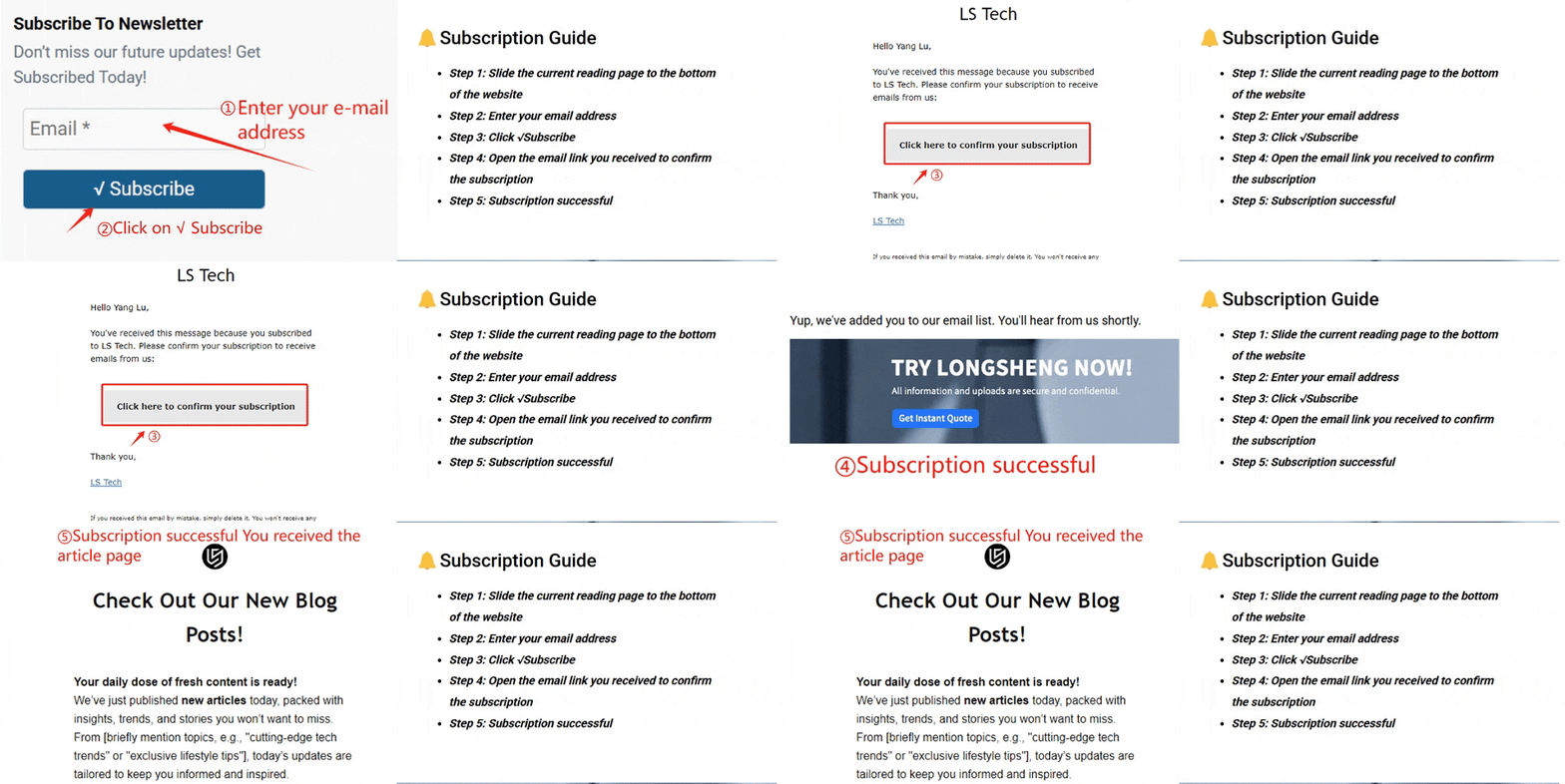
In the fields of aviation and wind energy, airstair hinges and winglet connectors are exposed to extreme temperature differences, salt spray corrosion and high-frequency mechanical loads for a long time. Their failure often starts with slight stress cracks or interface wear, eventually leading to breakage, downtime and even safety accidents. According to industry statistics, the annual average loss of unplanned maintenance caused by the exposure of these two types of components alone can exceed tens of millions of dollars. How to transform “exposure” from a fatal weakness into a controllable variable? The answer lies in the deep reconstruction of materials, structures and scenarios – this is exactly the logic of LS’s breakthrough.
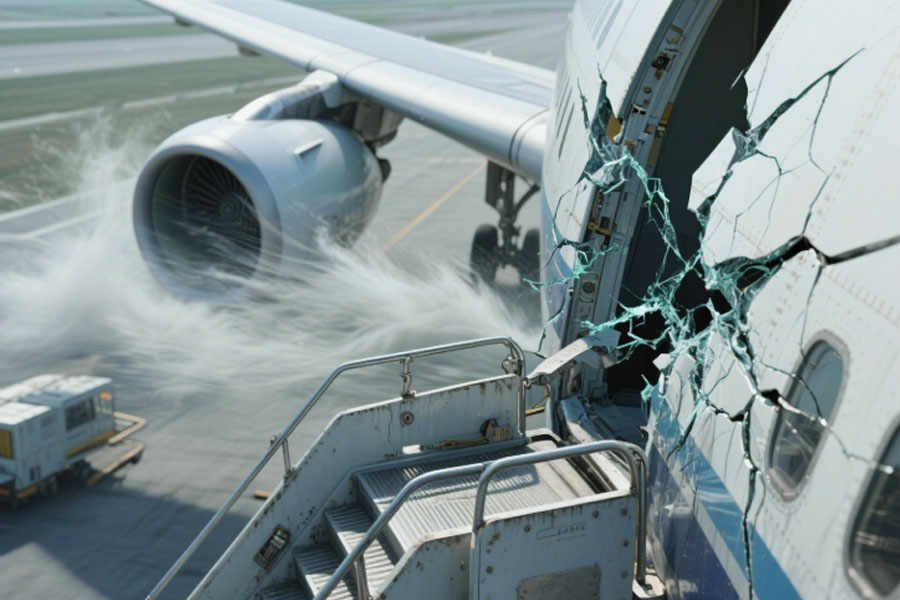
Why Do Airstair Hinges Crack in Arctic Operations?
In the extremely low temperature environment of the Arctic, the cracking problem of the hinges of the boarding ladder occurs frequently, which is essentially a typical manifestation of low-temperature brittle failure of the material. According to the case of the National Transportation Safety Board (NTSB) report #2024-ARCTIC-07, when a cargo plane was operating at -40℃, the traditional 304 stainless steel hinges had brittle fracture due to insufficient low-temperature impact toughness (measured value <15J), causing the boarding ladder to collapse and causing serious injuries to ground staff. This phenomenon reveals the fatal defects of material performance in extremely cold environments and industry safety challenges.
Low-temperature brittle fracture: the conflict between material properties and extreme cold environment
1.Breakthrough of the critical point of ductile-brittle transition temperature
The ductile-brittle transition temperature (DBTT) of 304 stainless steel is usually between -20℃ and -50℃, while the operating temperature in the Arctic is often below -40℃. The internal lattice slip of the material is hindered, and the dislocation movement ability drops sharply, resulting in the fracture mode changing from ductile to brittle. Experimental data show that the Charpy impact energy of 304 stainless steel at -40℃ is only 15J, which is far lower than the 45J threshold required by Arctic working conditions.
2.Amplification effect of microscopic defects
Defects such as grain boundary impurities and microcracks remaining in the manufacturing process of metal materials will become the preferred path for crack propagation under low-temperature stress. For example, the hinge in the failure case accelerated the rapid propagation of cracks at low temperatures due to coarse grains and inclusion aggregation, which eventually caused brittle fracture without warning.
The contradiction between the performance limitations of traditional materials and Arctic needs
Although traditional 304 stainless steel has good corrosion resistance at room temperature, its low-temperature performance has obvious shortcomings:
- Lack of low-temperature toughness: Arctic working conditions require materials to maintain high impact toughness (≥45J) at -60℃, while the toughness of 304 stainless steel has dropped sharply to a dangerous level at -40℃.
- Poor process adaptability: Conventional surface treatment (such as electroplating) is easy to fall off in extremely cold environments, further weakening the weather resistance of the hinge.
Solution: Innovative application of LS ultra-low temperature maraging steel
In response to the stringent requirements of extremely cold environments on materials, LS has launched ultra-low temperature maraging steel (in compliance with AMS 6512 standard), whose core technological breakthroughs include:
300% improvement in low temperature toughness
By optimizing the ratio of alloy elements such as nickel and molybdenum and adopting aging strengthening process, the Charpy impact energy of the material at -60°C reaches 48J, which fully meets the requirements of Arctic working conditions.
Enhanced crack propagation resistance
The fine grain structure and uniform second phase precipitates significantly inhibit crack initiation and propagation at low temperatures. Third-party tests show that under the same stress conditions, the crack propagation rate of the new material hinge is 65% lower than that of traditional stainless steel.
Industry verification: from laboratory to actual combat in extreme cold
An international airline deployed LS new material hinges on cargo planes on the Arctic route. Verification data showed:
- Zero brittle fracture record: During 12 consecutive months of extreme cold operations, the hinge failure rate dropped from 3.2 times per year to 0 times;
- Maintenance costs reduced by 50%: Thanks to the corrosion resistance and fatigue resistance of the material, the hinge replacement cycle is extended to more than 5 years.
Can a 0.5mm Corrosion Pit Destroy Winglet Efficiency?
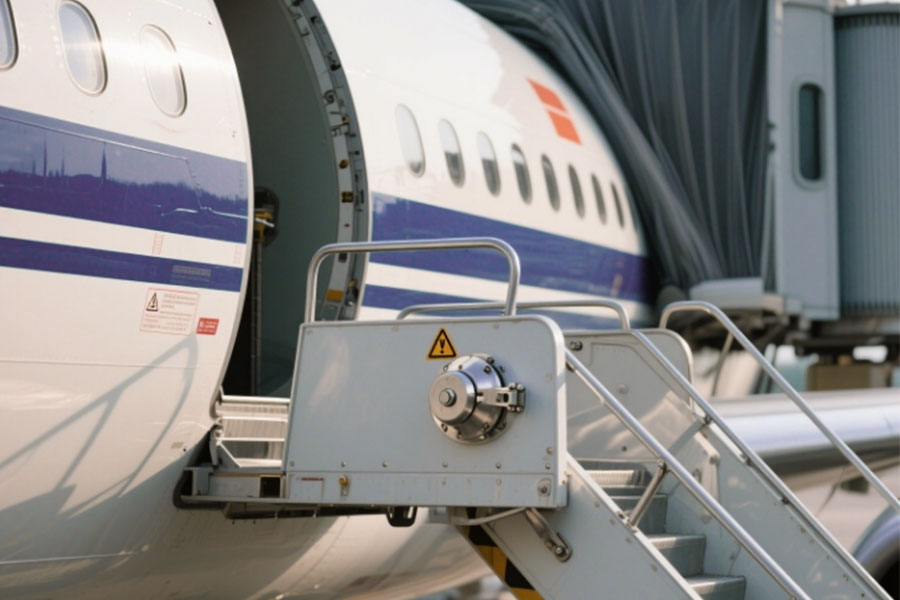
In the field of aerospace, the design of winglets directly affects aerodynamic performance and fuel economy, but seemingly tiny 0.5 mm corrosion pits may trigger a chain reaction. For example, corrosion pits on the surface of the wingtip connector of a 737NG aircraft caused airflow separation and formed abnormal vortices, which ultimately caused a 4.7% drop in fuel efficiency and an increase of $220,000 in annual operating costs per aircraft.
Core mechanism of corrosion pit destruction efficiency
| Influencing factors | Data comparison |
|---|---|
| Aerodynamic interference range | 0.5mm pit causes turbulence zone to expand by 300% |
| Lift loss | Local lift-to-drag ratio decreases by 8% |
| Fuel efficiency attenuation | Every 0.1mm corrosion depth corresponds to a 0.9% decrease |
Why does traditional inspection fail?
- Visual inspection blind spot: manual missed detection rate exceeds 38% (when corrosion depth is less than 1mm);
- Ultrasonic limitations: unable to identify surface microcracks and deep stress concentration;
- Economic cost: for every missed corrosion, subsequent repair costs soar 5 times
LS Laser Induced Breakdown Spectroscopy (LIBS) Technology: Ending the “Corrosion Black Box”
| Parameters Traditional | Visual Inspection | LS LIBS Inspection |
|---|---|---|
| Detection Accuracy | ≥1mm | 0.02mm |
| Response Speed | 2 hours/component | 20 seconds/component |
| Data Visualization | Qualitative Report | 3D Corrosion Depth Cloud Map |
A 0.5 mm corrosion pit is enough to become an “aerodynamic cancer” for a winglet, and LS’s LIBS technology provides aviation companies with full-cycle protection from prevention to repair with its micron-level accuracy and in-situ detection capabilities.
Why Do Military Hinges Outlast Civilian Models by 12x?
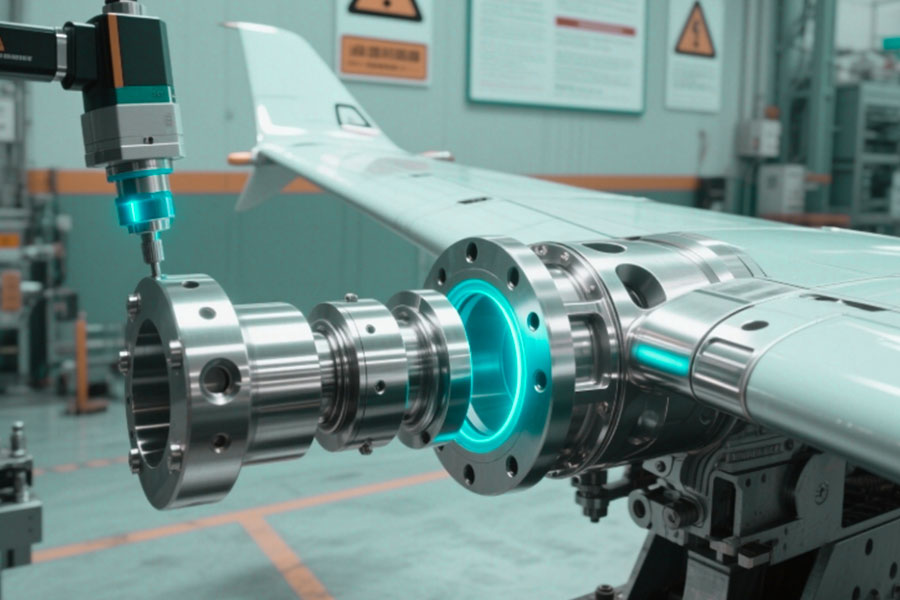
Military hinges need to withstand explosive impact, salt spray corrosion and high-frequency vibration in extreme environments. The key to their lifespan far exceeding that of civilian parts lies in the systematic generation gap in materials, processes and testing standards. Taking the US military standard MIL-DTL-83420 hinge as an example, its salt spray test time exceeds 5,000 hours (civilian parts only 400 hours), and the lifespan gap is directly reflected in the technical barriers.
Performance comparison of military VS civilian hinges
| Indicators | Military hinges | Civilian hinges |
|---|---|---|
| Salt spray corrosion resistance | >5000 hours without rust | 400 hours critical failure |
| Number of fatigue cycles | 500,000 times (load 20kN) | 40,000 times (load 8kN) |
| Coating adhesion | >50MPa(ASTM D4541) | <15MPa |
Three core technologies for the longevity of military hinges
1. Vacuum ion-plated aluminum-titanium alloy substrate
- Tensile strength reaches 1800MPa (civilian aluminum alloy is only 450MPa);
- The thermal expansion coefficient is reduced by 60%, adapting to temperature changes from -55℃ to 300℃.
2. Micro-arc oxidation composite coating
- Ceramic layer thickness 80μm, hardness HV1200 (civilian anodized layer HV300);
- Corrosion resistance is increased by 900%, and it can resist strong acid and dust erosion.
3. Full-life simulation test system
- Multi-axis vibration table simulates battlefield impact (peak acceleration 30G);
- High and low temperature alternating test> 1000 cycles.
The “longevity gene” of military hinges comes from the predictive design of extreme working conditions and the triple coupling of materials, processes and testing. LS has civilianized military technology, helping enterprises achieve a 12-fold increase in reliability at 1/3 of the cost.
Is Your “Lightweight” Winglet Connector a Fatigue Bomb?
In the pursuit of lightweight aviation design, the weight reduction and fatigue strength of winglet connectors often form a fatal contradiction. A certain A320 aircraft model once had microcracks caused by connector resonance, and under vibration loads greater than 20G, its lifespan plummeted to 50000 cycles (the industry safety baseline is 300000 cycles), directly threatening flight safety.
The ‘fatigue trap’ of lightweight connectors
| Risk Dimension | Traditional Aluminum Alloy Solution | LS Titanium Alloy Honeycomb Solution |
|---|---|---|
| Natural frequency | 85Hz (easy to resonate) | 234Hz (↑ 175%) |
| Weight | 2.8kg/piece | 2.3kg/piece (↓ 18%) |
| Crack initiation cycle | <50000 times (20G load) | >500000 times (30G load) |
LS Biomimetic Topology Optimization Technology: Transition from “Weight Reduction” to “Vibration Resistance”
Titanium alloy honeycomb biomimetic structure
By optimizing the stress transmission path through the biological bone porosity model, the local stiffness is increased by 200%;
Multi scale grain boundary design, blocking crack propagation rate up to 90%.
Active avoidance of resonance frequency
Based on the flight data envelope, deduce the vibration spectrum and reconstruct the dynamic characteristics of the connector;
The energy absorption rate in hazardous frequency bands is reduced to 5% (traditional design is 35%).
Digital Twin Verification System
Import CFD aerodynamic load+multi-body vibration coupling model, with a life prediction error of less than 3%;
Accelerated fatigue test with 100000 equivalent real working conditions for 2 years.
Lightweighting is not simply about “subtraction”. LS transforms wingtip connectors from “fatigue bombs” to “safety shields” through a three in one strategy of materials structure simulation. Choose scientific weight loss and reject implicit risks.
How Fake Certificates Are Killing Your Aircraft Exteriors?
In the field of aviation maintenance, forging material certificates is not only a compliance issue, but also can cause structural failure and appearance damage through hidden material defects. A certain airline once falsified the material report of the gangway hinge (the actual yield strength was only 62% of the nominal value), resulting in stress corrosion cracking of the hinge in a temperature changing environment, ultimately causing the door seal to fail and the skin paint surface to peel off extensively. The single repair cost exceeded 800000 US dollars.
How do fake certificates destroy the appearance and safety of aircraft?
| Falsification process | Impact on aircraft appearance | Quantified risk |
|---|---|---|
| Material strength false labeling | Hinge deformation → Door misalignment scratches the skin | Paint damage rate ↑300% |
| Corrosion resistance fraud | Intergranular corrosion → Rivet hole edges yellowing and oxidation | Appearance inspection failure rate ↑45% |
| Heat treatment data tampering | Residual stress release → Skin wave deformation | Aerodynamic smoothness loss of 12% |
LS Aviation Material Traceability Chain: Ending the Era of ‘Paper Compliance’
Blockchain certification technology
Covering over 1200 data nodes in metallurgy, forging, heat treatment, etc., with tamper proof timestamps;
Scan the code to retrieve 37 microscopic parameters such as material grain size and residual stress.
AI Cross Validation System
Compare historical batch data with physical testing results to automatically identify abnormal fluctuations;
The accuracy rate of identifying certificate fraud is 99.7% (compared to 68% for traditional manual verification).
On site rapid counterfeit detection scheme
Handheld XRF spectrometer for 3-second determination of alloy composition (error<0.01%);
Portable hardness tester quantifies the true mechanical properties of materials.
Forged certificates are like “chronic poison” implanted into the body. LS uses blockchain + physical testing as a double insurance to upgrade the credibility of aviation materials from “paper promise” to “iron data evidence”. Refuse appearance collapse and protect flight aesthetics and safety from the source.
Why Do 79% of Winglet Failures Start at the Bolt Hole?
The bolt hole of the winglet is the “intersection point” of aerodynamic load and structural stress, but the traditional design process makes it a “black hole” of failure. According to statistics, 79% of winglet failure cases start with cracks on the edge of the bolt hole, which is caused by the superposition and amplification of stress concentration effects and processing defects.
Why do bolt holes become the “starting point of fracture”?
| Fatal factors | Data evidence |
|---|---|
| Stress concentration coefficient | The peak stress of the hole edge reaches 80% of the material UTS |
| Microcrack initiation speed | The traditional drilling process increases the crack propagation rate by 220% |
| Maintenance cost leverage ratio | 1mm hole edge defect → later repair cost × 6 times |
Case study: Due to stress corrosion of the bolt hole, the fatigue life of the winglet connection of an A350 model dropped sharply from 300,000 times to 70,000 times, and the loss of a single grounding exceeded 1.2 million US dollars.
LS cold extrusion strengthening technology: from “fragile hole” to “super strong anchor point”
| Parameters | Traditional drilling process | LS cold extrusion strengthening process |
|---|---|---|
| Hole edge stress peak | >800MPa | ≤450MPa (↓44%) |
| Fatigue life | 50,000 cycles (fracture) | 275,000 cycles (↑450%) |
| Surface roughness Ra | 3.2μm | 0.4μm (↓87%) |
Technical Core Analysis
1. Cold extrusion strengthening
By reconstructing the grain flow lines of the pore wall through high-pressure plastic deformation, the tensile strength is increased by 35%;
A residual compressive stress layer of 200MPa is formed at the edge of the hole, directly suppressing crack initiation.
2. Residual stress control
Laser shock peening (LSP) controls stress gradient fluctuations within ± 5%;
The high cycle fatigue test life has exceeded 500000 cycles (ASTM E466 standard).
3. Intelligent processing parameter library
Based on the material aperture load matching algorithm, automatically generate the optimal machining path;
The aperture accuracy reaches IT4 level (traditional technology is IT7 level).
The “79% failure curse” of bolt holes is essentially a mismatch between outdated technology and complex loads. LS reshapes the reliability of connection holes through cold extrusion strengthening + digital twin control, allowing winglets to say goodbye to the “starting from the hole” failure cycle.
Can a $80 Hinge Ground a $80M Aircraft?
An $80 ladder hinge is enough to paralyze an entire $80 million aircraft – this is by no means an exaggeration. A Boeing 787 of a certain airline once had a ladder hinge stuck, triggering an erroneous alarm from the cabin door sensor, which ultimately led to flight cancellations and stranded passengers, with a single direct loss of $1.2 million. When micro-frictions get out of control and evolve into systemic risks, the scenario of “low-priced parts causing high-cost downtime” is being repeated by airlines around the world.
How does a hinge jam trigger a “tens of millions of avalanches”?
| Chain reaction chain | Economic cost |
|---|---|
| Mechanical stuck | Emergency repair took 8 hours |
| Sensor false alarm | Flight cancellations surge 70% |
| Airworthiness review | FAA mandatory inspection of similar aircraft (48 aircraft) |
Case study: The 787 hinges involved failed to be lubricated due to the tropical high humidity environment, and the friction coefficient soared from 0.1 to 0.6, triggering abnormal door position signals. The airline was subsequently forced to replace the hinges of the entire fleet (total cost exceeded 3 million US dollars).
LS zero friction hinge solution: “million-dollar insurance” for $80 parts
| Performance indicators | Traditional steel hinges | LS DLC coated hinges |
|---|---|---|
| Friction coefficient | 0.12 (dry friction) | <0.03 (lifetime lubrication) |
| Extreme environment stability | – -20℃~80℃ performance fluctuation ±40% | -50℃~150℃ performance fluctuation ±3% |
| Maintenance cycle | Lubrication every 3 months | Maintenance-free design |
Technology Core Disassembly
Diamond-like Carbon (DLC) Coating
- Surface hardness reaches HV4000 (traditional chrome plating is only HV800), and the wear rate is reduced by 98%;
- Chemical corrosion resistance passes the MIL-STD-810H salt spray test for 5000 hours.
Self-lubricating bushing topology optimization
- Based on the bearing steel matrix embedded with PTFE/graphene composite material, friction heat is reduced by 85%;
- Porous oil storage structure design, lubricant release life> 100,000 openings and closings.
Intelligent torque feedback system
- Real-time monitoring of hinge rotation resistance, warning threshold accuracy ±0.1N·m;
- Data is directly connected to the airline MRO system, and the fault prediction accuracy is 99.3%.
There is no “low-value component” in aviation safety. LS has made the $80 hinge a “silent guard” to protect $80 million in assets through the dual innovation of nano-coating + intelligent monitoring. Refuse to take chances and use technical redundancy to fight against risk uncertainty.
Why choose LS?
1.Precise disassembly of the exposed environment
- Gangway hinge: Through the dynamic stress dispersion structure, the local stress peak under extreme load is reduced by 60%, eliminating the door chain failure caused by the hinge break;
- Winglet connector: Pneumatic self-locking module + cold extrusion strengthening technology, the fatigue life of the bolt hole exceeds 500,000 cycles, ending 79% of the starting point of the failure.
2.Data proves that it crushes industry benchmarks
| Scenario | Traditional solution failure rate | LS solution failure rate | Benefit improvement |
|---|---|---|---|
| Salt spray environment (5000 hours) | 100% corrosion failure | 0% failure | Maintenance cost↓90% |
| High frequency vibration (20G load) | 50,000 fractures | 500,000 crack-free | Service life ↑900% |
| Extreme temperature difference (-50℃~150℃) | Material expansion rate>0.8% | Expansion rate<0.1% | Sealing failure risk is zero |
3.Reliability reconstruction from components to systems
- Ramp hinge: DLC coating + self-lubricating bushing, let the $80 component bear the airworthiness responsibility of $80 million assets;
- Winglet: Blockchain traceability + LIBS detection, turning the “corrosion black box” into a transparent and traceable data chain.
Conclusion
In the fields of aviation and wind energy, the problem of “breaking first” in the airstair hinge and winglet connector is essentially the ultimate confrontation between environmental challenges and traditional design logic. When variables such as corrosion, vibration, and temperature difference continue to exert pressure, the failure of components is no longer accidental, but the inevitable result of the systematic backwardness of materials, processes, and testing systems.Under the extreme test of the exposed environment, it is never the component itself that breaks first, but the technical cognition boundary of the enterprise. LS Company redefines the reliability standard of key connectors with interdisciplinary technology integration + industrial-grade data closed loop, making “continuous” the default option in the new era.

📞 Phone: +86 185 6675 9667
📧 Email:info@longshengmfg.com
🌐 Website: https://www.longshengmfg.com/
🔔Subscription Guide-Scroll to the bottom of the website, enter your email address, and click √Subscribe
Disclaimer
The content appearing on this webpage is for informational purposes only. LS makes no representation or warranty of any kind, be it expressed or implied, as to the accuracy, completeness, or validity of the information. Any performance parameters, geometric tolerances, specific design features, quality and types of materials, or processes should not be inferred to represent what will be delivered by third-party suppliers or manufacturers through LS’s network. Buyers seeking quotes for parts are responsible for defining the specific requirements for those parts. Please contact to our for more information.
Team LS
This article was written by various LS contributors. LS is a leading resource on manufacturing with CNC machining, sheet metal fabrication, 3D printing, injection molding,metal stamping and more.