5-axis CNC machining costs are a major pain point for companies, which often face significant challenges due to opaque quotations, large price disparities, and difficulties in accurately estimating final expenses. This frequently leads to budget overruns and increased project risks.The root cause lies in traditional pricing methods, which rely heavily on individual experience rather than systematically analyzing key cost drivers—such as part geometry complexity, fixture design, programming time, and material utilization.
In this article, from LS Manufacturing’s professional perspective, we will not only break down the seven key factors influencing 5-axis machining costs but also unveil our proprietary cost-calculation model. Through a real-world aerospace case study involving a complex component, we will demonstrate how we optimize machining processes to significantly reduce costs while ensuring on-time delivery.To receive a clear, fair, and competitive quotation, continue reading to gain deeper insight into the logic behind machining costs.
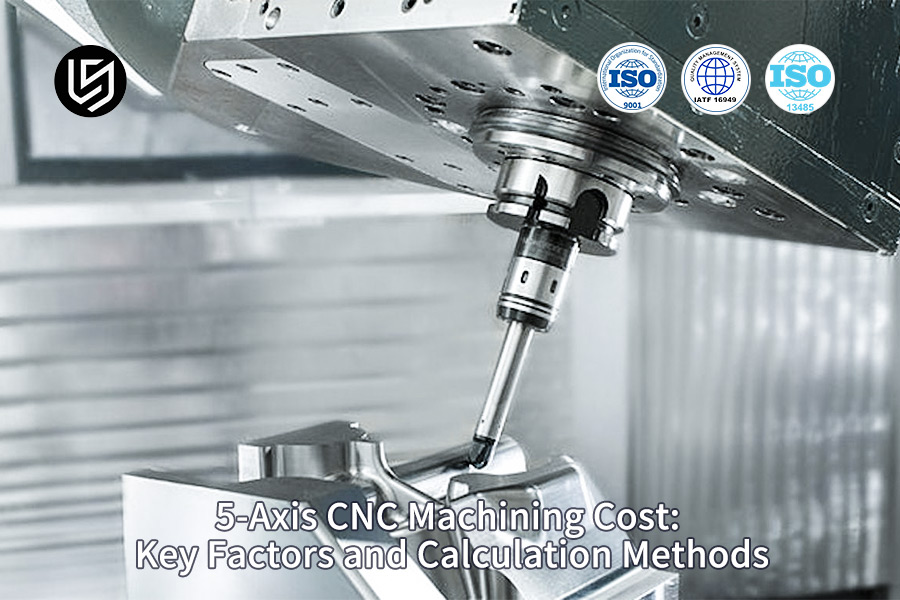
5-Axis CNC Machining Cost Quick Reference Table
| Cost Components | Impact on Cost | LS Manufacturing Optimization Solutions |
| Part Geometric Complexity | The more complicated the structure is, the longer the time for machining will be, and it will be more difficult to program. | DFM analysis suggests reasonable partitioning or structural optimization. |
| Material Selection | High-strength/difficult-to-machine materials are much more time-consuming and require more tools, increasing the costs greatly. | Provide alternative material solutions that balance the performance and cost. |
| Jig Design and Clamping Times | Dedicated jigs are expensive; a number of clamping times increase errors and time. | Modularity in jig design will reduce clamping times. |
| Programming and Simulation Time | It is very time-consuming to program complex surfaces, and simulation avoids the risk of tool collisions. | Intelligent programming software can be applied to enhance efficiency and ensure safety. |
| Machining time | It is one of the core constituents of the cost and thus directly controls the price. | Reduce machining time by optimizing toolpaths and cutting parameters. |
| Accuracy and Tolerance Requirements | The cost increases exponentially with higher accuracy. | Key tolerances should be defined to avoid over-machining. |
| Requirments for post-processing and quality inspection | Special treatments such as anodizing and sandblasting, together with precision inspection, increase the costs. | Integrating post-processing workflows and providing standardized quality inspection reports. |
The 5-axis CNC machining price is not determined by “hourly billing” but by several interrelated factors. We are committed to turning the traditional “cost black box” into a transparent and controllable value creation process, and in this process, minimize your total cost of ownership while guaranteeing the highest quality standards.
Why Trust This Guide? Practical Experience from LS Manufacturing Experts
This guide represents fifteen years of practical experience in 5-axis CNC machining accumulated at LS Manufacturing. We successfully delivered over 50,000 complex parts, ranging from Incon 718 alloy engine blades to medical implants for aerospace, medical devices, and precision optics, all the while deeply understanding the delicate balance between material properties, structural stability, and cost.
Long-term practice has enabled us to develop scientific methods of cost control. We address core cost drivers like deformation of thin-walled parts and wear of difficult-to-machine materials by optimizing cutting parameters and the clamping scheme to significantly improve efficiency with ensured accuracy.
Further, we draw on standards and research findings of the most authoritative organizations, such as the National Surface Finishing Foundation (NASF) and the Aluminum Association (AAC), to set advanced but economical process parameter settings. The following guide is a systematic summary of these experiences that will help you understand cost structure and make better decisions.
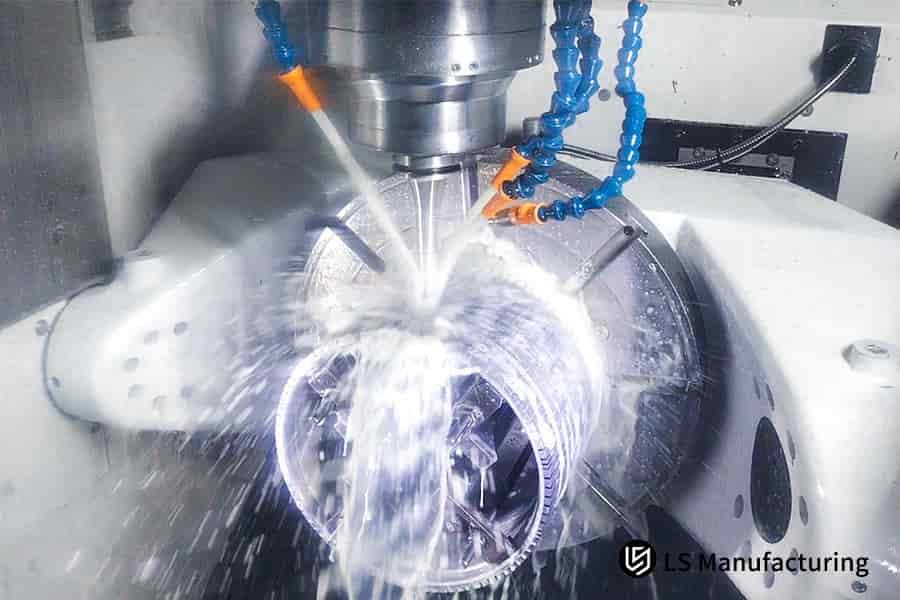
Why is cost assessment for 5-axis CNC machining so complex?
The 5-axis CNC machining cost analysis is far more complex compared to traditional 3-axis machining, given the depth and integration of technology that the former requires. In fact, understanding the cost structure for such machining involving several complex parts with curved surfaces, irregular shapes, or multi-faceted forming goes beyond a mere budgeting issue to an important component in determining project feasibility. This stems mainly from the following core dimensions:
Significant programming and post-processing enhancements
5-axis machining is no longer simple layered cutting. It requires considerable investment of time by experienced engineers in toolpath planning, multi-axis linkage collision avoidance, and the development of dedicated post-processors for simulation and optimization, thus driving up technical preparation costs.
Special Characteristics and Complexity of Tooling and Fixtures
Specialized precision fixtures are usually designed and manufactured for the stable fixation of workpieces in an irregular shape at high speed. Such non-standard tooling fixtures embody not only a cost in themselves but directly influence machining accuracy and efficiency, and even the final success rate in their design rationality.
Extended preparation and debugging time for processes
For every new part, before actual machining, machine tool calibration, tool setting, and the first-piece verification process takes longer. Since any minute error is amplified in 5-axis space, a much more rigorous process is required for flawless execution, and such time cost should be wholly considered.
To put it simply, the technological content of 5-axis CNC machining is well reflected in its cost, particularly when it comes to the cost of complex part machining. We commit ourselves to making every process transparent: turning the complex machining costs of intricate parts into clear and controllable project plans through scientific DFM analysis and process optimization, so as to output maximum value to the clients.

What are the 7 Core Factors Affecting Your 5-Axis Machining Quote?
Behind the transparent quotation lies a systematic analysis of the components of the 5-axis machining cost. The following are seven core factors affecting 5-axis machining cost, which in turn determine the process route, time consumption, and resource input, ultimately shaping the final price.
- Part Material and Specifications: Material hardness, toughness, along with other properties determine cutting parameters, tool wear rate, and the power requirements of equipment amongst others. For example, the cost and time of machining vary significantly between titanium alloys and aluminum alloys.
- Geometric Shape and Complexity: Complex surfaces, deep cavities, and thin walls increase the difficulty of programming, require more specialized tools, and may necessitate multiple setups, substantially increasing machining and preparation time.
- Machining Accuracy and Tolerance Requirements: Stricter tolerances mean a growing demand on the accuracy of machine tools, methods of measurement, and skills of operators. Thus, toolpaths need to be more precise, inspections more frequent, which implies exponential cost increases.
- Production Batch and Equipment Setup Time: Small batches result in high per-piece programming and fixture setup costs. Large-batch production can reduce the fixed costs; however, the total material and time input increases.
- The time cost of programming and simulation: Multi-axis toolpath planning and collision simulation for complex parts require substantial time investment by experienced engineers. In fact, such an intellectual cost is a major component of the quotation.
- Specialized Fixtures and Tooling Design: Non-standard fixtures for the positioning of the parts, which are of irregular shape, involve design, manufacturing, and debugging costs, but they are a must for accuracy and safety.
- Post-processing and surface finishing: Special surface treatments, such as anodizing and sandblasting, will need to be outsourced at higher logistical costs, fees for processing, and lengthening the production cycle.
All the factors described above interact to form the final 5-axis machining cost structure. A deep understanding of those factors that influence the 5-axis machining cost provides a clear basis on which customers and manufacturers can communicate effectively right from the very beginning of a project, seeking the best balance among quality, efficiency, and cost through design optimization and process planning.
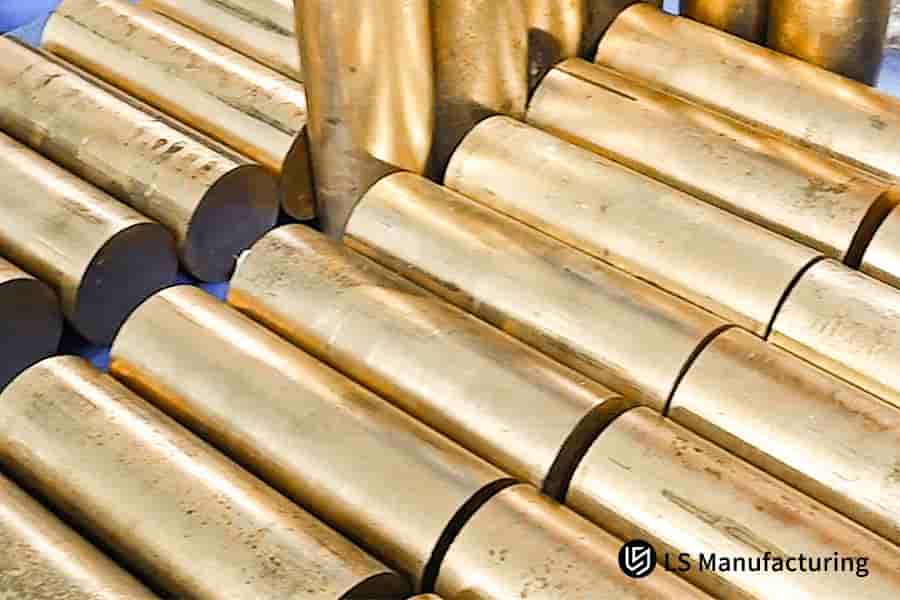
5-Axis Machining More Expensive Than 3-Axis Machining? An In-depth Comparative Study
The common misconception in 5-axis vs 3-axis machining cost comparison is that 5-axis will always be more expensive. As a matter of fact, 5-axis machining may achieve better total cost control for complicated workpieces by improving overall efficiency. The following table clearly compares the cost impact of the two technologies across different dimensions.
| Comparison Dimensions | 3-Axis Machining | 5-Axis Machining |
| Costs of equipment and programming | Rather low | Very high |
| Number of Clampings and Time Spent | A complex part involves multiple clampings; large cumulative errors and time-consuming operations are the result | Multi-faceted machinings get completed by one clamping, hence saving a lot of time and ensuring accuracy |
| Complex Structure Machining Capability | Complex curved surfaces cannot be directly machined but must be disassembled for secondary machining, hence increasing the cost. | Complex curved surfaces will be formed in one operation, reducing a number of parts and assembly cost. |
| Overall cost/scrap rate | A number of clampings easily result in error accumulations, risking a higher scrap rate. | High-precision one-time forming reduces the accumulation of errors, thus greatly lowering the scrap rate. |
Therefore, comparing 5-axis and 3-axis machining costs cannot rely solely on unit price. For complex, high-precision parts, 5-axis technology can yield lower total costs by reducing clamping, merging processes, and minimizing scrap. LS Manufacturing provides expert analysis to recommend the most economical and reliable overall solution for your parts.
How does LS Manufacturing reduce the cost of turbine blade machining by 30% for its aerospace customers?
Cost reduction in high-end manufacturing involves deep process innovation and technological integration. A typical case study for LS Manufacturing—machining high-performance, nickel-based alloy turbine blades for an aerospace customer—perfectly illustrates how we systematically reduce 5-axis machining costs.
Customer Challenges
The customer was facing a serious situation: the structure of the turbine blades was complicated with low yield rates for internal cooling channels. Suppliers in the market not only quoted high prices and long delivery cycles but huge fluctuations in quality also seriously affected the progress of the customer’s new engine project and supply chain security.
LS Manufacturing Solution
Our engineering team did not simply accept the order but first conducted an in-depth DFM analysis. The core innovation was to redesign a special fixture for precise multi-angle positioning of the blades. This single, complex fixture eliminated error accumulation and time consumption from multiple clamping. By optimizing toolpaths with advanced CAM software, non-cutting idle travel was significantly reduced, and more suitable cutting parameters for nickel-based alloys were adopted, greatly improving efficiency and reducing tool wear.
Results and Value
Through the above systematic optimization, noticeable results were obtained in this project: the unit machining cost was reduced by 30%, the general delivery cycle was shortened by 50%, and more importantly, the product qualification rate steadily increased to 99.8%.
This LS Manufacturing case proves the concept that really lowering the cost of 5-axis machining is not a quality sacrifice, but rather multiple value enhancements in cost, efficiency, and quality to customers through process innovation and engineering wisdom, earning trust as a strategic partner.
Would you like to optimize the cost of 5-axis machining? Contact our engineers today!

What are some practical strategies to effectively reduce 5-axis machining costs?
In the highly competitive market environment, effective control of manufacturing costs is a very important method for improving product competitiveness. The 5-axis machining cost reduction strategy is not to lower the unit price but to minimize the total cost of ownership through a series of scientific and feasible technical and management optimizations. Here are some proved and practical strategies:
- Implement Design-to-Manufacturization (DFM): Introduce manufacturability analysis at the very beginning of collaboration with manufacturers. For instance, design internal corners with achievable radii using standard tools while meeting functional requirements, avoiding the use of non-standard tools; or improve structural stability during machining by fine-tuning wall thickness and reinforcing rib layout, thus allowing for higher cutting parameters and directly improving efficiency.
- Establish reasonable tolerances and surface requirements: Carefully evaluate each dimension’s tolerances and relax the requirements for non-mating surfaces accordingly to avoid unnecessary precision waste. This can greatly reduce finishing time and costly precision measurement costs. Similarly, non-surface surfaces can be treated with lower-cost surface treatments.
- Early involvement of manufacturers who have engineering capabilities: Having a partner like LS Manufacturing means that you receive full engineering support right from material selection and process planning to fixture design. Our experience can help you to avoid potential pitfalls: reducing machining time and waste at source with optimized machining paths and clamping schemes.
5-axis machining involves effective cost reduction, which is a project that starts with design, passes through manufacturing processes, and materializes in an appropriate, stable, and controllable budget. One of the most reliable ways of achieving cost reductions and improvements in efficiency is to integrate strategies into the product development process while working with professional partners.
What’s 5-Axis CNC Machining?
5-axis CNC machining is a sophisticated manufacturing course that features a number of shifting chopping devices alongside 5 axes. This allows the creation of intricate and complicated parts with extreme precision and prime quality.
In distinction to standard 3-axis machining, which solely operates inside the X, Y, and Z dimensions, 5-axis CNC machining gives two additional rotational axes, the A and B axes. This allows the chopping system to methodology the workpiece from all directions, which is very helpful for machining sophisticated shapes and geometries.
Together with technical advantages, 5-axis CNC machining additionally has financial advantages. Reducing the need for numerous installations can significantly save set up time, improve the accuracy of each half, improve effectivity, in the reduction of prices, and cut back operator errors.
Nonetheless, to take full benefit of 5-axis CNC machine, the appropriate software program program packages and controls are chosen, the design course of is confirmed sooner than the CAD design is remodeled to CAM, and the operator is assured to be expert and accustomed to the full potential of the machine.
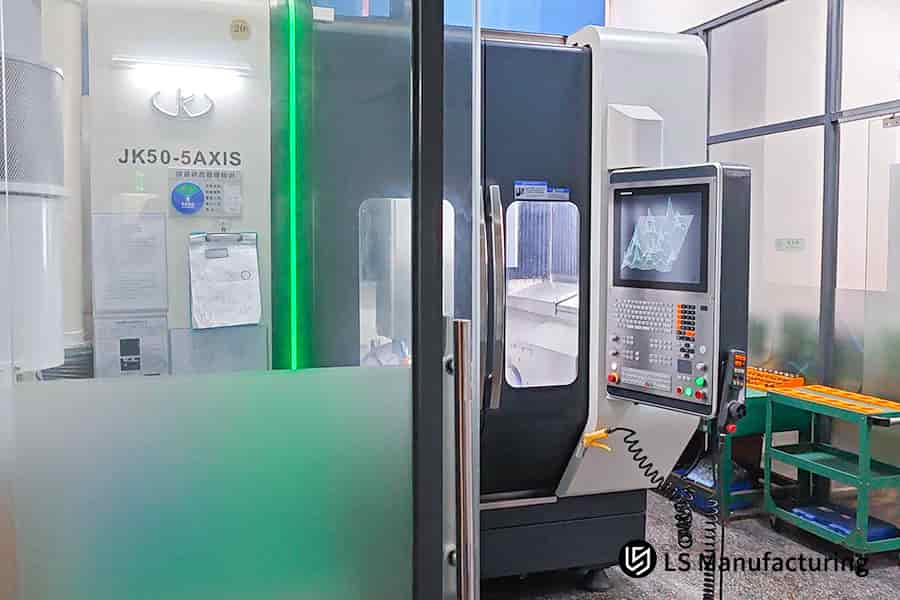
How To Calculate 5-Axis CNC Machining Prices Worth
Calculating the worth of 5-axis CNC machining entails a whole understanding of the methodology behind how to calculate the cost of 5-axis CNC machining? This can be a synthesized info primarily based on our precision 5-axis machining quotation method and the supplied key elements from present sources:
1. 5-Axis CNC Machining value and Working Costs
The value of 5-axis CNC machining is affected by 5 elements, that are affected by the dimensions, weight, manufacturing pace, power effectivity and configuration of the machine instrument. 5-axis machines are extra superior than three-axis machines and dearer, with work costs starting from $75 to $125 per hour. As a result of extra motor, encoder and plant administration strategies are totally different, the acquisition value and upkeep value is larger. Nevertheless, the brand new five-axis machines are quicker and extra environmentally pleasant, which can decrease the manufacturing value in the long term.
| CNC Machine Sort | Description | Approximate Value Vary (USD) |
| CNC Milling Machine | Used for chopping and drilling operations on metallic | $10,000 – $60,000 |
| CNC Lathe | Primarily used for turning operations | $15,000 – $45,000 |
| CNC Router | Superb for chopping softer supplies like wooden | $3,000 – $20,000 |
| CNC Plasma Cutter | Used for chopping metallic and different supplies | $8,000 – $30,000 |
| CNC Laser Cutter | Precision chopping device for numerous supplies | $10,000 – $70,000 |
| 5-Axis CNC Machine | Superior machine for complicated geometries | $75,000 – $250,000 |
| CNC Swiss Machine | Specialised in precision and complex parts | $30,000 – $100,000 |
| CNC Grinding Machine | Used for ending operations | $20,000 – $80,000 |
2. The value of supplies produced by five-axis machines
For different materials being processed, the corresponding calculate 5-axis CNC cost is not the same. The difference in material costs is primarily based on application, performance, and production value. Highly difficult and complex materials require more expense and time to process, and prices are continuously rising. The materials used, ranging from common metals such as aluminum, stainless steel, and brass, also affect the final cost.
| Materials | Application scenario | Amount | Unite Value (Estimated) | Lead Time (Estimated) |
| Aluminum | As Machined | 1 | $15 – $30 | 2 – 5 days |
| Aluminum | Anodizing | 1 | $20 – $40 | 3 – 7 days |
| Aluminum | Bead Blasting | 1 | $15 – $35 | 2 – 6 days |
| Aluminum | Sprucing | 1 | $25 – $50 | 3 – 7 days |
| Aluminum | Powder Coating | 1 | $30 – $60 | 4 – 8 days |
| Aluminum | Electroplating | 1 | $35 – $70 | 5 – 10 days |
| Aluminum | Brushing | 1 | $20 – $45 | 3 – 7 days |
3. 5-axis engineer labor and programmer value
Labor costs mirror the salaries of CNC operators and programmers. In China, it may well vary from $27 to $50 an hour. The complexity of the work can drive up these costs, particularly if CNC programmers are employed on a per-project foundation. The skilled CAM software program applications required for 5-axis programming will even improve the worth.
4. 5-axis Machining Time and Complexity
Processing time is a key issue, as extra time spent processing will increase prices. Complicated parts require longer machining occasions, require the usage of superior 5-axis machines, and extra cautious inspection occasions, which will increase prices. The power of 5-axis machines to create advanced shapes and options can cut back machining time, however can improve prices as a result of complexity of the parts.
5. Fast prototyping and Batch Manufacturing
We should know that the variety of parts ordered impacts the full price, and the bigger the order, the dearer it often is. Nevertheless, as a result of unfold of manufacturing tools and manufacturing instrument prices, larger output results in decrease prices per half. Mass manufacturing can save prices by optimizing 5-axis machine setup and manufacturing materials utilization.
6. Surface Finishing
Surface finishing operations such as heat treatment, surface treatment and coating can add to the price. Surface polishing that requires high precision or multiple finishes increases machine and labor costs.
7. Design Optimization
Design for Manufacturability (DFM) rules may help cut back prices with out compromising half high quality. Optimizing half nesting on materials inventory and environment friendly tooling methods are efficient methods to attenuate waste and price. Simplifying half geometry and avoiding unnecessarily tight tolerances may cut back prices.
8. Geography
Attributable to variations in labor prices, materials prices, 5-axis machine depreciation and working bills, the geographic location of CNC machining suppliers can have an effect on the general price.
9. Additional Considerations
Customized instruments, energy consumption, and the usage of non-standard supplies or dimensions additional impression prices. We can use economies of scale to decrease unit costs.
Instance Calculation
For instance, let’s assume the next for a single half:
Machine price: $100 (amortized per half)
Materials price: $50
Labor price: $60 (2 hours at $30/hour)
Programming price: $20
Ending price: $10
Packaging price: $5
Whole price earlier than revenue: $100 + $50 + $60 + $20 + $10 + $5 = $245
Materials choice and price-profit analysis
Selecting secure and inexpensive purposeful requirements can considerably cut back the worth of uncooked supplies. Standardizing provide all through the product monitoring course of minimizes waste, optimizes processing effectivity, and simplifies procurement. Important points in materials choice embody worth, availability, and processability. This prudent method reduces direct materials prices and will increase basic working productiveness.
Beneath is a desk exhibiting the material.
| Materials | Application scenario | Amount | Unit Value (Estimated) | Lead Time (Estimated) |
| Aluminum | As Machined | 1 | $30 – $50 | 2 – 5 days |
| 10 | $25 – $45 | 5 – 10 days | ||
| 100 | $20 – $40 | 10 – 20 days | ||
| 1000 | $15 – $35 | 20 – 40 days | ||
| Stainless Metal | As Machined | 1 | $40 – $60 | 3 – 7 days |
| 10 | $35 – $55 | 7 – 14 days | ||
| 100 | $30 – $50 | 15 – 30 days | ||
| 1000 | $25 – $45 | 30 – 60 days | ||
| Metal | As Machined | 1 | $35 – $55 | 2 – 6 days |
| 10 | $30 – $50 | 6 – 12 days | ||
| 100 | $25 – $45 | 12 – 24 days | ||
| 1000 | $20 – $40 | 24 – 48 days | ||
| Brass | As Machined | 1 | $30 – $50 | 2 – 5 days |
| 10 | $25 – $45 | 5 – 10 days | ||
| 100 | $20 – $40 | 10 – 20 days | ||
| 1000 | $15 – $35 | 20 – 40 days | ||
| Copper | As Machined | 1 | $35 – $55 | 3 – 7 days |
| 10 | $30 – $50 | 7 – 14 days | ||
| 100 | $25 – $45 | 15 – 30 days | ||
| 1000 | $20 – $40 | 30 – 60 days | ||
| ABS | As Machined | 1 | $50 – $100 | 2-5 days |
| 10 | $20 – $40 | 5-10 days | ||
| 100 | $10 – $20 | 10-15 days | ||
| 1000 | $5 – $10 | 15-20 days | ||
| Nylon | As Machined | 1 | $60 – $120 | 2-5 days |
| 10 | $30 – $60 | 5-10 days | ||
| 100 | $15 – $30 | 10-15 days | ||
| 1000 | $10 – $20 | 15-20 days | ||
| POM | As Machined | 1 | $70 – $140 | 2-5 days |
| 10 | $40 – $80 | 5-10 days | ||
| 100 | $20 – $40 | 10-15 day | ||
| 1000 | $15 – $30 | 15-20 days |
Outsourcing CNC machining suppliers with LS Manufacturing
CNC machining service outsourcing. Nonetheless, choosing an outsourcing location is crucial. Outsourcing to firms in developed nations is perhaps pricey, however in areas like China, the place working costs are decrease, firms can supply aggressive prices with out compromising prime quality.
For example, Chinese language-language firms like LS Manufacturing present high-quality CNC machining companies at a fraction of the related price in contrast with their counterparts in developed economies. This makes outsourcing a viable selection to cut back basic processing costs, significantly for firms attempting to optimize budgets with out sacrificing prime quality.
As soon as you utilize LS Manufacturing, your CNC machining costing turns into straightforward. Our Quick quote platform permits you to receive your quote nearly instantly. We’ll evaluation your design and provide solutions inside a day.
We even have one of many quickest provide events inside the commerce to make sure your merchandise arrives. So why wait? Start working in your CNC machining mission and get a CNC quote!

FAQs
1. What is the MOQ of 5-axis machining?
Consequently, we fully understand the needs at every stage of product development and will not set a rigid minimum quantity. Whether it’s single-piece prototype verification or small-batch production of hundreds of pieces, we can undertake it and promise customers that with different batch sizes, the same rigorous and high-quality service will be given.
2. Does your quote cover all the costs, and are there any hidden costs?
For pricing, we would always follow the principle of complete transparency. When quotations are provided, therefore, it includes items like the cost of materials, machining time, the cost of fixtures, surface treatment, and taxes for a clear understanding of the cost structure, while we make sure that there is absolutely no more additional amount as hidden fees.
3. What is the normal lead time from quotation to delivery?
With your completed 3D drawings and technical specifications, we can provide a detailed quotation within 2-3 business days. Production time will depend on the complexity of the parts and batch size. For urgent projects, there is an expedited channel to maximize your R&D progress.
4. How do you ensure accuracy and quality in the parts that are machined?
Precision is guaranteed due to the comprehensive quality assurance system we follow. From first-piece inspection to in-process sampling, all high-precision testing with equipment like coordinate measuring machines is done. We provide an inspection report that makes sure every product 100% meets your drawing specifications.
5. Do you provide feedback on Design for Manufacturability?
The DFM analysis is our standard service process. Our engineers will review your design for free at the quotation phase and give detailed suggestions on design improvement in terms of manufacturability and cost optimization, which would help you improve efficiency and control costs from the source.
6. How are my design drawings and intellectual property protected?
Your intellectual property is very important to us. A strict NDA should be signed before working on the project. All design documents are stored on encrypted servers, with strict internal access control, to ensure complete security for your technical data.
7. What if some quality issues arise in the processing of parts?
We adopt the system of 100% quality responsibility. If the quality problem is caused by our process, we will immediately activate the contingency plan: unconditionally put work in the first place and bear all relevant expenses to make sure that your project schedule will not be affected.
8. Apart from the metals, does 5-axis machining have the capability to handle plastics or composite materials?
Absolutely, we have extensive experience in the processing of non-metallic materials, including a variety of engineering plastics and composite materials such as PEEK and carbon fiber composite materials. We will customize the cutting solutions according to the material characteristics to make sure the quality and efficiency of the processing.
Conclusion
On this case, the estimated value of machining half utilizing a 5-axis CNC could possibly be $245. This value can fluctuate drastically relying on the half’s complexity, the machining course of’s effectiveness, and the geographical location of machining services. It should be famous that this can be a simplified instance, and the exact value might comprise extra detailed questions, akin to the worth of a high-quality inspection, the potential for a considerable discount in provide, and the correct electrical energy invoice for the realm.
When calculating costs for real-world transaction states, gathering the right info for every challenge and altering the calculations accordingly is crucial. As well as, prices can fluctuate between totally totally different service suppliers, so it’s usually useful to get a number of quotes to make sure aggressive pricing.
📞Phone:+86 185 6675 9667
📧Email:info@longshengmfg.com
🌐Website:https://www.longshengmfg.com/
Disclaimer
The content appearing on this webpage is for informational purposes only. LS Manufacturing makes no representation or warranty of any kind, be it expressed or implied, as to the accuracy, completeness, or validity of the information. Any performance parameters, geometric tolerances, specific design features, quality and types of materials, or processes should not be inferred to represent what will be delivered by third-party suppliers or manufacturers through LS Manufacturing’s network. Buyers seeking quotes for parts are responsible for defining the specific requirements for those parts. Please contact to our for more information.
LS Manufacturing Team
This article was written by various LS Manufacturing contributors. LS Manufacturing is a leading resource on manufacturing with CNC machining, sheet metal fabrication, 3D printing, injection molding,metal stamping and more.



Your blog is so much more than just a collection of posts It’s a community of like-minded individuals spreading optimism and kindness
Awesome write ups, Regards!