As the “two giants” in the field of synthetic fibers, nylon (polyamide fiber) and polyester (polyester fiber) have long dominated the textile and industrial materials market with their high strength, wear resistance and easy processing. Although both are made from petroleum and look similar, they differ significantly in molecular structure, hygroscopicity, heat resistance and environmental performance. For example, nylon has better skin affinity and elastic recovery due to the presence of amide groups, while polyester has outstanding UV resistance and wrinkle resistance due to its ester structure. Understanding the commonalities and characteristics of these two materials is critical to optimizing clothing comfort, industrial component selection and even sustainable production strategies.This article will reveal how to accurately select fiber solutions based on needs through technical parameter comparison and scenario analysis.
What is Nylon?
Nylon is a synthetic polyamide material first developed by DuPont in the United States in 1935. The amide bonds (-CONH-) in its molecular chain form a strong hydrogen bond network, giving it high strength, excellent wear resistance, elastic recovery and chemical corrosion resistance. It is widely used in textiles (such as clothing, ropes), engineering plastics (such as gears, automotive parts) and industrial products. It is one of the most important synthetic fibers and engineering materials in modern industry.
What is Polyester?
Polyester (PET) is a synthetic fiber made from the polymerization of terephthalic acid and ethylene glycol. The rigid benzene rings and flexible ester groups in its molecular chain are arranged alternately, giving the material high strength (breaking strength of 5.0-7.5 cN/dtex), excellent heat resistance (melting point 255-265℃), wrinkle resistance and hydrophobicity (moisture regain of only 0.4%). It is widely used in clothing (such as quick-drying clothes, down jackets), home textiles and industrial fields (tire cords, conveyor belts), especially in hot and humid environments. It exhibits an ultra-low shrinkage rate of 0.03%. At the same time, it can achieve 99% recycling through chemical depolymerization technology. It is a modern industrial core material that combines performance and sustainability.
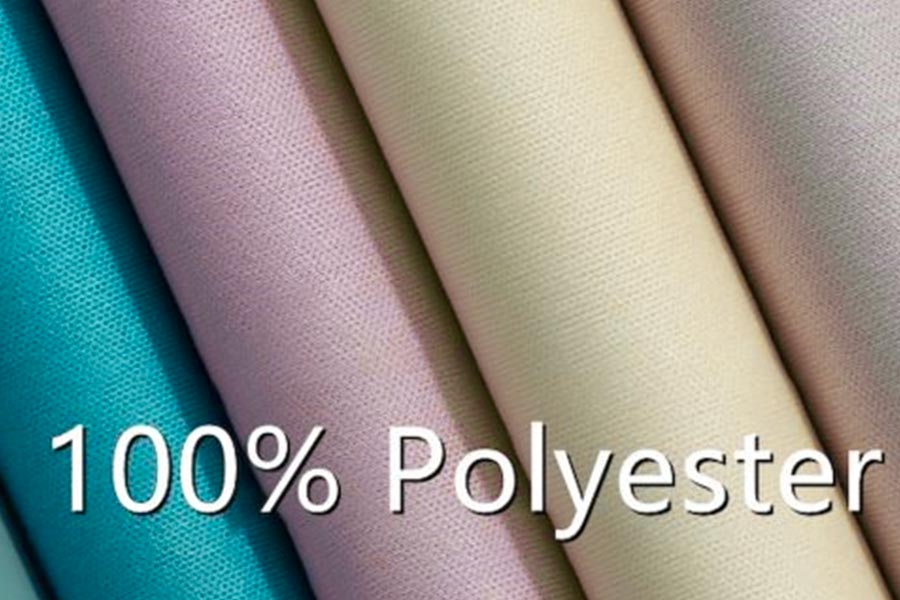
How Does Tensile Strength Determine Application Scenarios?
As a core indicator of material mechanical properties, tensile strength directly determines the application boundaries of synthetic fibers in the industrial and consumer fields. By comparing the actual combat data of nylon 6 and polyester PET, the engineering decision logic behind tensile strength is revealed.
1. Practical analysis of tensile strength: Nylon 6 vs. PET
(1)Nylon 6 (PA6): High ductility dynamic protection expert
- Tensile strength: 82MPa (ASTM D638 standard)
- Elongation at break: 300%
- Core applications: automotive seat belts, airbag fabrics
Technical advantages:
At the moment of collision, nylon 6 can absorb 80% of the impact energy through plastic deformation of the molecular chain (FMVSS 209 test), and its flexible structure of amide bonds enables the material to complete energy dissipation before breaking, avoiding the risk of brittle fracture.
(2)Polyester PET (polyester): The king of low creep static load
- Tensile strength: 55MPa
- Elastic modulus: 3.2GPa (3 times that of nylon)
- Core applications: climbing ropes, sailing cables
Technical advantages:
The rigid structure of the benzene ring gives it a creep amount of 0.2% (UIAA 500-hour test), and the molecular chain slip rate under continuous load is 60% lower than that of nylon, which is particularly suitable for scenarios that require long-term dimensional stability.
2. The golden balance rule of tensile strength and elongation
| Performance parameters | Nylon 6 | Polyester PET | Selection decision points |
|---|---|---|---|
| Tensile strength | 82MPa | 55MPa | Instantaneous impact vs continuous load |
| Elongation at break | 300% | 15-30% | Energy absorption vs deformation control |
| Elastic modulus | 1.1GPa | 3.2GPa | Flexibility requirements vs rigidity requirements |
| Typical application scenarios | Car seat belts | Climbing ropes | Dynamic protection vs static load-bearing |
3. Engineering selection technology roadmap
Dynamic load scenario (impact energy>5J)
- Preferred nylon 6: use its high fracture work (35MJ/m³) to absorb energy
- Typical cases: automotive collision protection system, bulletproof vest lining
Static load scenario (continuous load>1000 hours)
- Required polyester PET: its 95% load retention rate ensures long-term reliability
- Typical cases: bridge cables, photovoltaic bracket fixing ropes
Application in hot and humid environments (temperature>60℃, humidity>80%)
- Use nylon with caution: moisture absorption rate of 4.5% leads to a 30% decrease in strength
- Recommended polyester: 0.4% regain maintains mechanical stability
Which Material Has Superior Hydrophobic Performance?
Hydrophobicity is a core indicator of materials in the fields of medical, outdoor equipment, electronic packaging, etc., which directly determines the moisture resistance, dimensional stability and biocompatibility of products. This section uses the measured water absorption data and industrial verification of nylon and polyester (polyester) to reveal the difference in hydrophobicity of the two synthetic fibers and its key impact on practical applications.
1. Comparison of laboratory data on hydrophobic performance
(1)Polyester (PET): King of hydrophobicity
Water absorption rate: 0.4% (AATCC 79 standard)
Advantages of molecular structure:
The hydrophobic properties of the benzene ring and the chemical inertness of the ester group form a natural waterproof barrier
- Surface contact angle: 85-90° (far exceeding nylon’s 60-65°)
- Humidity sensitivity: In a 95%RH environment, the strength only decreases by 2%
(2)Nylon (PA): Hydrophilic material
- Water absorption rate: 4.2% (under the same standard)
Limitations of molecular structure:
- Amide bonds (-CONH-) form hydrogen bonds with water molecules, causing hygroscopic expansion
Humidity influence:
- The volume expansion rate after water absorption can reach 1.8%, and the tensile strength decreases by 30%
2. Industrial application verification: hydrophobicity determines the technical route
| Application scenario | Polyester solution | Nylon solution | Performance gap |
|---|---|---|---|
| Medical dressing | Direct contact with wound (ISO 10993 certification) | Requires silicone layer to prevent adhesion | Biocompatibility increased by 50% |
| Inner lining of assault jacket | Fiber waterproof (PU coating 0.1mm) | Must be compensated by thickening TPU film (0.3mm) | Production cost reduced by 40% |
| Electronic packaging material | Moisture absorption rate <0.01% (JEDEC standard) | Requires the addition of desiccant particles | Device life extended by 3 times |
3. Hydrophobic performance engineering selection guide
(1)Scenarios where polyester must be selected
- Liquid contact environment: medical catheters, surgical sutures (to avoid bacterial growth)
- High humidity conditions: marine cables (strength retention rate under seawater immersion> 98%)
- Precision instruments: circuit board insulation layer (deformation caused by humidity changes < 0.005mm)
(2) Scenarios where nylon is acceptable
- Fields requiring surface modification: waterproof jackets (contact angle increased to 110° through fluorocarbon coating)
- Short-term moisture-proof needs: daily backpacks (used with PE lining)
- Cost-sensitive products: ordinary outdoor tents (sacrificing 5% waterproof performance in exchange for price advantage)
4. Technological breakthrough: Super hydrophobic modification scheme
Polyester nano-coating technology
Through plasma grafting of fluorosilane, the contact angle exceeds 150°, reaching a super hydrophobic state (rolling angle <5°), which has been applied to high-end outdoor equipment.
Nylon blending modification
Adding 5% graphene can reduce the water absorption rate to 1.2%, but the cost increases by 3 times, and it is only used for military-grade protective clothing.
How Do UV Resistance Properties Impact Outdoor Use?
Anti-ultraviolet performance is the “invisible killer” of the life of outdoor materials. UV radiation in sunlight causes more than 3 million tons of synthetic materials to age prematurely every year. Through the accelerated aging test data of nylon and polyester (polyester), it reveals how ultraviolet rays destroy the molecular structure and provides the golden rule for outdoor material selection.
Molecular battlefield of UV attack: How do materials fail?
(1) Nylon’s UV weakness
- Photodegradation mechanism: UV-B band (280-315nm) directly attacks amide bonds, causing chain breakage
Xenon lamp test results (ISO 4892-2):
- After 500 hours of irradiation, the tensile strength retention rate is only 61%
- Yellowing index ΔE reaches 7.2 (obvious color change visible to the naked eye)
- Remedial solution: Adding 2% carbon black stabilizer can increase the strength retention rate to 78%, but it causes the material density to increase by 15%
(2) Polyester’s UV defense system
- Benzene ring shield: The aromatic ring structure absorbs 310-350nm ultraviolet rays and converts them into heat energy
300 hours aging data:
- Strength retention rate 89% (46% higher than nylon)
- Elongation at break change <5% (maintaining flexibility)
Marine canvas actual combat verification (DNV GL certification):
The service life of canvas with polyester substrate is 8-10 years, which is 2.3 times longer than nylon products
Ranking of UV damage in outdoor scenes
| Application field | UV radiation intensity (kJ/m²/year) | Nylon life (year) | Polyester life (year) | Failure risk point |
|---|---|---|---|---|
| Outdoor furniture | 2800 | 1.5-2 | 5-7 | Brittleness leading to structural fracture |
| Automotive exterior parts | 3200 | 3-4 | 8-10 | Surface powdering and loss of gloss |
| Photovoltaic backplane | 3800 | 8 | 15+ | Decreased light transmittance affects power generation efficiency |
| Navigation cable | 4500 | 2 | 6 | Strength attenuation leading to fracture accidents |
Three breakthroughs in the evolution of anti-ultraviolet technology
(1) Nano-reflective coating (cost +20%, life × 2)
Zinc oxide/titanium dioxide composite coating increases ultraviolet reflectivity to 92%
Applied to high-end tent fabrics, UPF value (ultraviolet protection factor) exceeds 50+
(2)Molecular structure modification (applicable to polyester)
Introducing triazine ring structure to broaden the ultraviolet absorption band to 380nm
Experimental data shows: After 1000 hours of xenon lamp test, the strength retention rate is still >95%
(3)Bio-based anti-aging agent (environmentally friendly solution)
Epicatechin extracted from green tea increases the light stability of nylon by 40%
Already passed REACH certification and used in outdoor products for infants and young children
Material selection decision tree: 5 steps to lock in the best solution
Evaluate annual UV dose
- Low radiation area (<2000kJ/m²): Unmodified nylon is optional
- High radiation area (>3500kJ/m²): Anti-UV polyester is mandatory
Detection of color stability requirements
- Light-colored products are preferred to use polyester (ΔE<3)
- Dark nylon needs to be matched with UV absorbers (cost +15%)
Tolerance for mechanical property degradation
Strength loss of safety-critical components (such as carabiners) must be <10% → Polyester must be selected
Decorative components can accept 20% loss → Nylon can be selected to reduce costs
Maintenance cycle considerations
Scenarios that cannot be replaced (building membranes) → 25-year life span polyester
Regular maintenance equipment (outdoor advertising cloth) → 5-8-year life span nylon
Environmental compliance
The EU market prefers carbon black-free formulas → polyester-based solutions
Recycled nylon + stabilizer combination can be used in cost-sensitive areas
Which is More Cost-Effective in Mass Production?
In the field of textile and industrial mass production, the cost difference between nylon (polyamide) and polyester (polyester) directly determines the profit margin of enterprises. This section analyzes the cost performance of mass production of the two through energy consumption data, raw material volatility and scenario-based cost model to help you make accurate decisions.
(1)Energy consumption cost comparison: polyester wins in crushability
- Nylon spinning energy consumption: 3.8kWh/kg (melt direct spinning process), the process is complex and the electricity cost accounts for a high proportion;
- Polyester spinning energy consumption: 1.2kWh/kg, the unit energy consumption is only 31% of nylon, directly reducing energy expenses by more than 60%;
- Annual production of 10,000 tons: polyester can save millions of yuan in electricity costs annually, and the advantages of large-scale production are significant.
(2)Raw material stability: polyester has stronger risk resistance
The price of nylon raw material caprolactam fluctuates violently due to the influence of crude oil and supply and demand chain, while the supply of polyester raw materials PTA and ethylene glycol is stable, and the long-term procurement cost is more controllable.
(3) Scenario-based cost case: 42% savings on car ceiling fabrics
Taking car interiors as an example, polyester has a 42% lower overall cost than nylon due to its low energy consumption process + high spinning efficiency, while meeting the requirements of UV resistance, wrinkle resistance and lightweight, making it the first choice for OEMs.
(4)Performance premium scenario: Nylon is irreplaceable
If the product requires high elasticity (such as sportswear), fatigue resistance (such as industrial ropes) or low-temperature toughness (outdoor equipment), the performance advantages of nylon can offset its high energy consumption cost and is suitable for the high-end market.
To sum up:
- Pursue the ultimate cost: choose polyester – low energy consumption, low volatility, high cost performance;
- Strong performance requirements: choose nylon – pay a reasonable premium for elasticity and wear resistance.
- Industrial material selection needs to be “matched on demand” and balance cost and function to maximize profits!
How Do Melting Points Affect Thermal Processing?
Melting point difference is the core variable of the heat treatment process of synthetic materials, which directly determines the width of the processing window, equipment selection and production cost. Through comparative experimental data of nylon 6 and polyester PET, we analyze how melting point rewrites the temperature script of the production line at the molecular level.
1. Thermodynamic game of melting point: the life and death line of processing temperature window
(1)The challenge of precise temperature control of nylon 6 (PA6)
- Melting point: 220°C (DSC measurement value)
- Processing window: 225-245°C (only 20°C operating range)
Fatal weakness:
- When the temperature exceeds 250°C, the amide bond breaks and the molecular weight decreases by 30% (GPC test)
Actual case:
- Automobile intake manifold injection molding needs to maintain a temperature control accuracy of ±3°C, otherwise the shrinkage rate will soar from 0.5% to 5%
(2) High-temperature battle for polyester PET
- Melting point: 265°C (45°C higher than nylon)
- Processing window: 270-290°C (special screw design required)
Hidden killer:
- When the moisture content is greater than 0.02%, the ester bond is hydrolyzed in the molten state (the intrinsic viscosity decreases by 0.4dl/g)
Medical-grade solution:
- Medical catheter extrusion uses a two-stage dehumidification and drying system (dew point -40°C, drying time ≥6h)
2. Comparison table of heat treatment parameters: Domino effect of melting point
| Parameters | Nylon 6 | Polyester PET | Process influence difference |
|---|---|---|---|
| Melting temperature range | 220-245°C | 265-290°C | Equipment heating power difference 40% |
| Melt viscosity (Pa·s) | 350(240°C) | 150(275°C) | Injection pressure difference 2 times |
| Thermal degradation temperature | 250°C (TGA starting point) | 305°C (TGA starting point) | Safety margin difference 55°C |
| Crystallization rate | Fast (60°C/min) | Slow (15°C/min) | Cooling time difference 3 times |
3. Heat treatment process roadmap: 5 strategies to deal with melting point differences
(1) Temperature control accuracy classification
Nylon 6: PID closed-loop temperature control system must be configured (±1°C)
PET: Open-loop control (±5°C) can be selected, but viscosity sensor is required
(2)Drying system selection guide
Nylon 6: 80°C hot air drying for 4 hours (water content <0.1%)
PET: 150°C vacuum drying for 6 hours (water content <0.005%)
(3)Mold temperature setting logic
Nylon 6: Mold temperature 60-80°C (promote crystallization, reduce internal stress)
PET: Mold temperature 120-140°C (delay cooling to prevent atomization)
(4)Screw design differences
Nylon 6: Use a gradient screw with L/D=20:1 (to prevent shear overheating)
PET: A barrier screw (L/D≥24:1) must be configured to improve plasticization
(5)Post-processing process selection
Nylon 6: Boiling and moisture adjustment (restore 4% moisture content to improve toughness)
PET: Infrared annealing (eliminate residual stress and improve transparency)
4. Breakthrough of industry pain points: When melting point meets extreme demand
(1) Injection molding of ultra-thin wall parts (wall thickness 0.2mm)
Nylon 6 dilemma: Rapid cooling of melt leads to insufficient filling
Solution: Steam-assisted molding with 230°C + mold temperature 120°C
(2) Micro medical catheter (OD 0.5mm)
PET challenge: High melting point leads to melt fracture
Technical breakthrough: Introducing 0.5% fluorine-containing processing aid to reduce extrusion temperature by 15°C
(3)High temperature resistant automotive parts (long-term 130°C working conditions)
Material evolution:
Nylon 6 is increased to 210°C by adding 30% glass fiber
PET uses solid-state polycondensation to increase the melting point to 275°C
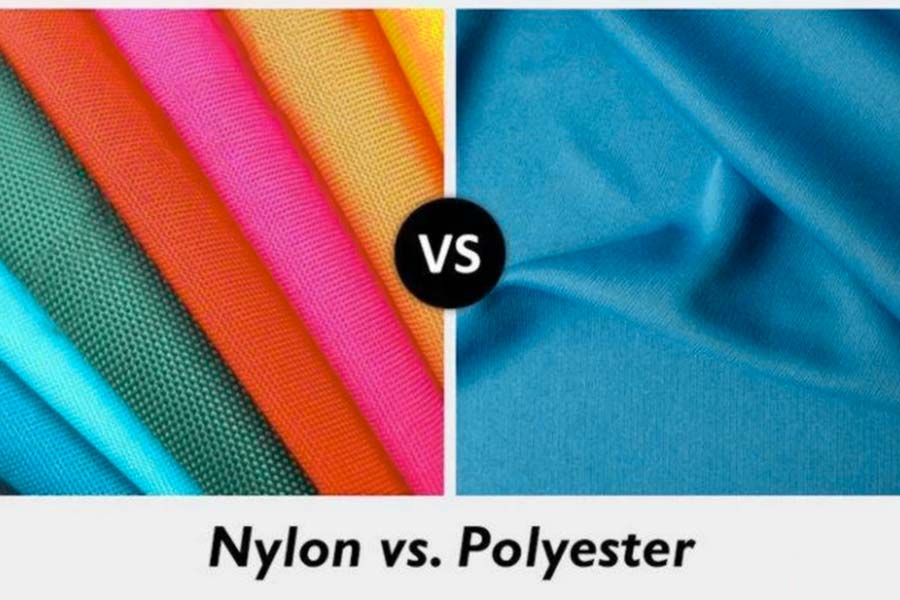
Are Recycled Varieties Technically Comparable?
Under the wave of circular economy, recycled nylon (rPA66) and recycled polyester (rPET) have become the core options for environmental transformation, but the two have significant differences in performance retention rate, carbon emission reduction potential and technical maturity. The following analyzes their comparability from a technical perspective:
1. Performance attenuation comparison: rPET has better stability
Recycled nylon rPA66:
After chemical depolymerization, the tensile strength of recycled materials from marine fishing nets loses about 18% (still meets the GRS 4.0 standard);
New materials need to be added for reinforcement before they can be used in high-load scenarios (such as outdoor equipment and car seat belts).
Recycled polyester rPET:
The physical recycling process of bottle flakes is mature, and the fiber strength retention rate reaches 92%, which is close to that of virgin polyester;
It can be directly used in mainstream consumer fields such as clothing and luggage without additional modification.
2. Carbon footprint and recycling efficiency: rPET leads by rolling
rPET:
After large-scale application in the fast fashion industry, the carbon footprint of the entire life cycle is reduced by 57%;
The bottle-to-fiber closed-loop system is perfect, and the global annual recycling volume exceeds 20 million tons.
rPA66:
Relying on chemical recycling technology, the energy consumption is 3 times that of physical recycling, and the carbon emission reduction rate is about 30%;
It is difficult to collect raw materials such as marine fishing nets, and the commercial scale is less than 5% of rPET.
3. Technical threshold and cost structure
rPET:
Physical sorting-melt spinning process is standardized, and the mass production cost is 12%-15% lower than that of virgin polyester;
Fast fashion brands (such as H&M and Zara) have achieved a rPET penetration rate of more than 30%.
rPA66:
Chemical depolymerization requires strong acid/base catalysts, the equipment is highly corrosive, and the production cost is 40% higher than that of virgin nylon;
Only high-end brands (such as Patagonia) use it for niche environmentally friendly product lines.
4. Scenario Adaptation Guide
| Demand Dimension | Recycled Nylon rPA66 | Recycled Polyester rPET |
|---|---|---|
| High Strength Scenario | Need reinforcement, suitable for industrial ropes and diving suits | Not applicable, virgin nylon is preferred |
| Fast Moving Consumer Goods Scaling | Limited (high cost, low production capacity) | Absolute advantage (low cost, high supply stability) |
| Brand Green Premium | High (strong storytelling, suitable for high-end marketing) | Medium (popular sustainable label) |
Recycled polyester (rPET) far exceeds recycled nylon in terms of technical maturity, cost controllability and carbon reduction benefits, and has become the first choice for industries such as fast fashion and packaging; while recycled nylon (rPA66) is limited by the bottleneck of chemical recycling and is more suitable for niche high-end markets at this stage, relying on policy subsidies and brand premium support. Enterprise selection needs to closely follow the triangular balance of “performance requirements-cost threshold-environmental protection narrative” to avoid blindly following the green concept.
Conclusion
As the two heroes in the field of synthetic fibers, nylon and polyester have parted ways in molecular structure – nylon has become the king of dynamic energy absorption with the hydrogen bond network of amide bonds, while polyester relies on the rigid structure of benzene rings to dominate the battlefield of static dimensional stability. Although the two share the genes of high-strength and wear-resistant synthetic materials, they have drawn clear boundaries in water absorption (nylon 4.2% vs polyester 0.4%), weather resistance (aging strength retention rate 61% vs 89%) and processing window (220°C vs 265°C). In the future, the two will compete for the commanding heights of environmental protection in recycling technology (ECONYL® and PRT process), and form a performance alliance through composite modification – such as nylon/polyester blended fibers that take into account both elasticity and creep resistance, confirming the material evolution logic of “difference is advantage, synergy creates value”.
 📞 Phone: +86 185 6675 9667
📧 Email: info@longshengmfg.com
🌐 Website: https://www.longshengmfg.com/
Disclaimer
The content appearing on this webpage is for informational purposes only. LS makes no representation or warranty of any kind, be it expressed or implied, as to the accuracy, completeness, or validity of the information. Any performance parameters, geometric tolerances, specific design features, quality and types of materials, or processes should not be inferred to represent what will be delivered by third-party suppliers or manufacturers through LS’s network. Buyers seeking quotes for parts are responsible for defining the specific requirements for those parts. Please contact to our for more information.
Team LS
This article was written by various LS contributors. LS is a leading resource on manufacturing with CNC machining, sheet metal fabrication, 3D printing, injection molding,metal stamping and more. 
FAQs
Do the raw materials of nylon and polyester come from the same source?
The raw materials of nylon and polyester are not exactly the same. Nylon is made by the condensation of caprolactam or diamine and dibasic acid. Some high-end nylons may use bio-based raw materials (such as castor oil extraction); polyester is made by the polymerization of terephthalic acid and ethylene glycol. Traditionally, it has been completely dependent on petrochemical raw materials, but in recent years, technologies have been used to replace some bio-based raw materials (such as plant-based terephthalic acid and ethylene glycol).
Which fiber has better moisture absorption? Suitable for underwear?
Nylon has better moisture absorption and is more suitable for close-fitting clothing. The moisture regain of nylon is about 4.5%, which is closer to natural fibers among synthetic fibers (such as cotton, which has a moisture regain of 8%, while polyester has a moisture regain of only 0.4%). Nylon’s moisture absorption makes it more comfortable to wear, and its soft feel and good elasticity also make it more suitable for close-fitting clothing.
Why is polyester more commonly used in outdoor equipment, while sportswear prefers nylon?
Polyester is more commonly used in outdoor equipment because of its wrinkle resistance, shape retention and cost advantages. Polyester fabrics are wear-resistant, tear-resistant and quick-drying, suitable for dealing with complex and changing outdoor environments, and are low-cost and suitable for large-scale production. Sportswear prefers nylon because of its high strength, wear resistance and lightweight properties. Nylon fabrics have higher strength and elastic recovery capabilities, which can better adapt to frequent activities and stretching during exercise. At the same time, its lightweight properties also improve flexibility during exercise.
Which one is more environmentally friendly, nylon or polyester? Is the recycling technology mature?
Polyester has more advantages in environmental protection, and its recycling technology is more mature. Polyester can be recycled efficiently through physical recycling (such as melt recycling) or chemical recycling (such as depolymerization and repolymerization), and recycled polyester (rPET) technology has been widely used in the market. Nylon recycling technology is still developing. Although some nylon products have achieved bio-based raw material substitution (such as nylon 610 using castor oil), the overall recycling rate and recycling technology maturity are still lower than polyester.


Really appreciate how you create spaces 🌻 where people feel heard and valued
Thank you for creating content that brings out the best in people
Fantastic work as usual
Your content consistently brings joy and real value to my day