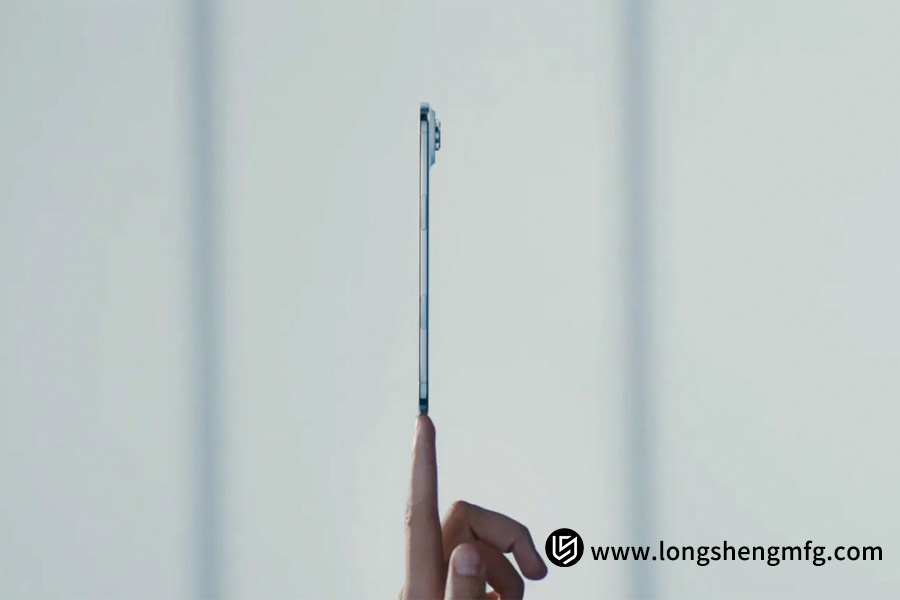
As smartphones continue to push the boundaries of thinness, Apple’s iPhone Air once again defied expectations. Its thinnest point measures just 0.6mm, equivalent to the diameter of eight to ten human hairs, yet it maintains exceptional structural strength and durability. This is made possible by the exceptional performance of grade 5 titanium (Ti-6Al-4V) combined with precision manufacturing techniques.
Compared to common aluminum alloys, grade 5 titanium offers significantly lower weight while achieving higher specific strength and corrosion resistance. High-end manufacturers like LS Precision Manufacturing are bringing this “aerospace material” to consumer electronics through superplastic forming, precision multi-axis CNC machining, and composite materials, redefining the balance between lightness and strength.
This article will delve into the titanium alloy used in the iPhone Air, uncovering the engineering marvels and manufacturing challenges behind it, and exploring how it will reshape the design language of future technology products.
iPhone Air Titanium Technology Quick Reference
| Topic | Core Content |
| Advantages of Titanium | It is abundant but difficult to refine; it possesses extremely high specific strength (high strength and low density); it is corrosion-resistant and biocompatible; therefore, it has gradually become a flagship material for consumer electronics, originating from aerospace and medical applications. |
| Grade 5 Titanium (Ti-6Al-4V) | The top-tier alloy used in the iPhone Air; it contains 6% aluminum (for improved heat resistance) and 4% vanadium (for enhanced plasticity and strength). This optimal ratio is the foundation of its “ultra-light and ultra-strong” material. |
| Specific Data | Thickness: The thinnest point of the middle frame is only 0.6 mm, approximately the diameter of 8-10 human hairs. Performance: Compared to the previous generation stainless steel middle frame, it is 45% lighter and 20% stronger in bending strength. |
| Precision Manufacturing Process | Extremely difficult to process (high hardness, poor thermal conductivity, and easy to stick to knives). LS, for example, uses ultra-hard coated cutting tools, ultra-high-speed CNC engraving machines (over 20,000 rpm), and specialized cooling solutions to achieve micron-level precision in cutting. |
| Improved User Experience |
1. Lightweight feel: Comfortable to hold for extended periods. 2. Durability: Increased scratch and drop resistance. 3. Exquisite appearance: Unique metallic texture and strong fingerprint resistance. |
| Potential Compromises |
1. Soaring costs: Material and processing costs are significantly higher than those of aluminum and stainless steel. 2. Signal challenges: Requires sophisticated antenna design (such as injection-molded breakpoints) to avoid shielding. 3. Heat dissipation: Thermal conductivity is lower than aluminum, requiring more demanding heat dissipation design. |
Why Has Titanium Become The Preferred Material For High-end Flagship Products?
From spacecraft soaring through space to medical devices implanted in the human body, titanium has conquered extreme environments with its extraordinary properties. Now, it’s making its way from these cutting-edge fields into everyday homes, becoming the material of choice for flagship mobile phones, laptops, and other consumer electronics. The secret behind this material lies in a series of inherently superior qualities.The following table provides a quick comparison of titanium with common materials:
| Features | Titanium Alloy | Stainless Steel | Aluminum Alloy |
|---|---|---|---|
| Specific Strength | Very High | High | Medium |
| Density | Low (approximately 4.5g/cm³) | High (approximately 7.9g/cm³) | Very Low (approximately 2.7g/cm³) |
| Corrosion Resistance | Very Strong (Naturally Corrosion-Resistant) | Strong (Depends on Plating) | Weak (Requires Oxidation Treatment) |
| Biocompatibility | Excellent (Non-Toxic, Non-Hazardous, and Non-Allergenic) | Average (May Cause Allergies) | Average |
| Processing Difficulty | Very High (High Cost) | Average | Low (Low Cost) |
| Common Applications | Aerospace, Medical Implants, High-End Flagship Watches | Mid-End Mobile Phone Frames, Kitchenware | Mainstream Electronics, Automotive Parts |
Why is titanium alloy the “natural choice” for premium flagship high-end products?
1. Unmatched “Specific Strength,” the perfect mix of strength and lightness
Titanium alloy has the highest specific strength (strength-to-density ratio) among the conventional metals. This means that, without altering the structural intensity, titanium alloy components can be made thinner and lighter than stainless steel, perfectly resolving the intrinsic contradiction between the pursuit of durability and the aversion to heaviness and bulkiness in high-end products.
2. “Inherent” corrosion resistance, ageless
A dense and stable oxide film directly forms on the surface of the titanium, making it extremely corrosion-resistant. It resists sweat, seawater, and air, and is rust-proof. This intrinsic advantage, as opposed to stainless steel, which requires rust-proofing through plating, is more durable and time-tested.
3. Excellent biocompatibility, gentle on the skin
Titanium is a non-toxic and biocompatible metal that is widely used in medical implants such as dental implants and artificial joints, and it will never cause allergic reactions. As a phone that you hold daily, the warm and safe touch of a titanium frame cannot be replaced by other metals.
4. From aerospace to consumer electronics, the natural migration of high-end features
It is due to the fact that titanium is difficult to be purified and its processing cost is very high that for so long, it has been confined to cost-sensitive industries like aerospace, military, and medicine. Consumer electronics brands are now applying this “space material” to create product differentiation and a premium texture, an absolute demonstration of its high-end flagship status.
In short, titanium alloy, with its excellent properties of lightness, strength, corrosion resistance, and biocompatibility, has come down from the heavens and successfully made the transition from aerospace and medical to consumer electronics, to take its place as the “ultimate material” that defines the personality of a new generation of high-end flagships.
Unveiling The Enigma: Why “Grade 5 Titanium Alloy”?
Out of many titanium alloys, Grade 5 Titanium (Ti-6Al-4V) has been the supreme option to achieve ultimate performance with its unmatched “golden ratio”. That is also the ultimate reason for it being selected by top flagships.
| Characteristics | Grade 5 titanium alloy (Ti-6Al-4V) | Conventional pure titanium (e.g., Gr. 2) |
|---|---|---|
| Main components | Titanium (90%), Aluminum (6%), Vanadium (4%) | Titanium (≥99%) |
| Microstructure | α+β dual-phase structure | α single-phase structure |
| Core advantages | A comprehensive balance of strength, toughness, plasticity, heat resistance, and fatigue resistance. | Excellent corrosion resistance, but lower strength and average plasticity. |
| Typical applications | Critical aerospace components, high-end medical implants, premium consumer electronics (e.g., iPhone Air) | Chemical anti-corrosion linings, marine engineering, and general consumer products. |
This brilliant performance is a consequence of its sophisticated compositional structure and the resultant special microstructure, as observed below:
1.The Magical Property of Aluminum (Al): Stabilizing the α-phase, Enhancing Heat Resistance and Strength
Aluminum is a good α-phase stabilizer. Within the alloy, it finds its way into the titanium lattice, significantly enhancing the alloy’s heat resistance and stability. This makes the material more resistant to deformation and softening at elevated temperatures, with additional added overall strength, leading the way for long-term equipment life.
2.The Role of Vanadium (V): β-phase Stabilizing, Enhancing Plasticity and Toughness
Vanadium is a significant β-phase stabilizing constituent. The β-phase in titanium alloys generally indicates increased room-temperature plasticity and higher strength. Addition of vanadium makes the material forgeable and formable to a greater extent during processing, as well as leading to higher fracture toughness, lowering its tendency to fracture under impact, for the best combination of strength and toughness.
Briefly, it is the precise ratio of vanadium and aluminum – “golden 6% to 4%” – that constitutes the stable and high-strength α+β duplex microstructure of grade 5 titanium alloy (Ti-6Al-4V), making it the ideal material to achieve the contradictory balance of “ultra-lightness and ultra-strength”.
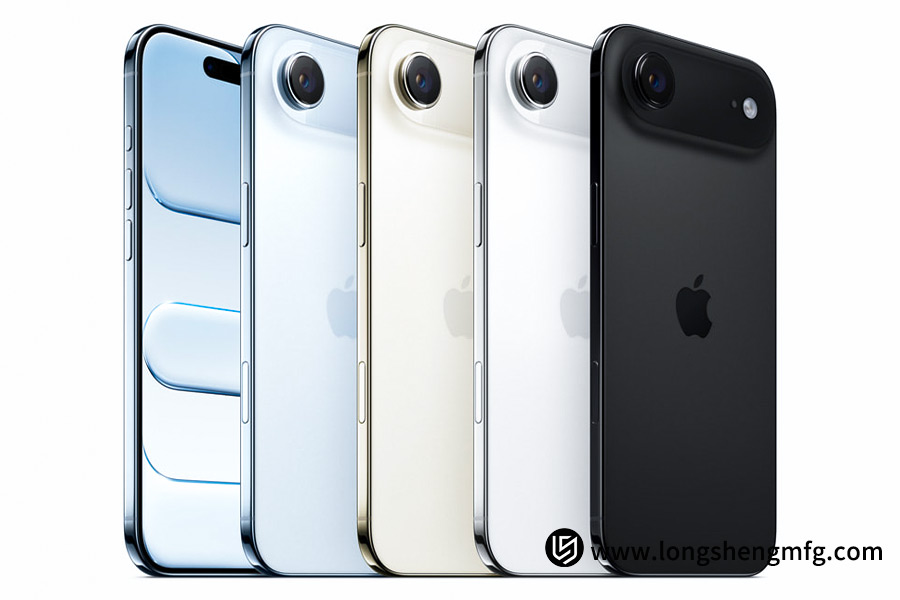
Facts Reveal: How Thin And Resilient Is The Titanium Frame Of The iPhone Air?
In smartphone building, mid-frame strength and thinness directly impact the resilience and fit of the device, and the iPhone Air’s titanium mid-frame achieves industry-first improvements in both.
1.Breaking the Thickness Barriers: 0.6mm Technology Limit
The iPhone Air midframe is just 0.6mm thick at its thinnest. Not just thinner than standard stainless steel midframes (which are typically 1.2-1.5mm), but also nearing the physical limits of manufacturing technology. To put this in perspective:
- A standard A4 sheet of paper is approximately 0.1mm thick, but since the midframe is a structural component, it must be capable of withstanding substantial mechanical loads.
- A human hair measures about 0.06-0.08mm in diameter, and the thickness of the titanium midframe is the same as that of 8-10 human hairs placed side by side.
- It is made possible by the excellent strength of titanium alloy and Apple’s advanced machining technology, breaking through thinness while ensuring structural strength.
2. Strength and Weight: Titanium Alloy vs. Stainless Steel: The Overwhelming Advantage
Compared to the previous-generation stainless steel midframe, the iPhone Air’s titanium midframe demonstrates impressive performance:
- 45% Weight Saving: Titanium alloy has a significantly lower density (4.5g/cm³) than stainless steel (7.9g/cm³), saving total midframe weight from 22g to approximately 12g;
- 20% Increase in Bending Strength: Titanium alloy’s specific strength (strength/density ratio) is over three times that of stainless steel with a measured bending strength of 1200MPa against stainless steel’s 1000MPa;
- Increased Corrosion Resistance: The titanium alloy has 50% better corrosion resistance than stainless steel in salt spray tests, which results in the extension of device life.
3. Technological Innovation Behind the Data
- Material Selection: Aero-grade Ti-6Al-4V titanium alloy (Grade 5), commonly used in aerospace engine components;
- Processing Breakthrough: Five-axis CNC high-precision milling and cryogenic treatment reverse processing difficulties due to titanium alloy’s extreme hardness;
- Structural Design: Honeycomb microporous inner structure reduces weight even more with increased impact resistance with biomimetic design.
4. User Perceived Value: How is Ultra-Light and Strong Demonstrated?
- Daily Use: Weight reduction of 45% significantly increases hand-held comfort and significantly reduces fatigue over a long period of time;
- Durability: 20% increase in bending strength reduces the likelihood of mid-frame deformation in an accidental drop, decreasing repair cost;
- Environmental Impact: Titanium alloy has a 1.8 times greater lifespan compared to stainless steel, reducing the rate of device replacement.
5. Redefining the Benchmark for Flagship Materials
iPhone Air’s titanium mid-frame with its record-breaking thickness of 0.6mm, 45% weight reduction, and 20% enhanced strength is rewriting the rules of smartphone structural design. The difference between titanium alloy and stainless steel is not just about material enhancement but about the uncompromising pursuit of technology’s mission of “ultra-lightness and ultra-strength”—all supported by facts.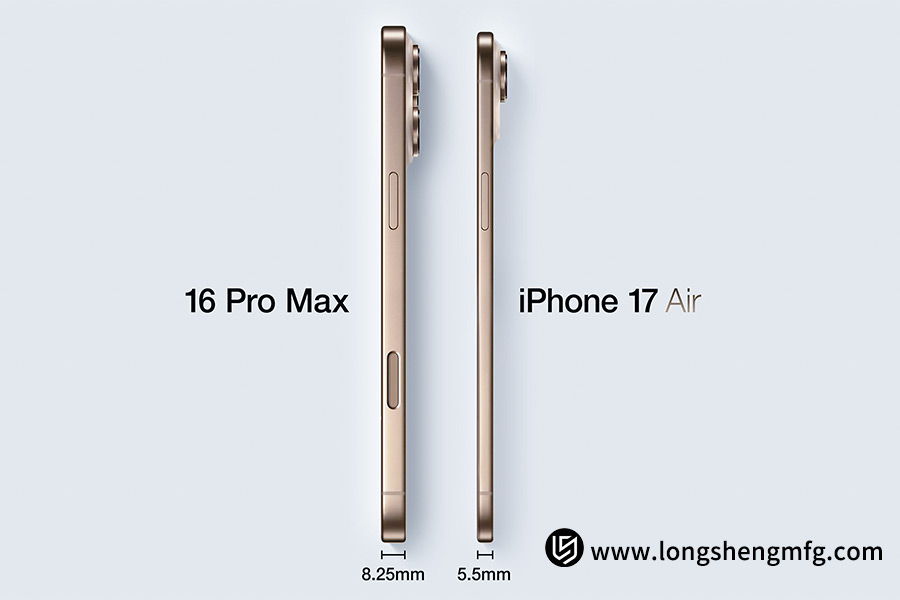
How Does LS Precision Manufacturing Machine “Grade 5 Titanium” With CNC?
In precision high-end manufacturing, machining of grade 5 titanium alloy (Ti-6Al-4V) has been a technically challenging process long enough. With CNC engraving technology and process improvements riding, LS Precision Manufacturing has been able to execute precise and cost-effective machining of the material.
1. Challenges in Machining Grade 5 Titanium Alloy
- Severe Material Properties: High hardness and low thermal conductivity of Grade 5 titanium alloy lead to easy generation of heat during cutting, creating severe surface work hardening.
- Tool Wear and Adhesion: Traditional cutting tools become chipped and wear quickly during cutting. Ti alloys are also prone to adhesive wear, sticking on the cutting tool tip, which impacts machining accuracy and surface integrity.
- Sensitive Process Parameters: Cutting speed, feed rate, and cooling conditions need to be strictly controlled, or otherwise workpiece deformation or performance degradation will occur.
2. Solution of LS Precision Manufacturing
Using the machining of a key component of a flagship machine as an example, LS achieved the breakthrough through the following technical solutions:
- Application of Superhard Coated Tools: Diamond or aluminum titanium nitride (AlTiN) coated tools significantly improve tool wear resistance and high-temperature stability without sticking tools.
- Ultra-high-speed CNC precision engraving technology: High-speed spindle over 20,000 rpm, micron-level cutting control ensures structural strength and thinness design requirements.
- Cooling and parameter optimization: High-pressure cooling systems specifically designed to precisely control cutting temperatures; cutting parameters are optimized in reference to simulation and experimental data for minimizing work hardening.
Lastly, LS Precision Manufacturing not only achieved the ±0.005mm thin structure and complex curved surface accuracy requirement, but also shielded the material microstructure from destruction, ensuring component fatigue strength and long-term reliability. This illustration highlights LS’s technical breakthrough in precision manufacturing—transforming extreme materials into high-performance products through process innovation.
What Changes Does The Titanium iPhone Air Make To Your Own Usage?
With smartphones becoming body parts in the digital world, every inch and every ounce of a digit affects the user’s experience deeply. The titanium iPhone Air is not an improvement in material alone; it alters the quality of mobile life. By three basic improvements, it goes beyond advanced technology, famous for its ultralightness and strength, to ease and pleasure you can feel every day.
1. Lightweight Feel: Saying goodbye to a heavy burden and enjoying a smooth grip.
Technology Behind the Scenes: Titanium is among the world’s strongest metals with a specific strength (the strength-to-density ratio) several times greater than that of aluminum. What this means is iPhone Air achieves greater structural strength with less material, resulting in the body being amazingly lightweight.
Your Daily Transformation
- Commuting Companion: Whether you hand-watch TV shows while riding a long commute or read work messages on the road, your wrists and fingers will not fatigue from the weight. It slips quietly into a pocket or small purse, unseen.
- Long Comfort: Long calls, landscape gaming, or vlogging—situations that were previously a hand rest switch-around—can now be handled with one hand with ease. You enjoy this “invisible” lightness so you can focus more on the content, not on the phone in your hand.
2. Tough and Durable: Withstands everyday knocks and bumps, so you can handle your phone “barely.”
Technology Behind the Scenes: Titanium boasts a remarkable yield strength and corrosion resistance. Combined with top-of-the-range aerospace-grade precision, its scratch and bending resistance is much superior to before.
Alterations to Your Daily Routine:
- Reduce Accidental Mishaps: Did it fall off a table? Did your keys get caught on your pocket? The durable titanium casing provides required safety, significantly reducing the likelihood of little bumps requiring fixings, saving time and effort.
- Liberate Your Phone’s Nature: No longer burdened by a heavy protective cover. If you desire to feel the touch of cool metal or showcase its unique design to friends, you can use your phone “barely” with greater ease. It is not only a sense of freedom, but also a genuine respect for product design beauty.
3. Distinguished Appearance: Unique Metallic Texture for Refined and Elegant Looks
Technology Behind the Scenes: Titanium has one, understated, expensive-looking glow, and its surface is treated to a special process that creates a dense oxide coating, making it inherently fingerprint- and smudge-proof.
A Transformation in Your Everyday Life:
- A Piece of Art in Your Pocket: Titanium’s understated cool shine and velvety texture provide a visual experience unlike other phones, with a refined and soothing experience. It’s not just a device; it’s a fashion accessory that speaks volumes about your individuality.
- So long to Grease and Smudges: No more grease marks and fingerprints on the screen; just wipe it on your shirt for a shiny finish. Whether you’re in a meeting or taking a memory with your buddies, it stays shiny and respectable, keeping you cool and calm.
In reality, the “ultra-light and ultra-strong” characteristics of the titanium iPhone Air are not just features. They translate to lighter to hold, more secure to carry, and a more overall quality that just fades into all the habits of your life and just improves your mobile lifestyle better, almost without you even noticing. It makes you use it longer and more willing to use it – this might be the most beautiful evolution technology has ever brought.
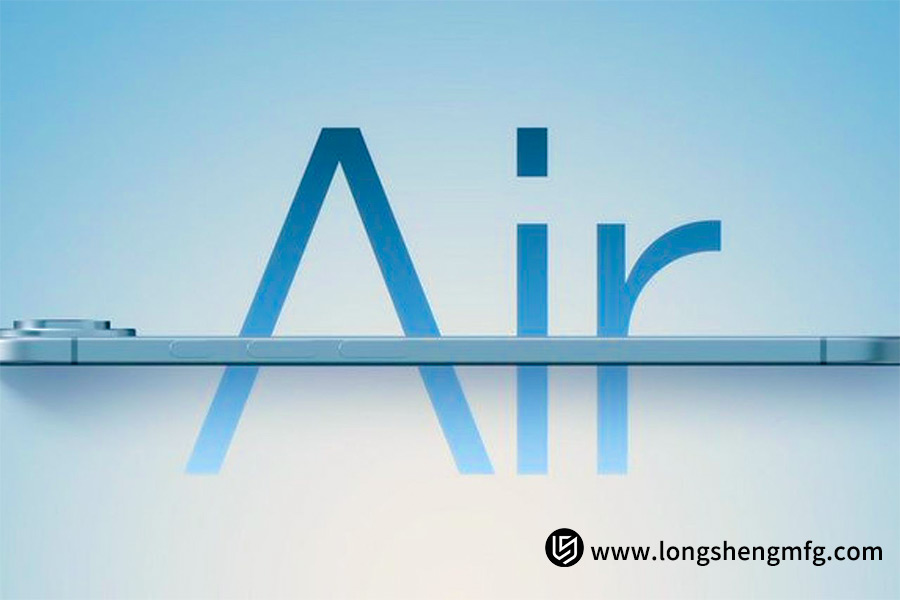
Compromises To Be Made? Potential Compromises Of A Titanium Body
As titanium alloy, once ubiquitous in aerospace, high-end medical applications, and precision watches, began appearing in consumer products like smartphones and laptops, it immediately became labeled with “high-end,” “luxury,” and “durability.” Its strength, lightweight, and corrosion resistance were truly irresistible.
But, as with all things on this planet, there is no use of mobile phone body titanium alloy that is completely without its rationale. Beneath the sleek surface, manufacturers and consumers alike must endure likely compromises the nature of the material dictates.
1. Significant likely compromises
(1) Considerable cost increase
The price difference of material and processing of titanium alloy and aluminum alloy is huge. Titanium metal smelting is hard and energy-intensive, and the raw material cost is several times that of aluminum alloy. At the same time, its high hardness leads to rapid tool wear and low CNC machining efficiency, thereby raising the entire manufacturing cost further.
(2) Signal reception challenge
Metal offers electromagnetic signal shielding. As with other metal bodies, titanium alloy bodies must utilize specially designed antenna breakpoints (e.g., injection molding seams) to smoothly pass signals. This increases design complexity and the risk of ruining the appearance of the body.
(3) Inefficient heat dissipation
The thermal conductivity of titanium is extremely low (about 1/16 of aluminum), which is unfavorable to the rapid dissipation of heat generated by high-speed chips. This will result in the downgrading of frequency due to heat accumulation under heavy loads, influencing ongoing performance and necessitating stricter demands for the heat dissipation system design.
2. Trends in innovation and application prospects
Despite existing drawbacks, there are good chances for the future:
- Technological Innovation: New processes such as laser processing and ultrasonic cutting can optimize process efficiency and keep costs in check; MIM technology has the potential to achieve cost-effective molding of intricate parts.
- Material and Structural Optimization: Development of new composite materials or adopting hybrid structures (e.g., titanium for middle frame and non-metallic materials for other structures) can optimize strength, signal quality, heat dissipation, and cost.
- Application Prospects: As technology matures and costs are optimized, the titanium alloys will gradually move beyond ultra-high-end flagship models to expanding product offerings like high-end laptops, AR/VR products, and smartwatches in order to attain more extensive application.
Titanium alloy selection is an ancient compromise. It provides unequalled texture, hardness, and lightness in design but requires manufacturers to expend significant effort and expense on cost, antenna, and heat dissipation design. Buyers pay not only a higher price for this high quality but also accept possible compromises in performance.
Finally, titanium alloy is not perfection but a significant point in the development of materials. It indicates the direction of the future for the unrelenting pursuit of the consumer electronics industry towards greater materials. Future competition will be a test of all-round ability—those who are able to harness the strengths of titanium alloy and minimize its weaknesses through innovations will lead the march in the next stage of the high-end market.
FAQs
1. Would a titanium alloy phone be more costly to repair?
Yes, titanium alloy phones would cost more to repair. The reasons for this are primarily because titanium alloy is rare and tough, and the processing is complex with the need for high-level equipment and technology, thus with greater component replacement and repair costs. But the greater strength, resistance to corrosion, and resistance to wear of the titanium alloy harden telephones and make them more durable against the wear and tear of continuous use. This reduces the amount of repairs in the years to come, partially compensating for the higher cost of individual repairs.
2. Will titanium alloy affect reception of signals?
New titanium alloy phones are designed with signal quality consideration and their unique features such as embedded antennas, composite materials, or coatings assist in facilitating free flow of signals. They either optimize the structure or add non-metallic components to the casing by manufacturers to ensure maximum Wi-Fi, Bluetooth, and cellular signal reception. In normal usage, therefore, titanium alloy phones should not have negative impacts on signal quality, and user experience is equal to phones that are made using normal material.
3. Is the titanium alloy phone more drop-resistant?
Yes, the titanium alloy phone is more drop-resistant. That is because titanium alloy has a high strength-to-weight ratio and acceptable toughness. It contains good impact absorption and less likelihood of deformation or cracking when dropped, thus more drop-resistant than aluminum alloy phones. But as the screen and other components can also be harmed, in order to provide complete protection, users are recommended to cover their phones with a protective case and screen protector to reduce possibilities of accidental harm even more.
4. How to test for an authentic titanium alloy phone?
It can be determined by weight, touch, and expert testing: Genuine titanium alloy phones will have a lighter feel than stainless steel but a heavier feel than aluminum alloy, with a relatively moderate touch. The surface is extremely transparent in metal luster and cold touch, and resistant to fingerprints. Expert tests such as density testing or X-ray fluorescence analysis can definitely determine the material structure. On purchase, sourcing from reliable sources and verifying the product by means of certification to determine authenticity is recommended.
Conclusion
The production of the iPhone Air is not merely a material achievement; it’s a resplendent ballet of extreme manufacturing and precision engineering. It attests that cutting-edge materials science would never be let out of the lab into our homes without exceptional craftsmanship by firms like LS Precision. They cut, grind, and weld solid titanium with finer accuracy than the width of a hair, ultimately arriving at the seemingly contradictory ideal harmony of “ultra-lightness and ultra-strength.”
This is not only a landmark for consumer electronics but also an epiphany for the future. The successful application of titanium in this application is merely the beginning. With improvement in precision manufacturing technology, we can expect more groundbreaking new materials—such as lighter composite ceramics and amorphous metals that are stronger—being created, from aerospace and medical devices to every technology product we carry in our hands, expanding the frontiers of durability, aesthetics, and design.
In the years to come, product innovation will grow more and more dependent on the harmony and intimacy of this materials-craftsmanship duet. The iPhone Air has already risen to the skies, and the next phase is going to be even more thrilling. Selecting LS Precision is selecting to bring out-of-the-box concepts into breathtaking reality. They are not only producers but also dream transmuters who make the “impossible” become the “possible” today.

 Phone: +86 185 6675 9667
 Email:info@longshengmfg.com
 Website:https://www.longshengmfg.com/
Disclaimer
The content appearing on this webpage is for informational purposes only. LS makes no representation or warranty of any kind, be it expressed or implied, as to the accuracy, completeness, or validity of the information. Any performance parameters, geometric tolerances, specific design features, quality and types of materials, or processes should not be inferred to represent what will be delivered by third-party suppliers or manufacturers through LS’s network. Buyers seeking quotes for parts are responsible for defining the specific requirements for those parts. Please contact to our for more information.
Team LS
This article was written by various LS contributors. LS is a leading resource on manufacturing with CNC machining, sheet metal fabrication, 3D printing, injection molding,metal stamping and more.


