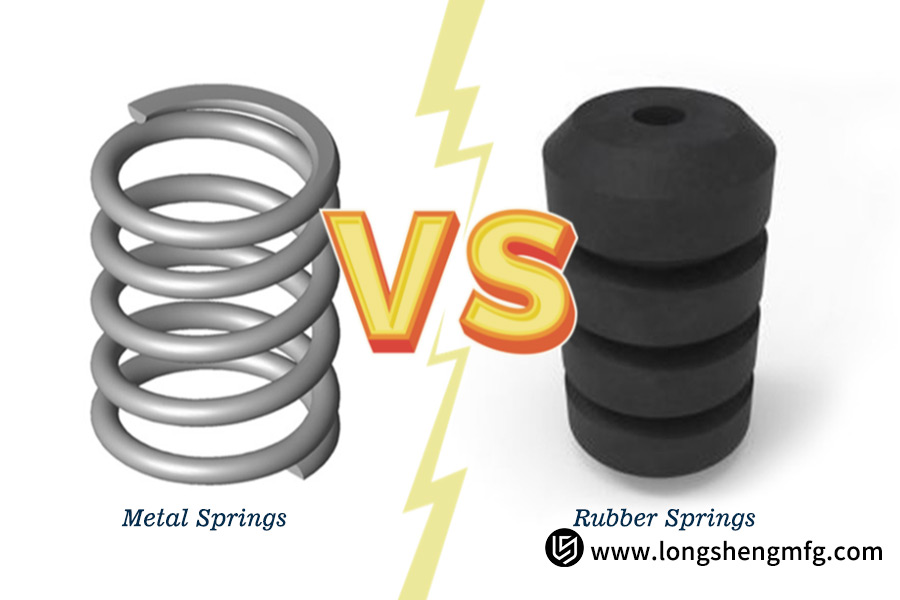
Metal springs and rubber springs are two basic components in mechanical vibration damping and load carrying with their respective inherent advantages. Metal springs are known to be very rigid with a high loading capacity and linear deformation, making them prevalent in heavy machine applications. Rubber springs, on the other hand, have the better of it when the issue of vibration isolation, noise, and high-frequency shock absorption is considered since they have nonlinear deformation.
Having been faced with diverse industrial uses, the precise material selection is crucial for optimum performance. LS Precision is well aware of this. By utilizing in-depth familiarity with material characteristics and well-developed craftsmanship, we offer single-source spring solutions, from material selection through structure design, so that every product is optimized. To save you time, we offer below a brief overview of key points.
Quick Reference Table of Basic Properties of Metal and Rubber Springs
| Characteristic Dimensions | Metal Springs | Rubber Springs |
| Core Materials | High-quality spring steel, stainless steel, etc. | Natural rubber, nitrile rubber, neoprene, etc. |
| Shock Absorption Characteristics | Absorbs and stores energy, prone to reciprocating rebound. | Absorbs and dissipates energy, high damping, and better vibration reduction. |
| Load Capacity High | Strong load capacity, high rigidity. | Medium-low.Relatively low load capacity. |
| Deformation Characteristics Linear | Force-deformation relationship is proportional, precise control. | Non-linear: Initially flexible, then hardens later, providing softer cushioning |
| Environmental Resistance | Resistant to high and low temperatures, oil, but susceptible to corrosion (surface treatment required) | Corrosion-resistant, but sensitive to ozone, heat, and grease (depending on the formulation) |
| Main Advantages | High load capacity, high precision, stable performance, long life. | Good sound insulation, excellent cushioning, no lubrication required, easy installation. |
| Typical Applications | Vehicle suspension, heavy equipment, precision instruments, valves. | Engine mounts, screening equipment, cushioning pads, flexible connections. |
Rubber springs and metal springs are not alternatives, but rather complementary in use. Metal springs are better when high loads and precise control are needed, while rubber springs are better with shock absorption, energy absorption, and noise reduction.
In practical usage, it is often necessary to take care of operating conditions, loads, frequencies, and overall environmental conditions, even to adopt a hybrid design for taking advantage of both.

Why Trust This Guide? Practical Experience From LS Experts
We are not only a spring manufacturer at LS Precision, but your vibration and shock problem-solving partner. LS Precision live our daily life struggling with material property analysis and failure mode research, motivated by our extensive material database, sophisticated fatigue test rigs, and formulation procedures developed on the actual operating environment (oil resistance, high and low temperature exposures, and salt spray exposures). LS Precision understands that a difference as small as in material selection can be tantamount to a world of difference in equipment performance.
In one standard application, one customer’s automation equipment used pure metal springs, and residual high-frequency vibrations added inaccurate readings in precision sensors. LS Precision did not simply alter specifications. Instead, through vibration frequency analysis, we developed a composite spring with a metal core for stability and a specialty rubber cover for use as an energy absorber.
This application successfully isolates harmful vibrations and eliminates accuracy issues. This experiential learning in identifying the cause of the issues is this manual’s secret value.
What Are Metal Springs And Rubber Springs?
There are many varieties of springs used in mechanical devices and industrial equipment, but the most prevalent and uncomplicated varieties are metal springs and rubber springs. Although both share the same title “springs,” they employ very dissimilar materials and principles.
1. Metal Springs:
Metal springs are generally made of high-quality alloy steel materials such as stainless steel and spring steel. They absorb and release energy in the form of their elastic deformation. They have the basic properties of high stiffness, high load-carrying capacity, precise deformation, and high durability. They are widely used in high load-carrying and precision control devices such as heavy-duty machinery and automobile suspensions.
2. Rubber Springs:
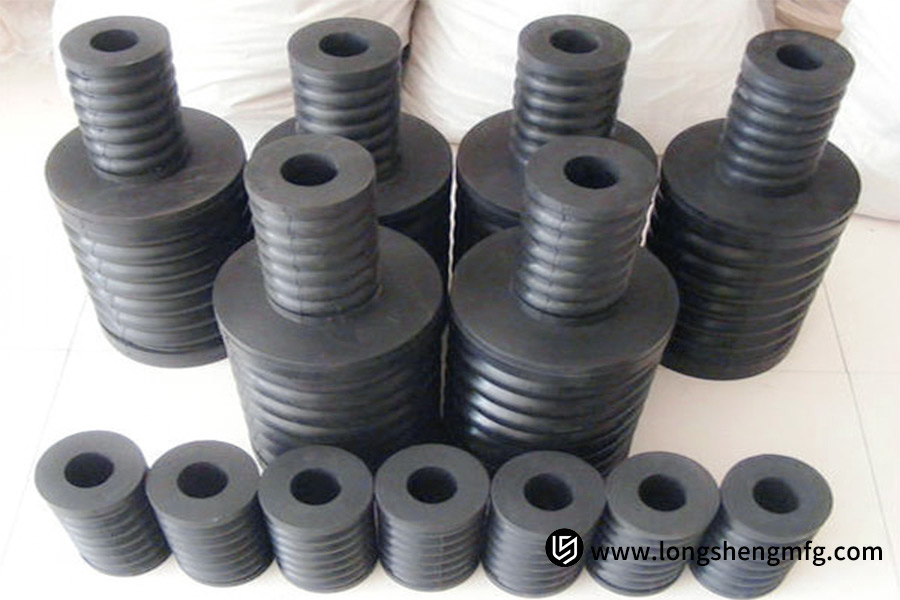
Natural or synthetic elastic polymers (such as rubber) are utilized in rubber springs, and these operate by availing themselves of the viscoelastic properties of polymer materials. Besides compressive support, they also dissipate energy very well through internal friction. This is also very useful in the application of vibration damping, sound insulation, and cushioning. They are extensively used in high-frequency shock isolation applications, such as engine mounts and vibrating screens.
The right type of spring to use depends on the specifications of the specific application. As the experts, LS Precision Manufacturing employs an in-depth understanding of material properties and precise craftsmanship to offer customers the most suitable elastic solutions.
What Are The Five Basic Differences Between Rubber And Metal Springs?
Though both rubber springs and metal springs are used for load bearing and shock absorption, there are certain inherent differences between them. It is crucial to make the proper choice by understanding such inherent differences. A step-by-step comparison of the five inherent differences is presented below:
1. Material Composition and Working Principle:
- Metal springs: Made of alloy materials such as spring steel, they utilize the material’s own elastic deformation to store and release energy back, a physical deformation mechanism.
- Rubber springs: Made of elastic polymers, they utilize intermolecular viscoelastic friction to damp energy while simultaneously damped energy and cushioning.
2. Load Capacity:
- Metal springs: They possess a very high load capacity and high stiffness and thus can be utilized in heavy equipment support and in high-load applications.
- Rubber springs: They have comparatively low load capacity but more pliable cushioning and therefore they are ideally suited to medium and low-load situations.
3. Vibration Damping and Sound Isolation:
- Metal springs: They primarily serve cushioning and restoring purposes, but they propagate high-frequency vibrations and are not good at sound insulation.
- Rubber springs: Have excellent damping properties, with very high shock absorption and resonance elimination with superior sound insulation and noise attenuation.
4. Environmental Adaptability:
- Metal springs: Require surface treatment (i.e., galv. or plastic spraying) for anti-corrosion. Suitable for temperature resistance at high and low but poor for chemical corrosion.
- Rubber springs: Great corrosion resistance, but temperature, UV exposure, ozone, and oils impact the performance (LS Precision can significantly enhance their environmental endurance by special compounding).
5. Fatigue Life and Maintenance:
- Metal springs: They possess very high fatigue life within their designed load range and consistent performance, but can be susceptible to metal fatigue issues.
- Rubber springs: They can be affected by aging and creep under sustained stress and need frequent inspection, but their absence of lubrication saves maintenance costs.
Metal vs. rubber springs is simply a compromise between high load-carrying capacity and high accuracy and between good vibration damping and noise insulation.
The power of LS Precision is that we are able to provide an end-to-end solution from material to special design as per your operating condition (i.e., load, frequency, and environment).
LS Precision can even combine the two and create a composite spring to use their strengths to the fullest and weaknesses to the least and achieve the best performance.
Secrets of Spring Manufacturing: LS Precision’s Unique Process
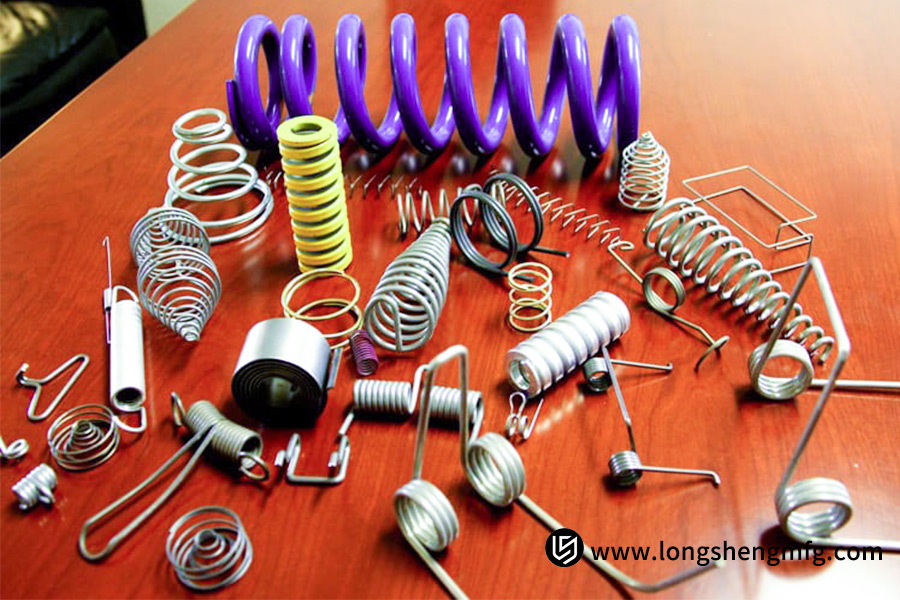
Producing a high-performance spring is an activity-led process that bridges materials science, precise machining, and strict quality control. LS Precision Manufacturing leverages its unique manufacturing process and technological advantage to provide customers with beyond-expectations spring solutions.
1. Spring Production Process
- Coiling: LS Precision begins production by selecting good-quality materials, which are thereafter properly coiled on a CNC spring coiling machine for precise geometric tolerances.
- Heat Treatment: The critical heat treatment process is as follows: a computer-controlled vacuum heat treatment process significantly increases the fatigue strength and load-carrying capacity of the spring.
- Testing: 100% testing of all the springs takes place on an automatic test bench for efficient inspection of its stress-deformation curve and endurance.
2. Representative Case Study: Automotive Suspension Spring Project
One of the high-end automobile companies required the suspension quality of its automobile models to be enhanced. LS Precision Manufacturing accomplished this by adopting the following innovative measures:
- Formulation of a new silicon-chromium alloy steel material;
- Use of a variable diameter and pitch design to optimize the stress distribution;
- Implementation of ultrasonic flaw detection of internal defects;
- Integration of an intelligent manufacturing system for real-time monitoring of the manufacturing process.
Results: Through 20% rise in product load capacity and 30% rise in fatigue life at a cost reduction of 15%, the firm earned the highest rating on its customer’s quality rating system.
LS Precision Manufacturing’s strength process is reflected in its strict control over the entire process: from composition optimization at material level to monitoring data in manufacture to end-product system verification.
LS Precision not only manufacture springs, but also provide customers with comprehensive performance solutions. We continue to innovate value by means of technological innovation, and we make each spring work reliably under the most adverse operating conditions.
The History of the Invention of the Spring: How It Changed Modern Technology?
Do you want to know when the spring was invented? The history of the invention of the spring can be referred to as a microcosm of human progress in technology.
1. History of the Invention of the Spring:
The earliest elastic materials were discovered in ancient crossbows, and the earliest metal springs were discovered in the 15th century and were used principally in precision machinery such as clocks and watches. In the 18th century, in the time of the Industrial Revolution, with improved technologies for producing steel and the needs for repetitive manufacture, springs came as ubiquitous to machinery, transportation, and other applications, and are a cornerstone of modern industry.
2. LS Precision Blends Eternally Retained Traditional Craftsmanship with the Latest Technology:
LS Precision has the greatest regard for such tradition of evolution.Apart from inheriting age-old spring making craftsmanship, we also knowingly blend it with contemporary material science and the latest technologies.
Through computer-aided design (CAD) for exact precision simulations, superior alloy materials, and computerized production lines, we’ve enhanced the performance and reliability of springs to record levels.
As spring technology developed from rudimentary to advanced, LS Precision Manufacturing has never lost sight of pursuing a seamless blend of old-world craftsmanship and new-world technology with the aim of providing customers in different industries with more efficient and long-lasting elastic solutions.
From its ancient beginnings as a tool to its present role as an industrial technology mainstay, the history of the spring demonstrates the constant presence of human engineering skill advancement.
LS Precision Manufacturing, Inc., is no exception, following this long and storied history in offering through continued technological innovation our spring products that not only meet current needs but also open the door to continued industrial progress.

How To Choose A Spring Type Based On The Application?
Proper spring choice is critical to achieving equipment performance and life. Both metal springs and rubber springs each have their respective strengths, and proper choice entails careful research of load, environmental, and vibration dynamics. The following selection guide is a helpful aid:
1. High Load and Precision Control Applications:
Where high loads or clearly defined force-displacement characteristics are to be attained in applications, metal springs are employed. They are well adapted to heavy-duty equipment, automotive suspension systems, precision equipment, and other applications because of their high stiffness, high load-carrying capacity, and linearity.
2. Vibration and Noise Control Applications:
If vibration isolation, noise reduction, or impact energy absorption is required, rubber springs are the best. Owing to their high damping capacity and nonlinearity in deformation, they are used in common applications in engine mounts, vibrating screens, and railway buffer systems.
3. Preference for Special Environmental Adaptability:
The rubber springs have certain advantages when used in corrosive environments or electrical insulation is essential. Metal springs with an appropriate surface treatment are more reliable in high-temperature applications or where long-term stability is required.
4. Complex Application Conditions:
Combinational solutions are available for complex applications. For example, in heavy industrial machinery, metal springs often provide primary support, and rubber springs are used to provide resonance and noise elimination.
LS Precision Manufacturing offers free selection consultation and customization. Our technical personnel will recommend the most suitable type of spring based on your real operating parameters (load, frequency, environmental conditions, etc.) and can also propose hybrid solutions to ensure optimum performance and cost-effectiveness.
How Do Metal Springs Perform In Extreme Environments?
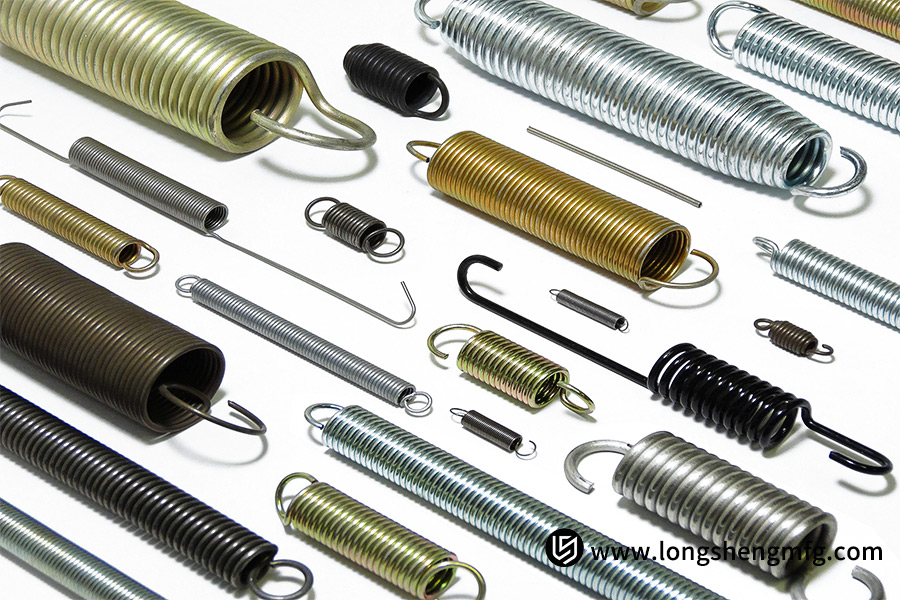
In harsh environmental challenges, metal springs generally outperform other elastic components, primarily due to their superior material properties and processing. In stark contrast to rubber springs, which tend to age easily and are influenced in their performances in harsh environments, metal springs, through appropriate material selection and processing, can perform stably in harsh environments.
1. Temperature Resistance:
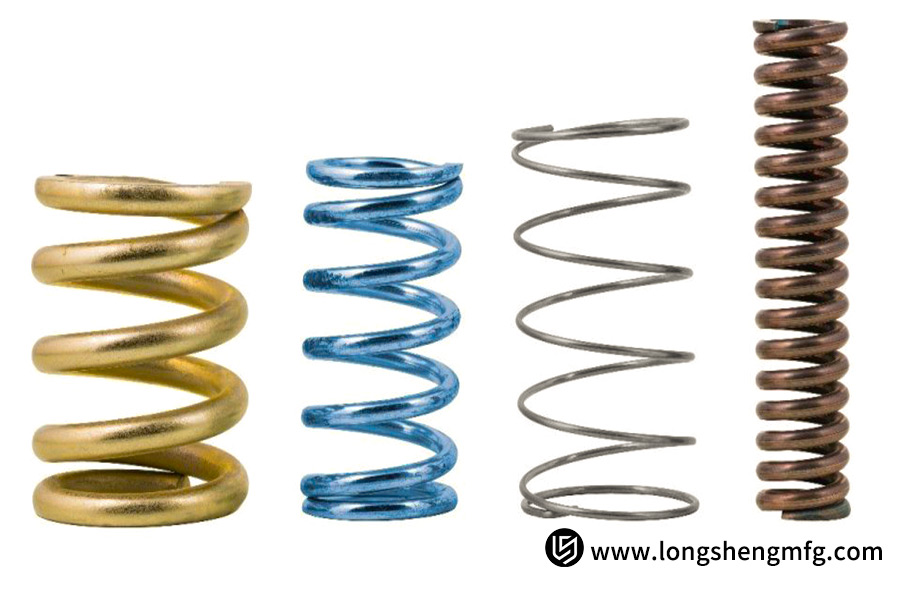
Good quality metal spring steel, through special alloy content as well as heat treatment processes, provides consistent performance over an extremely wide temperature range of -60°C to 250°C. For example, heat-resistant steel springs can even be utilized briefly at temperatures of up to 500°C, whereas rubber springs typically will degrade significantly above 80°C.
2. Corrosion Resistance:
By utilizing stainless steel spring steels (for example, 304 and 316) and implementing appropriate surface treatments (for example, plating and passivation), metal springs easily resist corrosion in various chemical media. On the other hand, while rubber springs are resistant to corrosion by nature, they tend to swell and deteriorate in certain media such as ozone and grease.
3. Typical Case Study:
LS Precision developed a high-temperature valve spring for a petrochemical company. Through a special nickel-based alloy, and by specific solution treatment and aging processes, the springs possessed stable elastic properties even at temperatures up to 280°C and under corrosive conditions, with a service life over three times that of conventional springs.
Under extreme conditions, metal springs, with better thermal stability and enhanced corrosion resistance, are the vital essential components.
LS Precision, with extensive experience in material selection and special process technology, can provide customers with specialized spring products that cater to different extreme operating conditions, making the stable operation of equipment possible under severe environments.
Are Rubber Springs Suitable For High-Precision Applications?
Among the many types of springs that are available, rubber springs are extremely popular as they possess good damping characteristics and vibration isolation. However, for precision applications of a high level, their limitations have to be realistically considered.
1. Rubber Spring Elastic Limitations:
As rubber materials exhibit inherent creep and temperature sensitivity, their force-displacement relationship is nonlinear and has some degree of hysteresis. These characteristics limit the use of pure rubber springs in high-precision systems that require accurate displacement or force control.
2. Suitable Applications of Rubber Springs:
Rubber springs can be suitably used in the following systems:
- Systems that predominantly require vibration isolation and noise reduction;
- Applications for absorbing impact energy and vibration transmission reduction;
- Applications requiring lower precision accuracy but good cushioning.
3. High-Precision Applications:
For high-precision applications, the following are suggested by LS Precision:
- A compound system comprising metal and rubber springs: The metal spring provides precise elastic characteristics while the rubber spring provides damping.
- A composite spring: It achieves complementary performance through advanced structural design.
- Utilizing special rubber compounds and improved processes to obtain better stability of the rubber material.
4. LS Precision Composite Spring Application Case:
LS Precision developed a composite vibration damping system for a precision instrument manufacturer. The system employs stainless steel coil springs to provide precise support, with specially designed rubber elements to dampen out residual vibration.
This solution not only ensures the positioning accuracy of the device but also reduces the influence of environmental vibration by 70%, significantly improving measurement accuracy.
Benefiting from LS’s deep understanding of the characteristics of various kinds of springs and abundant application experience, we are able to provide customers with the most suitable elasticity solutions, achieving an ideal compromise between accuracy and vibration damping requirements.
FAQs
1. Which has greater load-bearing capacity, metal springs or rubber springs?
Metal springs have greater load-carrying capacity. Made of high-strength spring steel or alloy, they can carry heavy loads and provide a stable support, which particularly makes them suitable for high-load applications such as heavy equipment and machinery. While rubber springs have superior vibration damping capability, their load-carrying capacity per unit volume is lower, which particularly makes them suitable for applications where cushioning and vibration isolation are the primary needs.
2. Can LS Precision produce corrosion-resistant metal springs?
Sure. LS Precision Manufacturing uses high-quality stainless steel (e.g., 304, 316, etc.) or surface-coated carbon steel, via special rust-proof treatments (e.g., galvanizing, phosphating, and Dacromet treatment), to produce corrosion-resistant metal springs. The springs are made to work stably and long-last in harsh environments with humidity, acidity, and alkalinity, meeting the specialized demands of industries such as the chemical industry, shipbuilding industry, and medical industry, etc.
3. I need a shock absorber with a non-standard shape. Can LS Precision manufacture it?
Yes. LS Precision has professional customized rubber spring services with abundant mold-making capacity and formula design experience. We can make customized shock absorbers based on your special requirements (special shapes, hardness specs, and working conditions). They are used in automotive, machinery, electronics, and other applications, which means there is a perfect match for your application.
4. How can I get a quote for LS Precision springs?
Provide us with full technical specifications, drawings, or parameters (wire diameter, outside diameter, free length, material, and working environment). LS Precision’s engineering team will carefully evaluate this information and send you back a competitive quote and professional technical advice within 1-2 working days to suit your budget and performance requirements.

Conclusion
In choosing between metal and rubber springs, the key is to understand their inherent nature and where they could be used. Metal springs excel in high load-carrying capability and precision, while rubber springs excel in high vibration and noise isolation. There is no absolute superiority or inferiority; it’s a question of whether it’s the perfect match for your specific application.
To select LS Precision Manufacturing is to gain an experienced partner with detailed understanding of material properties and application requirements. We can assist in ensuring that every spring you receive is true value for money.
If you require the optimal spring solution for your application, contact LS Precision today. Send us your requirements or drawings for a free selection consultation and accurate quotation. Let LS Precision bring stability and reliability to your products!
 Phone: +86 185 6675 9667
 Email:info@longshengmfg.com
 Website:https://www.longshengmfg.com/
Disclaimer
The content appearing on this webpage is for informational purposes only. LS makes no representation or warranty of any kind, be it expressed or implied, as to the accuracy, completeness, or validity of the information. Any performance parameters, geometric tolerances, specific design features, quality and types of materials, or processes should not be inferred to represent what will be delivered by third-party suppliers or manufacturers through LS’s network. Buyers seeking quotes for parts are responsible for defining the specific requirements for those parts. Please contact to our for more information.
Team LS
This article was written by various LS contributors. LS is a leading resource on manufacturing with CNC machining, sheet metal fabrication, 3D printing, injection molding,metal stamping and more.


