Acrylic, or PMMA and organic glass, is lighter, has a richer color with a smoother finish, and is less dense than glass. It was a laboratory darling but now is a ubiquitous contemporary material. It has been used in advertising signs, display windows, medical instruments, components of buildings and in other uses due to its excellent optical properties, processability, and abundance of design possibilities.
In buying acrylic sheets, the most important question is whether to use cast or extruded. The two appear very similar, yet the molecular level and applications in processing are drastically different, and this tends to confuse beginners.
This choice determines the effectiveness and success of the project. In case the wrong type is used, the laser engraving pattern will be irregular and coarse, the sheet will crack easily during hot bending, and cracks or silver lines could form upon bonding, causing delays in the project, increased costs, and poor finished products.
To accurately select the type of acrylic and avoid misconceptions, we contrast the two and interpret the key comparison table from the manufacturer’s perspective. The table below uncovers the key differences between cast and extruded acrylic in key dimensions such as molecular structure, physical characteristics, processing characteristics, application contexts and cost-effectiveness:
Cast Acrylic vs Extruded Acrylic Core Comparison Chart
| Property | Cast Acrylic | Extruded Acrylic | The Bottom Line |
|---|---|---|---|
| Manufacturing Process | Liquid monomer slowly solidifies in the mold | Molten particles are continuously extruded through the die | Casting is “slow and steady”, extrusion is “assembly line work”. |
| Thickness Tolerance | Poor Thickness varies greatly within and between sheets | Excellent Highly uniform thickness | Extruded types have uniform thickness and are suitable for precision assembly. |
| Laser Engraving | Excellent Produces a crisp, high-contrast matte white effect | Poor Melting results in blurred edges and unclear details | Casting is a must for engraving logos and medals. |
| Laser Cutting | Good Cut edges are smooth | Excellent Cut edges are as bright as flame polishing | For pure cutting applications, extruded types have better results and brighter edges. |
| Bending | Hard to bend Easy to produce bubbles or stress marks, low consistency | Excellent Softening evenly, good molding consistency | Extrusion type is more suitable for hot bending processing, high yield. |
| Chemical resistance | High High molecular weight, more resistant to solvent and chemical corrosion | Low Lower molecular weight, more susceptible to solvent corrosion and cracking | Contact with solvent or chemical environment, casting type is more durable. |
| Price | High (More Expensive) Higher manufacturing cost | Low (Less Expensive) High production efficiency, lower cost | With a limited budget, extrusion type is an economical choice. |
Key selection suggestions:
Choose cast acrylic: Need to laser engrave fine patterns/text, contact with chemicals, pursue the highest optical purity or weather resistance.
Choose extruded acrylic: Need precise thickness tolerance, laser cutting edge requires extremely high brightness, hot bending processing, large-size plates, cost-sensitive projects.
Here’s What You’ll Learn:
- Two core process sources: Analyze the reasons why “casting type” has no directionality and “extrusion type” has internal stress and performance differences.
- Laser processing milestone: Describe why the casting type has good engraving effect and the extrusion type shows “bright” cutting edge.
- Three methods of identification: Master drilling, sol-vent testing, and reading the protective film data to determine the two acrylic types.
- Casting type usable situations: describe its high quality and long-lastingness in high-end displays, aquariums and other applications.
- Extrusion type benefit areas: acquaint yourself with its performance in cost, dimensional accuracy and hot bending processing, suitable for batch flat plate use.
- Bending art: Expose the reasons behind the characteristics of extrusion type such as “anisotropy” to achieve superior bending effects.
- Display stand case: Notice material selection and online bending service through actual projects to achieve complex designs.
- All-round support: Acquaint yourself with the one-stop professional manufacturing solution from material consultancy to assembly.
- Common confusion questions: Answer key questions such as can extrusion type be used to create aquariums.
Now, let us explore more about the cast vs. extruded acrylic world to make an informed, positive material choice on your next project.
The Production Process: Why They Differ So Greatly
Different acrylic sheet manufacturing processes actually define the material’s characteristics. The following is a key comparison of the two main processes:
| Characteristics | Casting process | Extrusion process |
|---|---|---|
| Process nature | Liquid monomer polymerization and solidification (such as making cakes) | Solid particles melt extrusion (such as squeezing toothpaste) |
| Process characteristics | Slow, static, strict environmental control | Fast, dynamic, high-pressure forced molding |
| Internal stress | Very low | Intrinsic stress exists |
| Directionality | No directionality (isotropic) | Obvious directionality (molecular orientation) |
Source of Difference: Curing Method
The heart of the difference in performance of acrylic sheets lies in how they are born.
- Casting type: Allowing “cake” to form: Liquid MMA monomer is injected between two glass molds very accurately, and is exposed to a slow polymerization reaction (curing) under strictly controlled temperature (usually 50-60°C) and conditions. As a cake is merely cooked in a mold, this process is not at all dependent on external pressures, and the molecules can be oriented and mixed freely and homogeneously, and hence the final product has very low internal stress, no texture, and homogeneous properties throughout.
- Extrusion type: “Toothpaste” shaping postextrusion: Solid acrylic particles are first melted to form a viscous fluid. This melt is driven through a die of fixed shape under pressure (such as forcing toothpaste) to form a sheet prototype, which is instantly calendered and cooled by rollers to shape. This repeated, force-induced process stretches the molecular chains and aligns them in the direction of extrusion. Quenching “freezes” this direction condition and internal stress as a result of non-uniform heating, force and quench shrinkage, making the material directionally evident.
Process selection is material gene choice. Casting produces a low-stress, non-directional stable substrate; extrusion yields efficient and continuous sheets with directionality and internal stress. The fundamental difference is determined at the polymerization or molding time.
Laser Cutting & Engraving: The Critical Divide
Choosing cast or extruded acrylic (or similar polymers) for laser treatment will result in quite different results. An understanding of the differences of their response to lasers is key to achieving the maximum finished product. The primary differences are “powdering” and “melting” when engraving, and the “glossiness” of the cut edge.
Summary of the main differences:
| Features | Cast acrylic | Extruded acrylic | Applicable scenarios |
|---|---|---|---|
| Laser engraving effect | Powdering: produces a high-contrast matte white mark | Melting: blurred edges, unclear handwriting, low contrast | Medals, nameplates, fine logos, logos |
| Laser cut edges | Smooth, but relatively matte | Highly smooth and translucent (similar to the “flame polishing” effect) | Displays, parts that require highly translucent edges |
| Main causes | High molecular weight, easy to decompose (gasification/powdering) when heated | Low molecular weight, easy to melt, flow, and re-solidify when heated |
Laser Engraving: Powdering vs. Melting
- Cast: Due to its higher molecular weight and more uniform molecular structure, cast materials primarily vaporize and burn rather than melting under the high heat of the laser beam. The method produces a white powder, producing on the item a permanent high-contrast matte white engraving look. The finish is crisp, sharp, and textured and is ideal for medals, signs, logo walls, artwork, etc. requiring fine text or artwork.
- Extruded: Its lower molecular weight and molecular chain orientation during the production process make it softer to melt than being broken down by the action of the laser. The molten object will soften and re-harden, causing fuzzy edges, loss of detail, and overall fuzziness of the engraved lines, which renders it impossible to produce a clear and defined mark. Not suitable for purposes of fine engraving.
Laser Cutting: Matt Smooth vs. Flame Polishing
- Extruded: Due to its lower melting point and proclivity to melt readily, the edge material will melt extremely quickly during laser cutting. When the laser beam is retracted, the molten material re-forms below the surface tension to create a very smooth, transparent surface, similar to the effect of conventional “flame polishing”. This offers the cut edge a crystal-like high gloss, particularly well suited for displays, signs, light boxes, etc. that need to show edge finish.
- Cast: The cut edge can also achieve a smooth effect, but because its material tends to decompose rather than melt and flow, the gloss of its cut edge is usually not as high as that of the extrusion type, and is relatively more “matte”. Although it is also smooth, it lacks the translucency of “flame polishing“.
Material properties (casting’s high molecular weight decomposition tendency vs. extrusion’s low molecular weight melting tendency) directly determine the core effect of laser processing: casting provides excellent engraving clarity, while extrusion brings extreme gloss to the cut edge. Choosing the material type based on the core needs of the final application (whether to highlight fine engraving or high-gloss cutting edges) is the key dividing line for successful laser processing.

The Litmus Test: How to Identify Your Acrylic
When buying or using acrylic sheet, it is important to know whether it is cast or extruded. There are significant differences in physical properties (such as heat resistance, chemical resistance, processing and strength) and price. Cast types generally have better performance but higher prices, while extruded types are more economical and easier to produce in large quantities. The following table quickly summarizes the key identification points:
| Test items | Cast acrylic reaction | Extruded acrylic reaction |
|---|---|---|
| 1. Drill test | Produces fine, brittle powdery or flaky chips. | Produces continuous, curly long strips of chips (similar to wood shavings). |
| 2. Solvent test | It is not easy to dissolve or fog after wiping with acetone, and the edges are relatively clear. | It is very easy to dissolve, fog, whiten or crack after wiping with acetone, and the edges are blurred. |
| 3. Protective film information | The protective film is often clearly marked with “Cast”. | The protective film is often clearly marked with “Extruded”, or there is no type marking (in this case, other tests must be combined). |
1. Drilling test:
(1) Method: Drill at the edge of the board or in the waste area with a sharp drill bit (such as a twist drill) at a medium to low speed. Be sure to wear protective glasses!
(2) Observation:
Cast: The chips produced by the drill bit are fine, brittle powder or flakes and do not form continuous strips. They will be scattered around the drill hole.
Extruded: The drill bit produces continuous, curly strips of chips that look like fine shavings or spiral plastic filaments. These long chips will wrap around the drill bit or accumulate at the hole.
(3) Principle: Cast acrylic has a higher molecular weight and a more disordered molecular chain, which is more likely to break when drilling. The molecular chain of extruded acrylic is stretched and oriented during the extrusion process, making it easier to form continuous chips.
2. Solvent test (acetone test):
(1) Method: Use a cotton swab or lint-free cloth to dip in a small amount of acetone (the main ingredient of nail polish remover). On an inconspicuous edge or scrap of the board, rub a small area (about 1-2 cm long) vigorously for a few seconds. This test may cause permanent damage, so be sure to test in a hidden place!
(2) Observation:
Cast: After wiping with acetone, the surface changes little or nothing. It may be slightly sticky, but will not be noticeably white, foggy, blurry or cracked. The wiping mark is relatively clear.
Extruded: After wiping with acetone, the surface quickly becomes blurry, white, and foggy. The wiped area will soften and dissolve significantly, and may even have fine cracks. The wiping mark is very obvious and mushy.
(3) Principle: Cast acrylic has higher solvent resistance, especially to acetone. Extruded acrylic has a more regular molecular chain arrangement, a slightly lower molecular weight, and is more soluble in solvents such as acetone.
3. Protective film information:
(1) Method: Carefully inspect the protective film covering both sides of the board. Manufacturers usually print information such as brand and specifications on the edge, corner or middle area of the protective film, which may include the sheet type identification.
(2) Observation:
Cast: The protective film often has a clear “Cast” logo.
Extruded: The covering film most often has a plain “Extruded” brand name. Note: There are covering films that are not marked with a clear type designation (specifically low-cost or general-purpose sheets), or the brand name is on the piece you removed. If you cannot find the brand name, you cannot know the type and must use the first two test methods in combination.
By combining these three simple and convenient methods of checking the drilling chip morphology, conducting a small-scale acetone wipe test, and checking the protective film logo, you can quickly and accurately identify if the acrylic sheet you hold in your hand is extruded or cast, so that you can choose the best material for your project or verify the information provided by the supplier. Recall: The triplet of “drilling, wiping, and observing” is the best procedure to know the type of acrylic.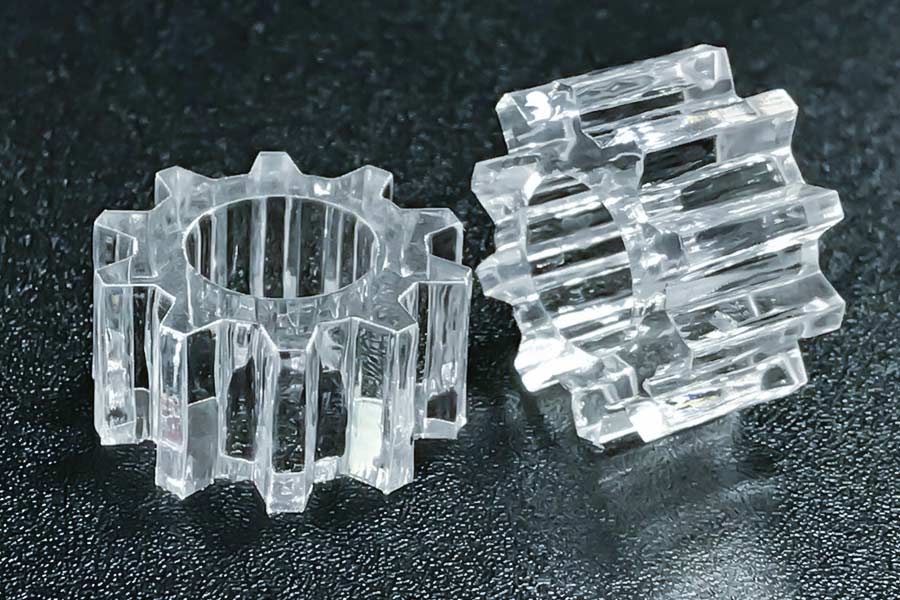
When to Use Cast Acrylic: For Quality and Durability
The following is a summary of some principal application situations in which cast acrylic is the best choice based on its superior quality, optical clarity, processing behavior and long life:
1. Display areas that aspire for the ultimate in optical quality and elegance:
- Museum display cabinets: require unblemished optical clarity and flawless surfaces to display sensitive artifacts unobstructed.
- Certainly high-end display racks: require excellent surface gloss, clarity and scratch resistance to bring out the value of high-quality products.
2. Large aquariums:
- Strength requirements: Cast acrylic has higher impact strength and crack resistance than extruded acrylic, and will be able to withstand the mammoth water pressure of large aquariums.
- Perfect bonding: Its molecular design facilitates smoother performance of high-strength, high-sealing chemical welding (gluing), the key to making large seamless aquariums.
3. Delicate carving and processing uses:
- Awards, souvenirs: Cast acrylic displays more transparent and polished edges following carving, enhanced decorative visual impacts, and strong detail rendition.
- Guidance system: When engraving text or carving complicated shapes or figures, you can obtain clearer, sharper and more professional edge effects.
- Processing advantages: Reduced stress internally, not easy to crack or warp in cutting, milling and drilling, and higher precision and finish of end products.
4. Applications involving chemical erosion resistance:
- Equipment in laboratories: It can better withstand erosion due to various chemicals (e.g., solvents, detergents, and some acids/alkalis) to ensure long-lasting stability and safety for the equipment.
- Medical device parts: Need to withstand multiple disinfectant cleaning (e.g., alcohol, isopropyl alcohol, etc.), and cast acrylic is chemically more resistant.
If the application requires extremely high levels of optical purity, surface finish, impact strength, edge quality after complex processing, reliability of chemical welding, and chemical corrosion resistance, then the material to use is cast acrylic over extruded acrylic. It provides unmatched quality and durability in demanding applications such as high-end display, structural pressure (such as aquariums), elegant processing and hostile chemical environments.
When to Use Extruded Acrylic: For Cost and Consistency
The following is an overview of the most significant application situations where extruded acrylic is the best most appropriate one due to extreme cost-effectiveness, excellent thickness tolerance, good flexibility and dimensional stability due to continuous production:
1. Flat panels of large-scale mass production:
- Advertising light box panels: The length flexibility and economy of extrusion (roll or long sheet) are ideal when panels of large size and large quantity are required.
- Poster clips/display stands: Cost-effective sizes are in demand, and budget-conscious. Extrusion is able to meet minimum optical requirements and reduce unit costs by a considerable amount.
- Window glass substitutes (protective glazing, partitions): When large-area applications require relatively lower optical purity than museum grade use, extrusion provides adequate optical transmittance and economy.
2. Assembly applications with high dimensional accuracy and repeatability:
- Multi-component assembly systems: Where many acrylic components (e.g., frame, shelves, and mechanical structural parts) need to be closely matched and fitted together without any problem, extrusion’s extremely high thickness tolerance control (usually ±0.1mm) is the main advantage, ensuring simple assembly and structural stability.
- Standardized industrial parts: Extremely large numbers of identical pieces with very consistent dimensions are required.
3. All hot bending/thermoforming applications
- Data racks, display racks: Flat plates need to be heated and bent into specific angles or forms. Extruded acrylic is softer and more ductile and, when heated, softens more evenly and so hot bending processes are easier to perform and less likely to crack or whiten.
- Machine guards: They have to be formed into complex curved shapes. The elastic properties of extruded acrylic (molecular chain orientation) make it the material of choice for hot forming.
- Furniture (chair backs, table edges, lampshades): Cost and smooth curved surfaces are needed.
- Signages, POP displays: Create pleasing aesthetic three-dimensional shapes.
Whenever the basic requirements of the application situation are cost control, mass production in quantity, tight dimensional tolerance for precision assembly, or complex hot bending, extruded acrylic is superior to cast. It possesses the best cost-effectiveness ratio, outstanding dimensional stability, and exceptional hot forming process performance in standardized industrialized production.
The Art of Bending: Why Extruded Acrylic is the Star
In the world of acrylic (PMMA), bending lovely curves is not a trivial achievement. Materials come in many types, which all have huge differences in bending behavior, so extruded acrylic is a true “star” where there is a demand for accurate, efficient, and repeatable bending. What follows is a comparison of cast acrylic and extruded acrylic in terms of primary bending properties:
| Characteristic | Cast acrylic | Extruded acrylic | Impact on bending process |
|---|---|---|---|
| Molecular structure | Isotropic (like uniform cheese) | Anisotropic (like wood with texture) | Extruded bends are more controllable and predictable along the extrusion direction |
| Thermoforming window | Higher softening temperature, narrower window | Lower softening temperature, wider window | Extruded heating is easier to operate and less prone to bubbles and defects |
| Bend consistency | Batch-to-batch/piece-to-piece variation can be large | High consistency | Extruded is perfect for high-volume, uniform bend angle projects |
1. Strength of “texture”: control of bending direction
The isotropic cast has a uniform structure and no preferred bending direction.
Molecules’ chains of the anisotropic extrusion type are well aligned parallel to the direction of extrusion and possess identical “texture”. Bending resistance in this direction is very low, and the behavior is highly reproducible, enabling good control of angles and radii and keeping scrap rates low.
2. Wider thermoforming window: more tolerant operation
The type of casting has a high softening point and narrow window of softening to melting, and the temperature control requirements are severe (easily whiten, crack, bubble or collapse).
The extrusion type possesses a lower softening temperature and broader temperature window (thermoforming window) for retaining plasticity in the softened condition. This significantly lowers the heating control difficulty, decreases the risk of bubbles, defects and loss of control of shape, and is of greater yield rate.
3. The foundation of mass production: outstanding consistency
Variations in molecular weight or internal stress from batch/sheet to batch/sheet of the castings may be possible and affect bending consistency results.
Continuous extrusion manufacturing process gives it extremely high material consistency. Combined with its stable bend behavior and forgiving thermal window, extremely consistent bent parts could be produced using the same process, making it an ideal use for large-scale, uniform-angle work.
With its anisotropic nature (providing controlled bending direction), wider thermoforming window (reducing operating complexity and defect rate) and higher batch consistency, extruded acrylic has taken over as the best of the best for high-precision, high-efficiency and large-volume bending applications, best describing the reliability in the “art of bending”. When your project includes fine curves and high specifications quality, choose extruded acrylic to turn the bending process into an advantage rather than a challenge. Our extruded acrylic product and bending process support team is always ready to provide rock-solid assistance for your imagination.
Case Study: From Flat Sheet to Intricate Retail Display
I am Longsheng, LS engineer. Not long ago, we finished a very typical project successfully, which thoroughly demonstrated our core strengths in advanced acrylic hot bending.
Customer challenge:
One of the popular cosmetics firms hired us to produce 1,000 custom countertop lipstick display stands. The product was extremely challenging to design: it contained several precise 90-degree right-angle folds and a smooth arc fold to cradle lipstick. The customer had very high requirements for cost control (budget-friendly), finish quality (sharp edges, overall crystal clarity), and most importantly, size and angle uniformity (1,000 units must be the same).
LS’s solution:
(1) Correct material choice: Based on the customer’s overall demands (cost, optical effect, and formability), we were not afraid to suggest extruded acrylic. Its high cost-effectiveness, fine hot bending processing performance, and high transparency are the reasons for meeting all requirements of the project.
(2) Professional Forming Technology: On the basis of our advanced online bending service, we use professional wire heating equipment for processing. By strictly controlling heating area, time and temperature, we ensure that:
- All 90-degree bends are sharp and clean.
- The curved corners are flowing and smooth.
- All finished products have no stress marks or deformation, and the edges are clear and bright.
(3) Consistency and mass production promise: Duly documented process parameters and stabilized process are the primary promise for highly consistent sizes and angles of 1,000 display racks. At the same time, effective processes and large-volume production enable us to provide highly competitive bending costs and timely delivery of all orders.
This case best illustrates that in the face of complex designs, strict appearance specifications and batch uniformity problems, the success lies in choosing the right material (extruded acrylic) and masterful and precise hot bending forming processes (such as LS’s online bending services) as the guarantee for transforming blueprints into hundreds of perfect products. We are deeply proud to provide customers with solutions beyond expectations.
FAQs
1. Can I use extruded acrylic for an aquarium?
Not recommended. Although extruded acrylic may be used in small, simple aquariums, its strength, chemical resistance (especially long-term water immersion and detergent effects), and resistance to environmental stress cracking are generally not as good as cast acrylic. Aquariums are subjected to continuous water pressure, and cast acrylic is a safer and more reliable choice due to its higher molecular weight and more uniform structure, which can significantly reduce the risk of leakage or bursting.
2. Why does my extruded acrylic crack after hot bending?
There are several key reasons why extruded acrylic cracks after hot bending: uneven heating leads to local overheating stress concentration, too fast cooling makes the material unable to fully relax, bending speed is too fast or too much external force is applied, the bending radius is too small to exceed the material’s ultimate deformation capacity at that temperature, and there are small defects or stresses in the material itself. Professional bending services avoid these problems by precisely controlling temperature, uniform heating, and controlling the bending rate and radius.
3. Do extruded and cast acrylic weigh the same?
Yes, extruded and cast acrylic weigh about the same. This is because they are both made primarily of polymethyl methacrylate (PMMA), which has very similar densities (approximately 1.18-1.20 g/cm³). Therefore, for sheets of the same dimensions (length, width, thickness), there is little difference in weight between the two, and weight is usually not a differentiating factor when choosing.
4. How thick can your bending service handle?
Our bending service can handle a very wide range of acrylic sheet thicknesses, from very thin 1mm to thick 20mm or even thicker. The specific upper limit of thickness that can be handled and the bending effect depends on the complexity of the bend (such as angle, shape) and the minimum bend radius required. For thick sheets or complex bends, it is recommended to upload a drawing or contact us for consultation. We will evaluate the feasibility and provide a solution based on your specific requirements.
Conclusion
Cast acrylic is the “quality choice” for engraving and high-strength applications, while extruded acrylic is the “economy and efficiency choice” and the champion of hot bending and mass production. Understanding their differences is the key to project success.
Don’t worry about material selection anymore. Whether your project requires the delicate engraving of a cast type or the perfect bending of an extruded type, we can provide professional guidance and manufacturing services.
Choosing LS is choosing a professional partner who can seamlessly transform your complex project ideas into reality. We go beyond a single bending technology and provide a full range of manufacturing capabilities including laser cutting, drilling, bonding, and multi-material assembly. Combining a deep understanding of various materials (from castings to extruded profiles) with professional material selection recommendations, we provide you with a “one-stop” solution from concept germination to finished product delivery.
Upload your design drawings now to get a comprehensive quote that includes not only bending prices but also professional material recommendations!
 📞 Phone: +86 185 6675 9667
📧 Email:info@longshengmfg.com
🌐Website:https://www.longshengmfg.com/



You have remarked very interesting details! ps decent web site.
Thank you for your wishes for my “wealth”! I’m glad you found the content interesting.
Greetings! Very helpful advice on this article! It is the little changes that make the biggest changes. Thanks a lot for sharing!
I¦ll immediately grasp your rss as I can not in finding your email subscription link or newsletter service. Do you’ve any? Kindly permit me understand in order that I could subscribe. Thanks.