Aluminum CNC machining is pivotal for creating lightweight structural components, yet engineers face a persistent dilemma. It will be heavier because of an increase in thickness, and there do exist designs that can reduce weights considerably, so machining will be costly. Moreover, there can arise some problems regarding selection of an aluminum alloy based on costs.
It would literally mean that it contains information about bits of info on inter-relationships which would potentially happen at a sub-structure level as far as attributes and skills as far as CNC machining. It would literally mean that it would be completely impossible to achieve an implementation solution. As your homework assignment for solving the problem above, you will be using your reference book as your source in which you will be required to develop an implementation solution with an understanding about a complementary synthesis which happens at a sub-structure level as far as knowledge and optimal machining as far as materials science.
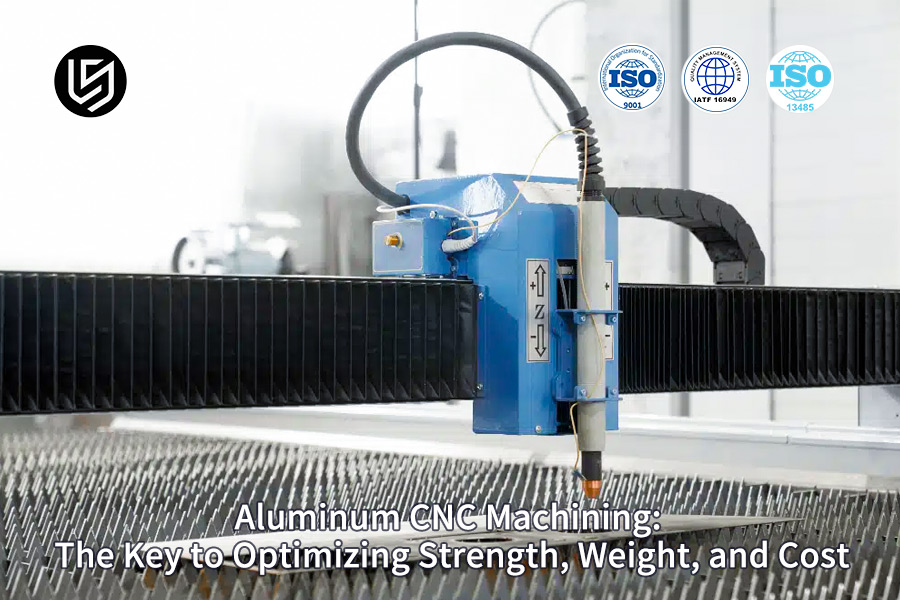
Quick Reference for Aluminum CNC Machining
| Section | Key Topic | Core Points | Typical Recommendations |
| Material Selection | Alloy Grades | Balance strength, corrosion resistance, machinability & cost. | 6061: Best all-rounder. 7075: High strength. 5052: Excellent corrosion resistance. |
| Design Optimization | DFM (Design for Manufacturability) | Simplify geometry, ensure tool access, uniform wall thickness. | Avoid deep pockets/sharp corners. Use radii. Add ribs over thick sections. |
| Machining Process | Parameters & Tolerances | Speed, feed, depth of cut affect finish, precision, tool life. | Optimize parameters per alloy/temper. Standard tolerance ±0.005 in. (±0.13 mm). |
| Surface & Treatment | Post-Processing | Enhances appearance, durability, and functionality. | Anodizing (Type II/III), powder coating, media blasting, chemical films. |
| Partner Strategy | Integrated Solution | Synergy between material science, heat treatment, and machining is key. | Collaborate with a partner offering deep expertise from design to finished part. |
Materials knowledge, intelligent DFM, and CNC machining knowledge have to be integral components that are incorporated effectively into aluminum CNC machining. The optimal choice of an alloy then addresses an optimal strength/weight ratio. Material knowledge and machining knowledge on the part of a manufacturer will then be the best approach toward developing an optimal high-performance and light product.
Why trust this guide? Practical experience from LS Manufacturing experts
Out of the literally thousands of articles I think might be encapsulated with something like ‘general knowledge about everything and anything,’ I have, with regard to my own article collection, an article on uniqueness. It begins with an introduction about it being a product of its makers because of the representation it shows for people who ‘do’ as opposed to people who ‘talk about doing.’ As someone with LS Manufacturing, my own hands are at the end of precision with regard to machining high strength aluminum alloys on a daily basis. It would be experiences like these that harden ‘general information’ into something tangible.
Our area of expertise originates from more than 50,000 machined aluminum components that have been supplied to very critical sectors. It is from our experiences and area of expertise that we have learned ways and means of effectively optimizing variables on materials that have 6061-T6 aluminum alloys. We have also been successful in multi-axis machining without causing warping on thin-walled components. Secondly, the process followed strictly obeys the best practices adopted within the industry. All recommended steps are justified with returns based on the best standards regarding safety and quality that have been set by recognized agencies Occupational Safety and Health Administration (OSHA).
The knowledge that we share with you represents our expertise. It shows solution capabilities within an actual setting-from eliminating tool deflection within a deep pocket machining process to optimizing surface finishes on an anodizing process. We have also incorporated more recent advances for cutting technologies and processes mentioned as Additive Manufacturing (AM) with traditional machining knowledge. Within the machined product process referenced within this document, we have compiled our knowledge with the end goal of efficient and error-free processes as it relates to your materials, designs, and machining.
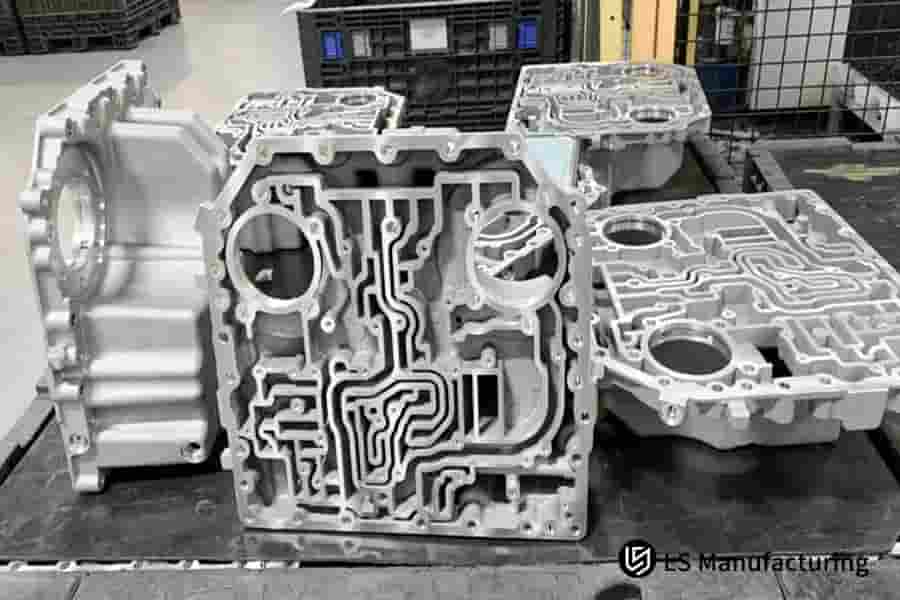
What are the differences in properties of different series of aluminum alloys (such as 6061, 7075, 5052) during CNC machining?
The various characteristics associated with aluminum alloys and materials have an extremely efficient machining process with excellent surface finish. However, consideration of materials plays an extremely vital role here. It sometimes becomes a compromise on characteristics. We will define below and assist you in making various distinctions among various materials that can be made use of based on your project requirements for aluminum CNC machining services.
| Alloy Series | Key Properties & Machinability | Typical Applications | Post-Processing Notes |
| 6061 (Al-Mg-Si) | Strong, corrosion-resistant, and machined easily. General-purpose metal. Easy to cut. | Auto parts, structural components, and containers. Excellent anodizing. | Excellent welding capabilities. |
| 7075 (Al-Zn) | Extremely strong and hard. Machined relatively easily but with more machining force. Poor corrosion resistance. | Aerospace structural components, highly loaded components, molds, and racing components. | Stress relieving recommended after machining. Corrosion-resistant with an anodic film. |
| 5052 (Al-Mg) | Ductile and highly corrosion-resistant. Softer and tacky; requires sharp tools and large rake angles. | Marine hardware, panels, chemical storage tanks, and electronic enclosures. | Excellent form and weld. Paints and powders adhere well. |
The proper alloy should be chosen. As much as materials with high strength are required, like aerospace materials, it would be fit for high strength aluminum 7075. It would, however, require the hardest machining system. As for malleable materials, corrosion-resistant materials, and materials with which work can be done easily, aluminum 6061 CNC machining will remain as standards. Those requiring maximum formability and corrosion-resistant materials would include type 5052 materials for marine/chemical.

CNC machining of aluminum alloys and steel: How to choose between strength-to-weight ratio and cost?
The ultimate conclusion on knowledge about aluminum vs steel CNC machining will be attained based on what needs the ultimate utilization. While steel offers higher absolute strength, lightweight aluminum parts shine due to their exceptional strength-to-weight ratio, making them a superior choice for dynamic or weight-sensitive applications. The decision involves balancing material cost, machining efficiency, and lifecycle performance.
| Aspect | Aluminum | Steel (e.g., Mild, 4140) |
| Specific Strength | Very High. Key for weight reduction. | Lower. Higher density cancels weight savings. |
| Machinability | Excellent. Faster speeds, lower tool wear, shorter cycle times. | Good to Fair. Harder, requires more power, slower cycles. |
| Material Cost | Generally lower. | Varies, but often competitive. |
| Ideal Applications | Aerospace frames, auto parts, robots, mobile devices. | High-stress tools, shafts, gears, heavy-duty industrial parts. |
Ultimately, the choice depends on your primary design goal. For applications where reducing mass is critical to performance, energy efficiency, or functionality, lightweight aluminum parts deliver an unbeatable advantage, despite a potentially higher material cost. This makes aluminum vs steel CNC machining a decision favoring aluminum for its superior specific strength. In many cases, the faster machining and lower finishing costs of aluminum contribute to a more cost-effective aluminum machining solution overall, especially for complex or high-volume production.
How to optimize and improve the strength and durability of aluminum alloy parts through CNC machining processes?
Methods for optimizing and enhancing strength and endurance properties of aluminum CNC machining. The natural attributes and properties put within a high strength aluminum blank are realized and attained via precision machining. Effective CNC machining within an aluminum blank plays a highly imperative role within the integrity and life span relating to a machined product. A lack of precision within machining an aluminum blank may lead to stresses, micro-cracks, and an increase in heating, thus influencing the attributes and properties put within an aluminum product. The implications and optimization relating to these will be discussed.
| Process Factor | Optimization Goal | Key Action for Durability |
| Cutting Parameters | Do not harden and stress the work piece. | High speed, feed rate, and control of cutter depth allow control of heating. |
| Strategy | Reduce internal stresses and distortion. | Trochoidal machining, consistent cutting, and fewer abrupt changes of direction. |
| Tooling and Setup | Stability & Surface Integrity | This must be accomplished with a sharp cutting tool, work holding, & coolants. |
| Post-Processing | establishment of ultimate material properties. | Apply solution heat treatment and aging (e.g., T6 temper) aftermajor material removal. |
This means that the machining procedure cannot be a secondary procedure when it comes to the formation of aluminum, unlike other metals, but a procedural consideration with regard to a metallurgical procedure, if precision on aluminum is to be complete. This has to be a procedure that is aimed at minimizing the certain weakness that is formed on the metal during the machining procedure. The best way to harness the immense strength that aluminum has the potential to possess is through precision aluminum CNC machining, followed by a treatment procedure called heat treatment.
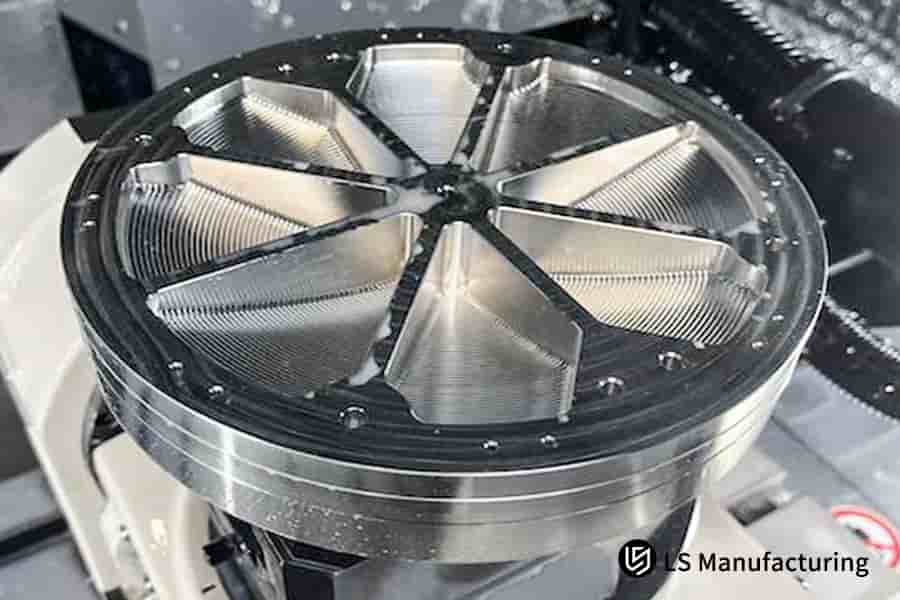
How to effectively control processing costs while achieving lightweight design of aluminum parts?
Since such a need is full of challenges, such as increased cost of production, the need to look for a solution to reduce the effect of the weight of aluminum components is thus realized. The solution to such a problem begins with design for manufacture design, taking into consideration metal removal rates. This is because your lightweight aluminum parts are economically viable, delivering true value through cost-effective aluminum machining.
| Strategy | Method for Lightweighting | Cost-Control Benefit |
| Design Optimization | Use topology optimization & rib design. | This optimises waste, waste cost, & raw stock. It also optimises machining volume. |
| Manufacturing Strategy | Use multi-axis CNC machining. | No need for multiple setup machining, thereby saving labor cost. |
| Feature Simplification | R – Simplify pocket features by having fewer deep pockets & avoid sharp internal corners. | This helps in taking advantage of faster production speeds; there is no need for special equipment. Helps in improved chip evacuation. |
| Expert DFM Analysis | The manufacturer has to be involved from the very onset, as is the practice with the LS Manufacturing. | It is concerned with cost factors, alternative functionality, and efficiency of process. |
The path to affordable lightweight aluminum parts lies in integrating weight-saving goals with manufacturing realities from the start. By leveraging intelligent design, efficient multi-axis aluminum CNC machining, and simplification of complex features, you can minimize machining time and tooling challenges. Ultimately, partnering with a manufacturer for a comprehensive DFM review is the most reliable way to achieve a high-performance, lightweight design through truly cost-effective aluminum machining.
Case Study of 7075-T651 Aluminum Alloy Frame Machining for Drones: How LS Manufacturing Achieved 30% Weight Reduction and Increased Strength
The drone expert demanded that his drone design should be robust in structure and light. This, together with his design that is produced from 6061, is not feasible at all. This is how our solution has been helpful in the solution of this problem with implications on LS Manufacturing aluminum CNC machining for high strength aluminum.
Client Dilemma:
The problem with regard to the existing 6061 series structure which the manufacturer has produced has been already pushed to such an extent that it cannot be reduced anymore in terms of weight. Reduction with regard to the weight of the structure with reduced thickness reduced the torsional rigidity properties and impact resistance, which are an essential part of aircraft stability.
LS Manufacturing Solution
The solution which we have provided is a two-fold process. We changed our base material to the most dependable high strength aluminum, which is 7075-T651, that is drastically better compared to our previous aluminum (6061). Following that, we use FEA, which helps us optimize our rib design, which removes non-critical material alone. The optimized component design is machined from a single part on a 5-axis CNC that provides greater accuracy, as well as increased strength for a precision aluminum part.
Results & Value:
The result has exceeded all the projections. Equally importantly, it has been capable enough of reducing weight by 30%, increasing static stiffness by 15% apart from the significant improvement in lifespan. This, in a way has increased the lifespan of the drone apart from undergoing rigorous tests for being certified. It has been concluded that intelligent design, together with expert machining, is capable of meeting a certain percentage increase in efficiency.
This case underscores that achieving major weight savings does not require sacrificing strength. By combining advanced materials science, computational design, and high-precision execution, LS Manufacturing aluminum CNC machining transforms conflicting requirements into unified success. The result is precision aluminum parts that delivers superior performance where it matters most.
Your aluminum component need optimization for strength and weight? Contact our experts now for a free DFM analysis!

What are the common surface treatment processes for aluminum alloy parts? How to choose the right one to achieve the best results?
Choosing the right surface finish is a very crucial process that begins with finishing, and it determines much about product functionality and functionality value. While analyzing components made with the help of aluminum CNC machining services, selecting a finish has to be done based on raw materials that can provide those specifications. Here are some guidelines that will help you in choosing the right finish for your precision aluminum parts:
- Anodizing (Type II & III): It acts as an electrochemical process and also thickens the pre-existing oxides. On one side, corrosion and color sensitivity ranging from clear to black was excellent on anodized type II, while on other side, Type III (Hardcoat) provides superior wear resistance and is ideal for high-abrasion applications, enhancing the durability of high strength aluminum parts.
- Chemical Film (Chromate Conversion): Thin and low cost; corrosion-resistant properties are excellent; excellent primer coat for paints. Very common and cost-effective aluminum machining with excellent properties; may be used on aerospace/military specifications but will not be abrasion-resistant compared with anodized finishes.
- Powder Coating: It is a powdered and dry substance that requires coating and baking. It takes a very thick and decorative polymer form. It effectively opposes corrosion and impact. It acquires various textures and colors. It is an extremely efficient form of product for durable goods as well as for outer products.
- Media Blasting (Bead/Sand Blasting): Mechanical. Bead/sand blasting will be done as a pre-process before anodizing and then painting. precision aluminum parts have a satin textured clean matte finish.
As for the finishes, it would depend on your main objective. And assuming your main focus is on heavy abrasion and corrosion-resistance properties, it would be recommended that you proceed with the process of Hard Anodizing. You might also want to opt for regular Anodizing on the basis of bright colors and excellent corrosion-resistant capabilities. It would be on account of your aesthetic finish and heavy film capabilities. Chemical Film would be preferred on account of your functionality and cost-effective aluminum machining as a protector. You should discuss your project with your service provider with regard to aluminum CNC machining.
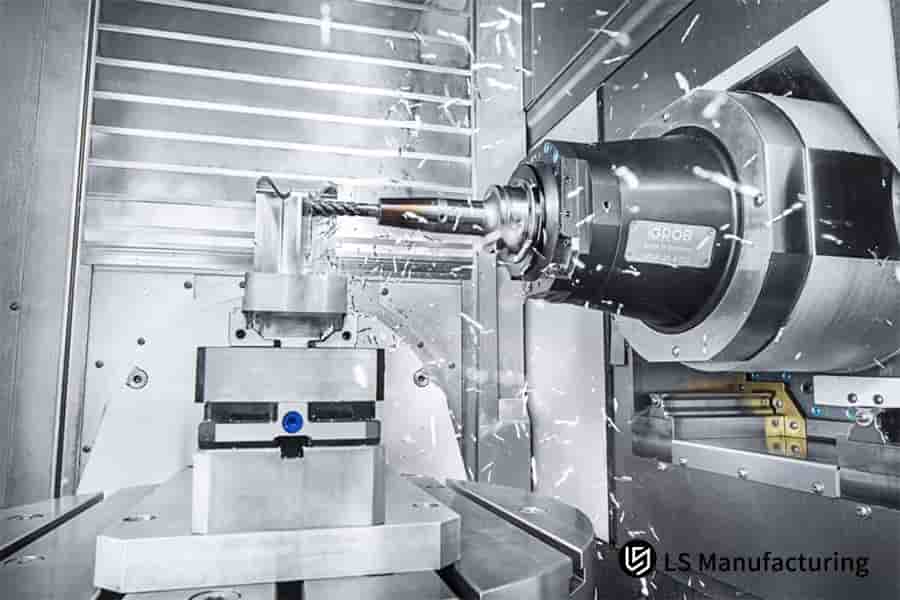
What Core Capabilities Should You Evaluate in an Aluminum CNC Machining Service Provider?
Partner selection, as a part of a project, can be quite serious; it is so first and foremost because, among other things, it may be a determiner of success or failure since it can be especially key to high-performance components. A good partner along with your aluminum CNC machining services will offer more than the capability to cut metals. A good partner will offer engineering and process expertise. A lot more will be at stake when your precision aluminum parts evaluates the technical competence and skills of a potential provider.
Material and Technical Expertise
Assess depth material and technology knowledge around aluminum alloys and materials science. A very good partnership would be a relationship that understands things concerning machinability and end product performance related to projects that involve high strength aluminum or thermal and electrical requirements.
Capability for Advanced Manufacturing
It should be checked. Modern multi-axis CNC machining centers, and more so 5-axis machining centers, cannot be replaced with regards to manufacturability for complex geometry within a single fixture. Besides that, the facility in high-speed machining is hugely desired in terms of class-one surface finish and dimensional accuracy on intricate precision aluminum parts.
Integrative Engineering and Design Support
Engineering support at an early stage is the next most critical differentiator. You must focus on shortlisting vendors offering in-depth DFM analysis at an early stage. This would help you get your design optimized for cost, performance, and manufacturability and even avoid costly redirects.
Quality Assurance Systems
Look at their quality control system. A good business will have an accredited quality management system like ISO 9001 and invest in the latest metrology tools, Coordinate Measuring Machines, and optical scanners to verify that every dimension within your tight specification is indeed achieved. However, what you should look for in a business partner is, first and foremost, more advanced technology and profound knowledge about the material, and then active engineering.
A reliable supplier will have an outstanding track record within your specific market sector, be open and transparent, and be, as a matter of fact, an extension of your own team. Where your projects are strict about accuracy, reliability, and performance, choosing a business partner with overall aptitude in LS Manufacturing aluminum CNC machining is the only avenue you can use to ensure perfection.
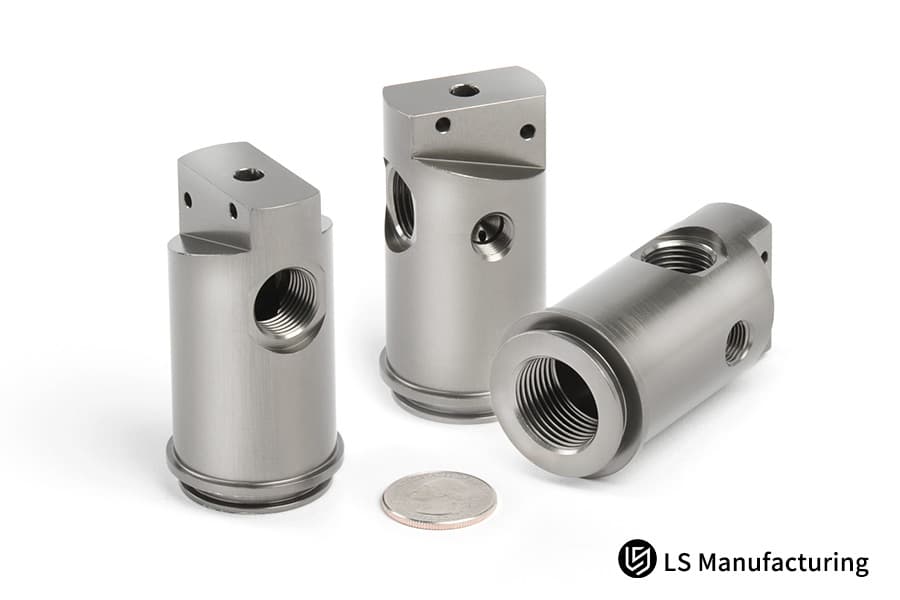
What is the Process for Collaborating on an Aluminum CNC Machining Project with LS Manufacturing?
A clean and efficient product manufacturing process begins with a successful partnership. There is clarity, expectations are managed, and optimums are ensured. From concept and finished part submittal, our proven aluminum CNC machining collaboration process is designed for efficiency and results, integrating deep material expertise with precise engineering at every stage.
Requirements & DFM Analysis:
This marks the beginning of your project as we carefully assess your needs with regards to performance requirements and budget. Once we have your data on file, we then offer a complimentary DFM analysis. By incorporating this highly valuable step within your project, we are then better equipped to analyze manufacturability, identify subsequent opportunities for optimization within your project, and identify recommendations for materials so we may then offer a cost-effective aluminum machining project.
Project Formalization & Production
Once we have finalized your project and plan of materials, you will then be provided a detailed price quote. The project then proceeds as we purchase your ordered quantity of aluminum and initiate your LS Manufacturing aluminum CNC machining needs. These jobs are then manufactured on multi-axis CNC machines with accuracy, adding your ordered surface finishes, all within our controlled environment.
Quality Assurance & Delivery
All components are taken through a thorough examination with CMM and various metrological instruments based on your designs and specifications as we then carefully ensure conformance to your expectations for your precision aluminum parts. Only after your project passes these inspections would your product then be carefully packaged and shipped, with full documentation accompanying your package. Our commitment does not end with shipping as we want to make sure you are completely satisfied.
Our streamlined, six-step process drives your specifications into superior-performing components with confidence and with transparency. By putting in place collaborative engineering and materials science knowledge at these early stages, every project then benefits completely from your LS Manufacturing aluminum CNC machining needs. It culminates in our collaboration process for the best engineering and material knowledge, then it ends with your project as an aluminum CNC machining collaboration process that’s a guarantee of performance and value for the assurance of mind, not just a product.

FAQs
1. What is the Minimum Order Quantity (MOQ) for CNC machining of aluminum alloys?
From developing your product prototypes to large-scale production, we would be absolutely there with you, offering more and more CNC machining services on your aluminium alloys.
2. What are the typical machining tolerances you can guarantee?
General discussion on machining accuracy. It would be possible for us to hold machining accuracy at either ±0.025mm on CNC machining on aluminum alloys. But there are some designs for which there might be additional accuracy requirements, and we would be able to control accuracy at no less than ±0.0125mm.
3. How long does it take from receiving drawings to getting a quotation?
Our quotation response service will be very fast. Despite some designs with simpler components made from aluminum alloys, we would be able to offer you a satisfactory response on a quotation within 2-4 hours after receiving your documents. Despite some designs with a more complex structure, we would still be able to offer you a response on a quotation within 1 business day.
4. Do you offer material certification and quality inspection reports for processing?
Regarding certification and reporting, we might be in a position to provide full certification regarding materials so that we could give traceable assurances regarding quality. Depending on the customer’s requirements, we would be able to provide first article inspections, full-size inspections, and so on as an indication regarding reliability for components manufactured.
5. Should I optimize my product specifically for the process of CNC machining with aluminum alloys?
We would be providing you with a free DFM service based on your basic design model. The prime focus, at this stage, would be on an optimal manufacturability process for your designs. That, as a natural consequence, will result in an improvement in product quality as well as an efficient control on production costs.
6. Which surface treatment processes are performed on aluminum alloys after CNC machining?
There are several surface finish techniques for making aluminum alloys, and these include anodizing for improving wear and corrosion resistances, sand blasting for an equal matte finish, and electroless nickel deposition amongst several. We would develop an economic method as per your requirement.
7. How do I protect my intellectual property related to my designs?
We truly respect your concern about the safety of your intellectual property and have strict agreements concerning confidentiality with all our clients. Again, documents within our organization are encoded, with control measures against leakage of your important information using our systems and technology.
8. How can new clients start their first aluminum alloy CNC machining project?
Starting a cooperation with a new customer doesn’t have any difficulties. You will, therefore, have to contact us solely via our main website, service hotline, and then emails, and then provide us with some relevant drawings and 3D models. After which, a project engineer will be set to assist and guide you in everything from start to finish.
Conclusion
Successful aluminum alloy parts are the product of a perfect combination of materials science, innovative design, and precision manufacturing. Choosing LS Manufacturing means choosing a technology partner with a deep understanding of material properties, top-notch machining processes, and a commitment to creating maximum value for you.
Optimize your aluminum part design and manufacturing now! Don’t hesitate, click “Get a Free Aluminum Alloy CNC Machining Quote and DFM Analysis,” submit your part requirements, and LS Manufacturing’s professional team will provide you with a one-stop solution from material selection to precision machining, helping you achieve both performance and cost optimization.
📞Phone:+86 185 6675 9667
📧Email:info@longshengmfg.com
🌐Website:https://www.longshengmfg.com/
Disclaimer
The content appearing on this webpage is for informational purposes only. LS Manufacturing makes no representation or warranty of any kind, be it expressed or implied, as to the accuracy, completeness, or validity of the information. Any performance parameters, geometric tolerances, specific design features, quality and types of materials, or processes should not be inferred to represent what will be delivered by third-party suppliers or manufacturers through LS Manufacturing’s network. Buyers seeking quotes for parts are responsible for defining the specific requirements for those parts. Please contact to our for more information.
LS Manufacturing Team
This article was written by various LS Manufacturing contributors. LS Manufacturing is a leading resource on manufacturing with CNC machining, sheet metal fabrication, 3D printing, injection molding,metal stamping and more.


