For woodturning artists, the turning tool is an extension of their hands and a medium for dialogue with rotating wood. Whether this “dialogue” is accurate, smooth and fun depends on the choice of blade steel. Choosing the wrong steel means frequent grinding interruptions and frustrating finished product defects; choosing the right steel allows creativity to flow smoothly on wood.
So, which steel is the “best”? Is it the extremely sharp traditional high-speed steel (HSS) or the wear-resistant carbide? Or is it the powder metallurgy (PM) steel that represents cutting-edge technology, excellent performance but higher price?
The answer is not absolute. The “best” choice depends on your unique working habits, the types of projects you often do, and your personal trade-offs between the two key attributes of sharpness and durability.
In order to help you quickly find the most suitable “weapon” in this “steel forest”, we will sort out the peak showdown of mainstream woodturning tool steels from the perspective of core performance to help you lock in your best choice.
Core Comparison Table Of Steel Materials For Woodworking Lathe Tools
| Steel Type | Sharpness Potential | Edge Retention | Sharpening Ease | The Bottom Line |
|---|---|---|---|---|
| M2 HSS | Razor Sharp | Good | Easy with standard grinder | The industry benchmark, can achieve the most extreme cutting effect, but requires frequent grinding. High cost performance, excellent overall performance, suitable for most turning tasks. |
| Tungsten Carbide | Good but not as keen | Excellent | Difficult (Requires diamond hones) | Good for lazy people, extremely durable, but sacrifices some extreme sharpness.Especially suitable for processing hardwood with high silicon content, laminated materials or long-term continuous operation, not easy to chip but brittle. |
| PM HSS | Razor Sharp | Very Good | Harder than M2, but doable | The ultimate performance, with the sharpness of HSS and the durability close to carbide, expensive. Designed for professionals or enthusiasts who pursue extreme performance and reduce the frequency of grinding. |
| High Carbon Steel | Razor Sharp | Poor | Very Easy | Traditional choice, commonly seen in entry-level/traditional wood carving knives, not suitable for high-speed woodworking lathes. Easy to sharpen but wears very quickly, easy to anneal and soften after long-term high-speed cutting, suitable for hand tools or low-speed carving. |
Selection suggestions:
- Seeking the ultimate cutting experience and cost-effectiveness: M2 HSS is the most balanced and widest choice. Accept frequent grinding as its price.
- Seeking extreme durability and reducing the number of grinding times: Carbide is the first choice. Accept its relatively low ultimate sharpness and high grinding threshold (diamond tool).
- Not short of money, pursuing top comprehensive performance: PM steel provides sharpness close to HSS and retention close to carbide, which is the peak performance choice.
- Slow-speed operation, budget priority or traditional tool enthusiasts: High carbon steel has the lowest cost and is extremely easy to grind, but it must be avoided for modern high-speed woodworking lathes, as its retention cannot meet the requirements and it is easy to damage.
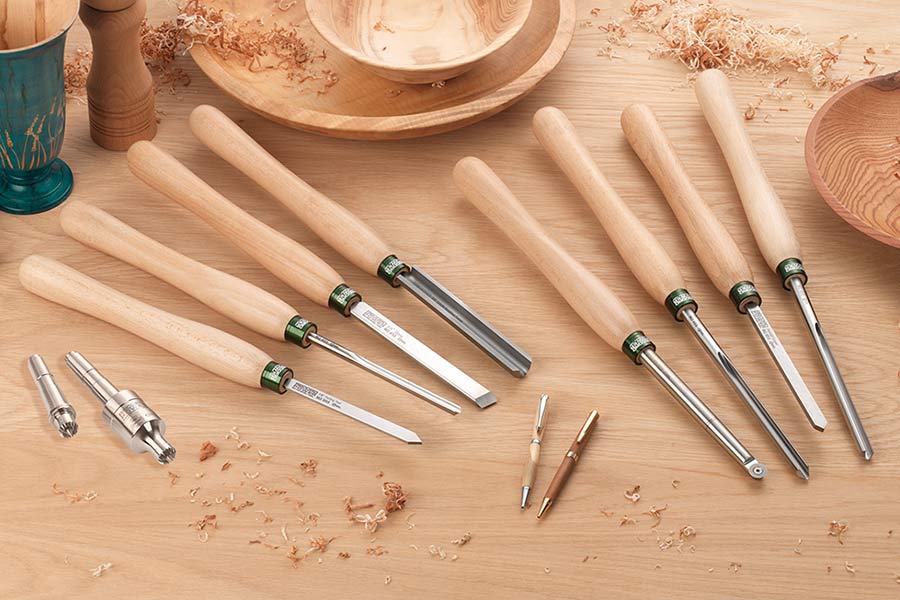
Here’s What You’ll Learn:
- A quick decision guide: Helping you choose between HSS, carbide and PM steels based on project requirements (e.g. wood type, machining accuracy, frequency of use).
- An in-depth comparison of the three major steels: Analyzing the core differences in sharpness, durability and cost between high-speed steel (HSS), tungsten carbide (carbide) and powder metallurgy steel (PM).
- Key factors for finished product quality: Why HSS can achieve “cutting” rather than “scraping”, and how to maximize surface finish through sharpening technology.
- The “beginner-friendly” advantage of carbide: Why its wear resistance and maintenance-free characteristics make it an ideal choice for beginners.
- A technological breakthrough in powder metallurgy steel: How the PM process improves toughness and edge retention at the same time to meet the demanding needs of professional users.
- The real calculation of long-term costs: Compare the total investment of HSS (requires grinding system) and carbide (replaceable blades) to break the myth that “cheap means saving”.
- From steel to fine manufacturing: revealing how CNC turning can improve the overall performance and safety of tool parts such as handles and ferrules.
- Real case demonstration: how a professional woodworker made a perfectly balanced PM steel cup chisel by custom CNC-machined metal parts.
- FAQs: practical questions such as “Can ordinary steel be used to make a lathe tool?” and “Is PM steel worth the high price?”
Now, let’s explore and find the “perfect steel” that best suits your woodworking style.
The Workhorse: Understanding High-Speed Steel (HSS)
High-Speed Steel (HSS) is a specially designed alloy tool steel. It significantly improves the performance of steel by adding high proportions of alloying elements such as tungsten (W), molybdenum (Mo), chromium (Cr), vanadium (V) and cobalt (Co). Its core characteristic lies in its excellent red hardness – even at high temperatures (about 500-600°C) generated by high-speed cutting, it can maintain sufficient hardness without rapidly softening or losing cutting ability. This makes it an ideal material for manufacturing cutting tools (such as drills, milling cutters, turning tools, planers, chisels, etc.) that need to withstand high cutting speeds and temperatures.
Overview of the core advantages of high-speed steel (HSS)
| Characteristic dimensions | Key points |
|---|---|
| Material characteristics | Perfect balance of toughness, hardness and cost: high hardness (HRC 62-67) combined with excellent toughness (impact resistance to chipping), the cost performance is significantly better than carbide. |
| Cutting experience | Extreme sharpness and true “cutting”: can be polished to razor sharpness, cleanly cut fibers instead of scraping, and achieve ultra-smooth finishing surface. |
| Applicable people | Traditional craftsmen who pursue ultimate quality: professionals and enthusiasts who value the surface finish of the final product and are willing to invest time in hand-grinding and maintenance of tools. |
High-speed steel (HSS) has become the standard in finishing because of its excellent balance of key properties: it provides enough hardness to cut hardwoods and hold an edge, while being tough enough to resist chipping, and costs far less than harder materials such as carbide.
The core benefit of this balance is its unparalleled sharpness potential. Skilled craftsmen can hone HSS edges to razor-sharpness. This extreme sharpness allows it to “cut” the wood fibers cleanly, rather than “scrape” them with pressure. The result is an extremely smooth surface with minimal burrs and tearing, perfect for the most demanding finishing stages.
As a result, HSS tools are particularly popular with traditional woodworkers and professionals who demand the ultimate in finished quality. They understand that “the best tool is the best tool” and do not mind, and even enjoy, investing time at the grindstone to achieve the top-notch cutting performance that HSS can provide through careful grinding and care, as an integral part of their craft.
High-speed steel (HSS) has become the irreplaceable “craftsman’s steel” in the hearts of traditional woodworkers who pursue the highest quality, thanks to its golden balance of toughness, hardness and cost, as well as the extraordinary finishing surface achieved through the ultimate sharpness.
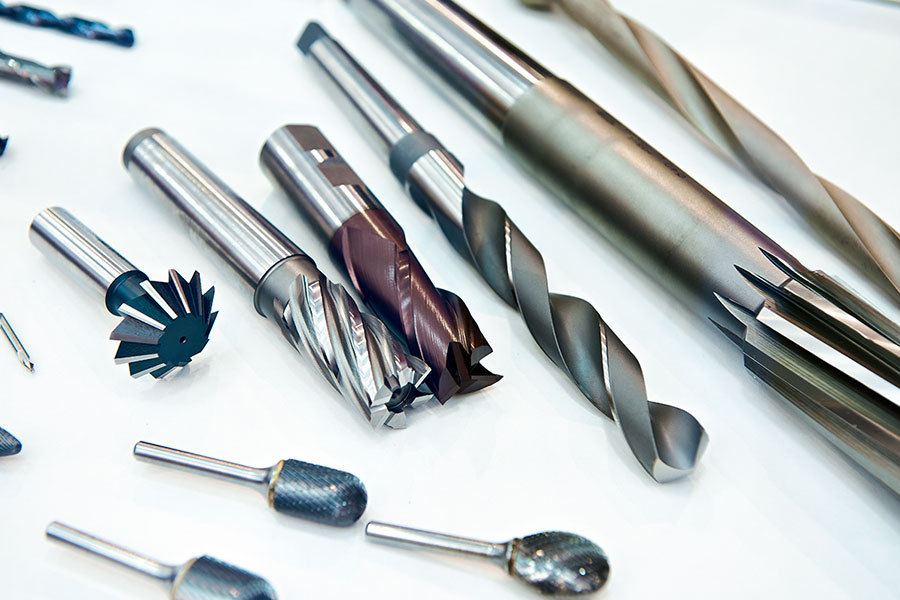
The Durable Challenger: The Rise of Tungsten Carbide
| Feature Category | Specific Description | Core Advantages/Values |
|---|---|---|
| Core Advantages | Incredible wear resistance, edge retention is several times or even dozens of times that of traditional high-speed steel (HSS) tools. | Long-lasting sharpness, greatly reducing the frequency of grinding/replacement |
| Working Principle | Usually used as a replaceable blade, using “scraping” to remove materials (rather than traditional cutting). | Safer operation, novice-friendly, significantly reducing the risk of “gnawing the knife” |
| Best application scenarios | 1. Woodworking novices 2. Enthusiasts who pursue efficiency and hate frequent sharpening 3. Need to process hardwood, laminate or artificial board containing glue/resin (such as MDF, particle board) | Provide reliable solutions for users in harsh processing environments and those who pursue convenience |
Incredibly wear-resistant tool
The core of tungsten carbide (hard alloy) knives lies in their extraordinary wear resistance. Its edge can maintain sharpness during continuous work, far exceeding the life of traditional high-speed steel (HSS) knives – usually several times or even dozens of times. This means that you can focus on your creation for longer, rather than being interrupted by frequent grinding.
Safe and friendly scraping method
This kind of tool is usually designed with a quick-change blade. Its uniqueness lies in the working principle: it mainly removes material through a “scraping” action. This method requires less control of cutting force, significantly reduces the risk of the tool violently cutting into the wood (i.e. “gnawing”) when operating errors, and is particularly friendly and safe for novices.
Ideal partner for demanding materials
Whether facing hard solid wood, highly abrasive laminates, or artificial boards filled with glue and resin (such as MDF, particleboard), tungsten carbide knives can handle it calmly. It is particularly suitable for enthusiasts who hate frequent sharpening and pursue efficiency, as well as any scenario that requires stable and reliable processing results on these demanding materials.
A piece of tungsten carbide blade is enough to redefine your efficiency and woodworking experience.

The Elite Class: Powdered Metallurgy (PM) Steels
| Feature | Dimension Description |
|---|---|
| Core Process | Gas atomization powder making + hot isostatic pressing (HIP) sintering to achieve ultra-pure matrix and ultra-fine/homogeneous grains |
| Core Advantages | Significantly improve toughness and edge retention at the same time (breaking through the limitations of traditional metallurgical performance trade-offs) |
| Performance | Comparable to the extreme sharpness of high-speed steel (HSS) + wear resistance and durability close to carbide |
| Representative steel types | CPM series (such as CPM S30V, CPM M4), VG-10 (improved version), and other high-end customized alloys |
| Applicable people | Professional users and senior enthusiasts who pursue extreme performance and have sufficient budget |
Traditional melting and casting metallurgy is difficult to avoid macro segregation and coarse carbides, which limits the balanced improvement of steel performance. The powder metallurgy (PM) process fundamentally solves this problem by atomizing the molten steel into extremely fine and highly uniform powder, and then densifying and sintering it under high temperature and high pressure (hot isostatic pressing HIP):
- Extreme purity: The rapid solidification process inhibits the accumulation of impurities and the matrix purity is extremely high.
- Ultrafine homogeneous grains: Fine powder particles form an extremely uniform and fine grain structure.
- Fine and uniformly distributed carbides: The hard carbides formed by key alloying elements (such as vanadium and molybdenum) are extremely small in size and extremely evenly distributed.
This revolutionary optimization of the microstructure has brought about a leap in performance: the synergistic effect of ultra-fine grains and uniformly distributed fine hard carbides gives the steel extremely high hardness and extraordinary wear resistance (extreme edge retention) close to that of cemented carbide, while its uniformity greatly reduces stress concentration points and significantly improves the overall toughness of the material, truly achieving “having your cake and eating it too”.
Powder metallurgy (PM) technology redefines the boundaries of steel performance by creating ultra-pure, ultra-fine grains and homogenized microstructures, setting a performance benchmark in the field of top-level tools that combines extraordinary toughness, extreme sharpness and excellent wear resistance. It is the top technology of choice for professionals pursuing peak cutting performance.
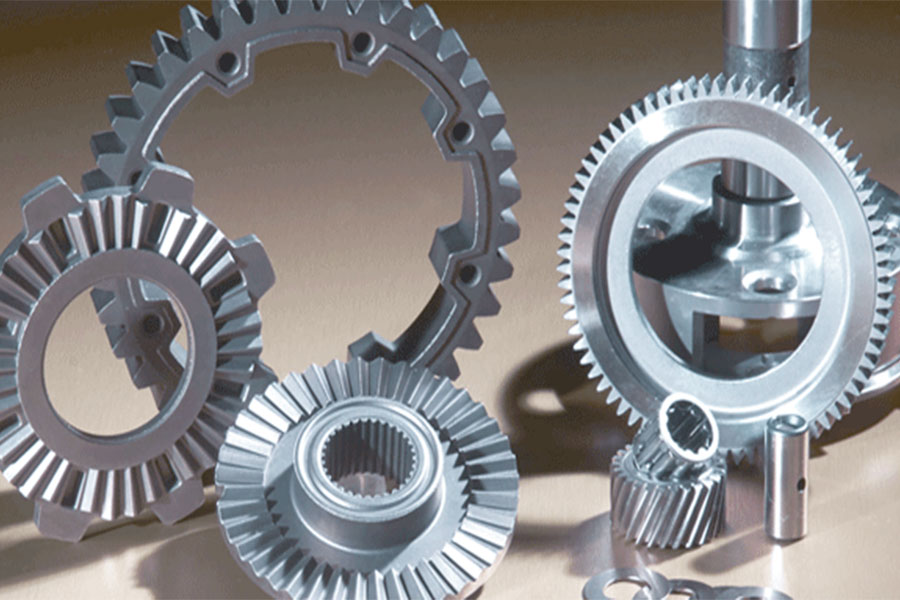
HSS vs. Carbide: A Head-to-Head Battle
| Dimensions of the Showdown | High Speed Steel (HSS) | Carbide | Winner |
|---|---|---|---|
| 1. Final Product Quality | Extremely sharp cut line for smoother surfaces, significantly reducing the need for post-grinding | Surface finish is generally inferior to that produced by a sharp HSS edge | HSS Winner |
| 2. Ease of Use | Requires regular grinding to maintain optimal performance, requiring more skill from the user | Little grinding required, ready to use, requiring less skill | Carbide Winner |
| 3. Long-term | Costs The tool itself has a lower initial cost, but requires an investment in a grinding system (grinding machine, whetstone, etc.) and time | Initial tool/blade cost is higher, but blades are replaceable and may be more economical in the long run | Depends on the situation |
Showdown 1 – End of final product:
High-speed steel (HSS) can be honed into a very sharp edge because it retains such wonderful sharpness. Having this super-sharp state allows it to produce the smoothest cuts when cutting wood, reducing the need for sanding afterwards. Carbide, though hard and durable, cannot usually achieve the same super-sharp state as a well-flatted HSS, and therefore the resultant surface it produces is occasionally slightly inferior. HSS wins this one.
Showdown 2 – Ease of use:
The single biggest advantage of carbide is its incredible wear resistance. This means that under typical usage conditions, it requires no sharpening at all and the user can simply “use it and go”, experience outstanding performance straight out of the package, and require little in the form of user sharpening skills. HSS, by contrast, requires learning sharpening skills and regular maintenance to achieve its best performance. Carbide wins this one.
Showdown 3 – Long-term costs:
Cost comparisons require a broader perspective. In terms of initial cost, HSS tools (e.g., entire planes or chisels) are cheaper. Money must be spent on a quality grinding system (e.g., grinder, terrazzo, sharpening stand, etc.) and time spent learning to sharpen the knives to maintain them at a sharp point. The initial cost of purchasing carbide tools or their replaceable blades is significantly higher, but their exceedingly long useful life and the fact that they do not require sharpening as frequently means that in the long term, ownership cost can be lower by only replacing the blade (and not the entire tool), especially for heavy professional frequency usage. No single winner here, just about use frequency, user competence and investment inclinations.
Choose HSS for the best search for finish and enjoyment of the grinding experience, and choose carbide for the convenience of use and coming and maintenance-free long-term. Both are fine, and the choice is all about your critical needs and utilization patterns.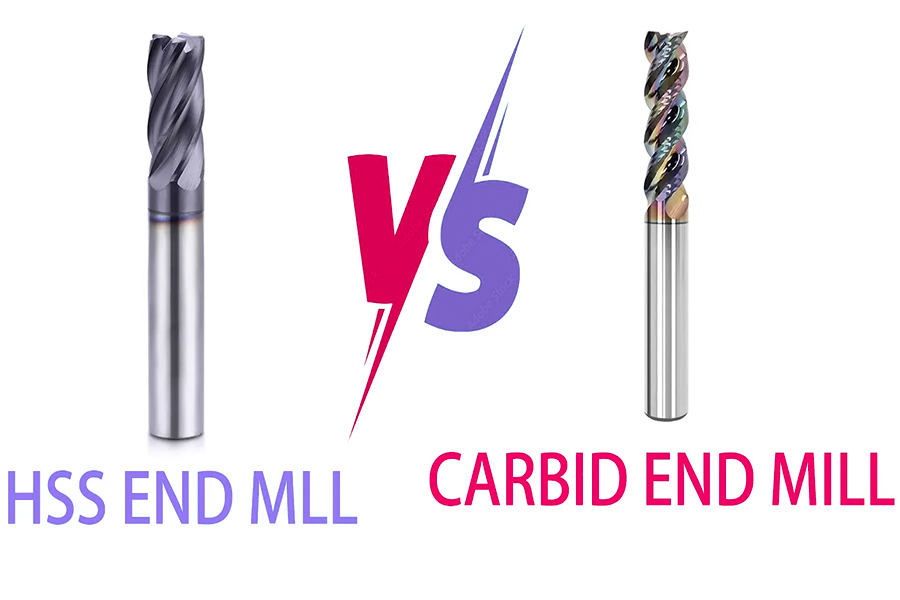
The Art of Sharpening: It’s Part of the Process
HSS Grinding Guide
Core: Master basic skills, safe and efficient
1. Basic grinding machine settings
Use white alumina grinding wheel (specific for HSS), grit size 60-120 mesh (60-80 mesh for coarse grinding, 100-120 mesh for fine grinding).
Mount a protective cover + use goggles: avoid splashing of debris, vital safety precautions.
Adjust the bracket: ensure the distance between the tool holder and the grinding wheel ≤3mm to prevent the tool from being drawn in.
2. Key skill of applying fixtures
Universal sharpening fixture: clamp the tool at a predetermined angle (generally 15°-25°), lock it and move it at an even speed to avoid angle deviation caused by hand shaking.
Alternative solution: Without a fixture, mark the blade with a mar+ker, lightly graze the grinding wheel to check the wear line, and adjust the angle by feel.
3. Cooling and annealing prevention
Water dip for 3 seconds after each grinding: HSS will anneal and become softened if overheated. If warm to the touch but not hot (about 50℃), it needs to be cooled.
Wet grinding must be employed: Where ever possible, utilize a water-cooled grinder in an effort to completely avoid high temperature damage.
Tutorial on “grinding” of cemented carbide (tungsten carbide)
Core: Grinding wheels must not be utilized! Only replace or hone
1. Diamond tools are required
Sharpen slightly blunt cutting edges: With diamond grinding plates/grinding rods (grain size > 300 mesh), carefully push along the original cutting edge 5-10 times in one direction (do not back and forth grind) to remove burrs.
Tips: Press the blade between your fingers ≤500g (similar to holding a pencil to write), too heavy pressure will cause it to chip.
2. Change the blade directly for extreme wear
Identification time: When the cutting edge has >0.2mm gap or cracks, forced repair will decrease the tool life.
Economic suggestion: Stock domestic cemented carbide blades (unit price 5-20 yuan), which is more cost-effective than repair work hours.
3. Absolute taboos
Common grinding machines are prohibited: tungsten carbide will wear out the grinding wheel abrasives, introducing the danger of imbalance and explosion of the grinding wheel!
Do not use oilstone/sandpaper: tungsten carbide cannot be cut with standard abrasives, and polishing will be useless.
Key points to build trust
Safety first: emphasize requirement for protective equipment (e.g. HSS grinding swarf speed can be 80km/h).
Transparent cost: warn in a clear fashion of the cost to repair limit of carbide in order to avoid users wasting money on useless repairs.
Expected effect:
HSS grinding recovers 90% of the initial performance, but carbide honing introduces a maximum of 10-20% sharpness.
Quality standards of self-inspection attached: HSS blade no curl, under light no white lines; carbide blade smooth, no serrations.
HSS grinding is unavoidable and carbide prioritizes maintenance over repair – crossing the boundary can achieve two times the outcome with half the effort.
Beyond the Blade: The Importance of the Ferrule and Handle
As we admire the sharpness and material of the turning tool blade, we forget the hero unappreciated behind its performance – the handle and the metal band (ferrule). A good turning tool is an engineering system of fine coordination.
1. Handle: Not merely a grip
Balance and weight: A heavy or unbalanced handle will quickly generate arm fatigue and introduce additional torque, affecting cutting stability and the machined surface quality.
Ergonomics: Ergonomic shape adapting to the palm can significantly reduce pressure, provide stable control and precise force, and make the operator more aware of processing itself.
Rigidity: A sufficiently rigid handle is the basis for force transmission, excluding bending vibration, and preventing chatter and chipping.
2. Metal ring: Safety and precision combined
The precise assembly of this small ring connecting the blade and the handle is critical.
Loosely assembled is a major latent danger: During high-speed cutting, loose metal ring can cause the blade to come loose and lead to major accidents. Micro-motion will destroy rigidity and produce vibration and noise.
Precision fit assurances: The blade is held firmly in place, and the force of cutting is transmitted even and effectively from the blade to the handle.
3. Precision manufacturing: perfect guarantee
The perfect balance, acceptable grip, rigid handle structure, and the perfect fit of the metal ferrule are no cakewalk. This depends enormously on modern precision manufacturing technology, especially CNC turning
The CNC turning can machine complex handle forms and internal key holes and threads to micron accuracy.
It offers strict dimensional consistency and form and position tolerances, which serve as the basis for realizing high performance of the handle and reliable locking of the metal ferrule.
Other precision operations (e.g., grinding and surface treatment) also work together to make these parts top-notch.
When choosing a turning tool, remember: the handle is the foundation of strength, and the metal ferrule is a safety link. They form a precision system with the blade. Giving no consideration to them, no matter how fine the blade is, it will not realize its potential, and may even induce fatigue and peril. On the drive for efficient, safe and high-quality processing, one must look to precision design and manufacturing that “goes beyond the blade” – that is the benefit of advanced precision technology (e.g., CNC).
Case Study: Making a Pro-Grade Custom Bowl Gouge
Client Background: Professional woodworker who wanted the best in tool performance.
Key Requirements: The client had already opted for a high-grade V10 PM steel blade, but needed custom metal pieces to exactly match:
Brass ferrule: In order to achieve the exact weighting.
Aluminum tail weight: To fit his hand exactly to hold and have functional non-slip knurling.
Hard Maple Handle: To exactly take in the above metal pieces.
Challenge: Hand-making such complex, high-precision metal components (especially knurling and precision fit) is extremely difficult and inconsistent.
LS Solution (CNC Turning):
Precision Machining: Based on the sketch provided by the client, we used CNC turning technology to precisely machine the brass ferrule and aluminum weight.
Key Benefits:
- Ultra-High Precision: Dimensional tolerances are strictly controlled to ±0.01 mm to ensure perfect embedding and seamless fit with the wooden handle.
- Perfect knurling: CNC-machined non-slip knurling has a uniform texture and provides an excellent grip.
- Strict weighting: Precisely control the weight distribution of metal parts to achieve the perfect balance required by customers
- Efficiency and value: Compared with time-consuming and difficult to accurately hand-made, we efficiently deliver precision parts that far exceed the quality of hand-made parts to customers at a very competitive CNC turning price.
Results:
- The customer successfully assembled a completely personalized, high-performance custom bowl scraper. Its excellent balance, hand-fitting grip and overall aesthetics far exceed the mass-produced products on the market, and it was praised by the customer as a “dream tool” that meets its stringent requirements.
- The realization of top-level tools not only relies on high-quality materials (such as the customer’s V10 PM steel), but also cannot be separated from the core links of precision manufacturing. LS Company has become a reliable manufacturing partner for customers to realize their ultimate tool vision through professional CNC turning services. We are good at turning complex and high-precision metal parts needs into reality.
From Crafting Tools to Crafting Masterpieces with CNC
Your pursuit of precision is at the heart of creating exceptional work. However, when a project requires absolute repeatability (such as making 100 identical table legs) or involves extremely complex geometries (such as wooden artwork with precision threads), the limitations of traditional hand turning become very apparent. Manual operations cannot avoid the accumulation of small errors, it is difficult to ensure that large quantities of products are exactly the same, and it is even more difficult to achieve highly complex details efficiently and accurately.
This is where LS online CNC turning services shine!
LS provides you with precision manufacturing solutions that break through the limitations of manual work:
- Unparalleled accuracy and consistency: Whether you need 1 or 1,000 pieces, our computer numerical control (CNC) lathes can faithfully execute your design files with micron-level accuracy, ensuring that every finished product is perfectly replicated and eliminating manual errors.
- Complex designs are easily realized: Precision threads, complex curved surfaces, unique contours, fine grooves… These details that daunt craftsmen can be accurately and efficiently carved out in front of our CNC technology, turning your most imaginative designs into a reality within reach.
- Wide range of material adaptability: Your creativity is not limited to a single material? LS can also handle it with ease. Whether it is the warm texture of wood, the diverse properties of engineering plastics, or the durability of metals (such as aluminum, brass, steel, etc.), our professional equipment and processes can perfectly handle it.
- Efficiency and Scalability: From single-piece prototype verification to mass production, LS’s online platform and automated processes allow your projects to move forward quickly. Eliminate long manual hours and significantly shorten the product launch cycle.
- Digital workflow: Simply upload your CAD design file (such as .DXF, .DWG, .STEP, .STL, etc.) to get instant quotes, professional manufacturing suggestions, and start production. The entire process is transparent, convenient, and controllable.
Choosing LS, you are not only choosing CNC machining services, but also:
- Cutting-edge manufacturing technology: Invest in the most advanced CNC equipment to ensure leading machining capabilities.
- Deep engineering experience: Professional team understands material characteristics and machining processes, and provides you with optimization suggestions.
- Strict quality control: The quality inspection system throughout the whole process guarantees the quality of each deliverable.
- Reliable supply chain and delivery: Efficient production management ensures that your project is completed on time.
- Focus on your core value: Leave the tedious manufacturing process to us, and you can focus on design innovation and market development.
Don’t let the limitations of manual work constrain your creativity and efficiency. Let LS’s online CNC turning service become a powerful engine for you to leap from “making tools” to creating “precision masterpieces”.
Visit the LS online platform now, upload your design, and experience the power of precision manufacturing!
FAQs
1. For beginners, should I buy HSS or carbide?
As a beginner, it is highly recommended to choose carbide turning tools. It allows you to focus on learning turning skills instead of wasting a lot of time on frequent sharpening. Carbide has high hardness and strong wear resistance, which keeps it sharp longer during turning, reduces maintenance requirements, and improves learning efficiency and safety. In contrast, HSS tools need to be sharpened frequently, which is easy to distract attention and increase the difficulty of operation. Investing in carbide can help you get started faster, build confidence, and reduce the risk of accidents. It is a wiser choice for beginners.
2. Can I make my own turning tools with ordinary steel?
It is not recommended to make your own turning tools with ordinary steel. Ordinary steel is not hard enough, and it will quickly become blunt under the high-speed friction of the lathe, and it cannot maintain effective cutting, resulting in poor processing quality and frequent replacement. More seriously, it may cause tool breakage or workpiece splashing, causing personal injury or equipment damage. Homemade tools lack professional heat treatment and are extremely risky. For safety and efficiency, regular turning tool materials such as HSS or carbide should be selected to ensure stable and reliable performance.
3. Is PM steel really worth the price?
Whether PM steel (powder metallurgy steel) is worth the money depends on the frequency of use. For professionals who use it for more than 8 hours a day, its excellent wear resistance and long life can significantly reduce grinding time and improve production efficiency. The long-term cost savings are enough to offset the high price. But for amateurs or low-frequency users, HSS tools are more cost-effective, provide sufficient performance and are affordable, and investing in PM steel may not be cost-effective. It is recommended to evaluate according to your own needs: professional scenarios are worth the price, and HSS is more economical for amateur use.
4. Can your CNC turning service process wood?
Of course! Our CNC turning service supports the processing of a variety of materials, including wood, plastic, and metal. Whether it is high-precision wooden parts (such as furniture components or crafts), plastic prototypes, or metal finished products, we can handle them efficiently. The service ranges from single sample development to mass production, ensuring accurate dimensions and smooth surfaces. Using advanced equipment, we provide a one-stop solution to meet your custom needs, regardless of material or order size.
Conclusion
The journey to find the “best” steel for woodworking turning tools ultimately reveals a core truth: there is no absolute “best”, only the most “suitable” choice. This is essentially a delicate trade-off between sharpness, durability, cost, and your personal work habits and pursuits.
- High-speed steel (HSS): Like an artist pursuing the ultimate feel, it can be sharpened to an amazingly sharp edge and provide unparalleled cutting smoothness, especially suitable for fine carving and woodworking with extremely high cutting feel requirements. Its toughness also makes it not easy to chip the edge, making it a reliable partner for delicate work.
- Carbide: It is more like a tireless productivity engine in the workshop. Its excellent wear resistance means longer service life and less sharpening time, especially suitable for processing hardwood, batch production or long-term continuous operation. It represents the industrial standard of efficiency and reliability.
- Powder metallurgy steel (PM steel): Standing on the shoulders of the first two, PM steel is the crystallization of peak fusion. It combines the grindability and sharpness potential of high-speed steel with the wear resistance close to carbide, providing a top solution for craftsmen who pursue extreme performance, reduce the number of sharpening times, and do not want to sacrifice cutting quality.
Your pursuit deserves more precise tool support!
Start now and get your exclusive CNC turning solution:
Upload your design drawings immediately – whether it is a custom turning tool part that needs to be perfectly reproduced, or a delicate and complex woodworking artwork – in just a few simple steps, you can get a clear and instant CNC precision turning quote.
Let us use cutting-edge manufacturing precision to empower your extraordinary creativity and superb craftsmanship! From a piece of wood to a masterpiece, let the most suitable turning tool steel be the solid backing of your craftsmanship journey.
 📞 Phone: +86 185 6675 9667
📧 Email:info@longshengmfg.com
🌐Website:https://www.longshengmfg.com/



Heya this is kind of of off topic but I was wanting to know if blogs use WYSIWYG editors or if you have to manually code with HTML. I’m starting a blog soon but have no coding skills so I wanted to get advice from someone with experience. Any help would be enormously appreciated!
Thank you very much for your question; it’s a great question for beginners! There are many excellent blogging platforms available today (such as WordPress and Ghost), which all have powerful visual editors that allow you to create content easily without needing to write any HTML code. You can absolutely start blogging even if you have no coding experience! If you’d like, I’d be happy to recommend some specific platforms and resources. Best of luck with your blogging!
You have observed very interesting points! ps nice web site.
Greetings! I know this is kinda off topic but I was wondering which blog platform are you using for this site? I’m getting fed up of WordPress because I’ve had problems with hackers and I’m looking at options for another platform. I would be awesome if you could point me in the direction of a good platform.
whoah this weblog is wonderful i really like reading your articles. Keep up the good work! You realize, a lot of persons are searching round for this info, you can aid them greatly.