iPhone 17: Titanium vs. Aluminum – What do you hold in your hands every day?
When you hesitate between the standard and Pro versions of iPhone 17, and glance at the shiny descriptions of “aerospace-grade aluminum alloy” and “space-grade titanium alloy”, are you wondering in your heart: Apart from the numbers on the price tags, what is the difference between these two “metal brothers” in your hands?
This is not just a word game in marketing copy. The metal shell you choose will directly determine what kind of real touch and user experience this phone will bring you every day in the next two years or even longer.
This is essentially a question about your lifestyle:
Are you a user who pursues extreme sturdiness and professional texture, and is willing to pay for the heavy sense of security?
Or is it a user who values lightness, comfort, dexterity and portability, or likes colorful colors to show personality?
Facing the difficulty of choosing “titanium alloy” or “aluminum alloy”? Don’t worry! We will tear off those high-sounding terminology packaging for you and use a “human-language version” comparison table to let you see in 60 seconds how these two metals will affect your daily use – from weight, feel, durability to visual style, it’s all clear at a glance.
Titanium Alloy (Pro) vs. Aluminum Alloy (Standard) – Daily Experience Comparison Table
| Features | Titanium Alloy (Pro Model) | Aluminum Alloy (Standard Model) | Summary in One Sentence (For Whom?) |
|---|---|---|---|
| Fall Resistance | “Hard Guy” Responsibility: Harder, Not Easy to Bend, Provides Stronger Physical Protection When Falling, Higher Sense of Security. | “Tough Guy” Style: The material is relatively soft, but it can also effectively protect the phone through good design. | Often slipping? Titanium alloy’s “Hard Guy” protection is more reassuring. |
| Feel and Temperature | Warm and Skin-Friendly, Premium Feel: Gentle touch, not cold, closer to the skin, luxurious texture. | Cool and Smooth, Tech Sense: Typical metal touch, smooth and cool (especially obvious in winter). | Choose titanium alloy if you pursue the warmth of luxury goods; choose aluminum alloy if you prefer the classic technology and cool feeling. |
| Appearance and Color | Low-key and Professional, Deep Texture: Matte/brushed surface, deep and calm color (such as titanium gray, black), showing professional quality. | Bright and lively, with a bold personality: it is easier to achieve rich and bright colors (pink, blue, green, yellow) to meet personalization. | Choose titanium alloy for business professional style; choose aluminum alloy for youthful vitality and colorful style. |
| Weight perception | Solid and stable without being bulky: high density but high strength can be made thin, providing a “weighty” solid feeling. | Extremely light, zero burden: naturally lightweight, long-term holding has the least burden on the wrist. | Choose titanium alloy if you like the “weighty” texture; choose aluminum alloy if you pursue “light as nothing”. |
| Scratches in the pocket | “Anti-scratch master”: high surface hardness, it is not easy to leave obvious scratches when placed with keys and coins. | “Needs care”: relatively soft, and it is more likely to have fine hairline lines or scratches in daily use. | “Naked runner” (don’t like to wear a case)? Titanium alloy makes you more worry-free. |
| The price you pay | Expensive: the material and processing costs are much higher than aluminum alloy, which is directly reflected in the selling price. | People-friendly: the material is popular, the processing technology is mature, and the cost control is good. | This is usually the “most core factor” in deciding whether to spend a few hundred dollars more to upgrade. |
Here’s What You’ll Learn
- Comparison of the anti-fall principles of titanium alloy and aluminum alloy: Using the metaphor of F1 racing chassis vs. car bumper, reveal how the two protect the internal components of the mobile phone with different logic.
- The aesthetic code of the two metals: Match the fine-grade finish of titanium alloy PVD coating and the anodizing color magic of aluminum alloy to pick a style that suits your taste.
- In-depth examination of price gaps: From the material cost of “Kobe beef vs. premium beef” to the processing technology of “diamond carving vs. butter cutting”, understand the premium logic of Pro models.
- One-year usage forecast of real color through daily scratch test: According to Mohs hardness comparison and “battle damage” effect analysis, predict the real color of the mobile phone after one year’s use.
- Physical combat of game warming: Use “metal pot vs. casserole” to measure the difference in heat dissipation to reveal which metal can better suppress the “violent temper” of the chip.
- Inspiration from real product cases: from the rock fall test of the titanium alloy camping cup to the fashion heat dissipation design of the aluminum alloy mobile power bank, see how materials decide user experience.
- Right purchase decision tree: Based on role portraits such as “tech enthusiasts/careless people/business elites”, lock in the model most suitable for you within 60 seconds.
- Apple material choice philosophy migration guide: Relocate the product essence offering of “security vs. personalization” into the next major product strategy for your brand.
- FAQ that demystifies: Bury contentious issues such as “Is titanium indestructible?” and “Is aluminum cheap?” to end decision troubles.
Let us now dispel the hype and employ material science and user scenario thinking to determine the truth of the two iPhone 17s.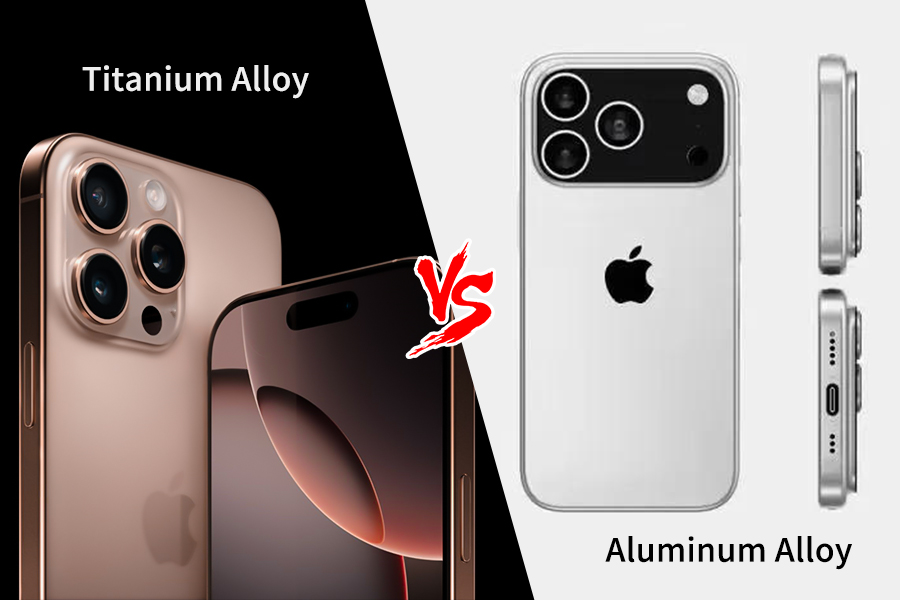
Durability Test: Titanium Armor and Aluminum Resilience
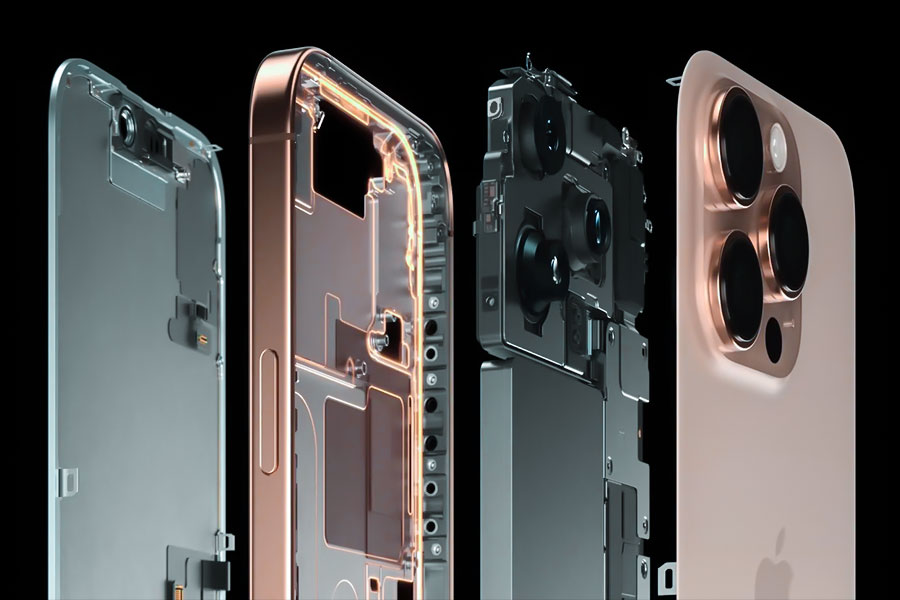
Titanium alloy vs aluminum alloy drop resistance comparison
| Attributes | Titanium Alloy | Aluminum Alloy |
|---|---|---|
| Design concept | Rigid fortress (such as F1 racing chassis) | Flexible buffer (such as car bumper) |
| Core goal | Resist deformation and protect internal precision components | Controllable deformation, absorb and dissipate impact energy |
| Energy processing | Disperse impact force and keep itself as original as possible | Absorb impact energy and consume it through its own deformation |
| Material behavior | High strength, high elastic modulus (high rigidity), not easy to bend or dent | Moderate strength, good ductility, allowing certain plastic deformation |
| Realistic performance | The frame/shell is more likely to remain intact and deform less | The frame/shell is more likely to be slightly dented or deformed, but the interior is protected |
1. The rationale of the titanium alloy: the defender of stiffness – the “F1 racing chassis” tactic
- Core: anti-deformation strength. Titanium alloy has a very high specific strength (strength-to-density ratio) and rigidity (high elastic modulus). Think of the carbon fiber monocoque F1 chassis: it must be extremely strong and lightweight, using the minimum quantity of material to form an almost undeformable “safety cabin” to contain the invaluable and fragile engine (analogous to the chip and motherboard in the cellular telephone) and the driver (analogous to the screen).
- Anti-fall mechanism: When the mobile phone falls and hits the ground, the first thing the titanium alloy frame/shell does not do is yield or become deformed. It’s like an rock cage, quickly transferring the impact force to the entire structure so as not to have the force sit on one specific point and hence directly damage the internal devices (especially corners of the screen).
- Advantages: Complete retention of structural integrity. The frame itself is hard to bend, dent or fracture, is normally negligible in the damage to appearance. This is the secret to protecting precious internal parts (especially the edges of the screen from being compressed and cracked).
2. The logic of aluminum alloy: energy absorber – “car bumper” approach
- Core: energy absorption that deforms. Aluminum alloy has good ductility and toughness. It is like the bumper on modern cars: designed to go through controllable and repairable deformity in low-velocity collisions, to dissipate and absorb most of the collision kinetic energy in its own material bending and wrinkling, thereby saving the more expensive body structure and occupants behind.
- Anti-fall mechanism: Under free fall and impact, the aluminum alloy frame/shell will actively undergo a certain degree of plastic deformation (dent, bend). It absorbs a great deal of impact energy, which is equivalent to creating a “buffer zone” or “energy absorption zone” for the internal precision components (chips, screens), thereby reducing the impact force transmitted to the interior greatly.
- Advantages: Effectively reduce the maximum impact force transferred to the internal components. Compromising local integrity of the shell (resulting in dents and scratches), the internal core components have a higher probability of survival.
3. Real-world performance: intuitive consequences of deformation differences
- Titanium alloy cell phone: When you have a typical drop (especially corner-landing), you would normally anticipate scratches or minor bumps on the frame, but the general shape remains intact, with minimal noticed bending or big-area dents. Its “armor” does a great job of defending against deformation and protecting the inside.
- Aluminum alloy cellular phone: When dropped and collided with, the frame would have a higher probability of developing pits, deformation, or even bending of light. These “scars” prove that it does its “bumper” thing – by self-deforming, it distributes impact and protects the “passengers” inside (chips and screens).
- On the battlefield of mobile anti-falling, titanium alloy is embodied as invincible armor, resisting deformation to protect internal precision and appearance integrity; aluminum alloy is akin to intelligent cushioning airbag, taking impact by its self-controllable deformation, sacrificing local safety for global safety.
Style Factor: Professional Colors vs. Colorful Choices
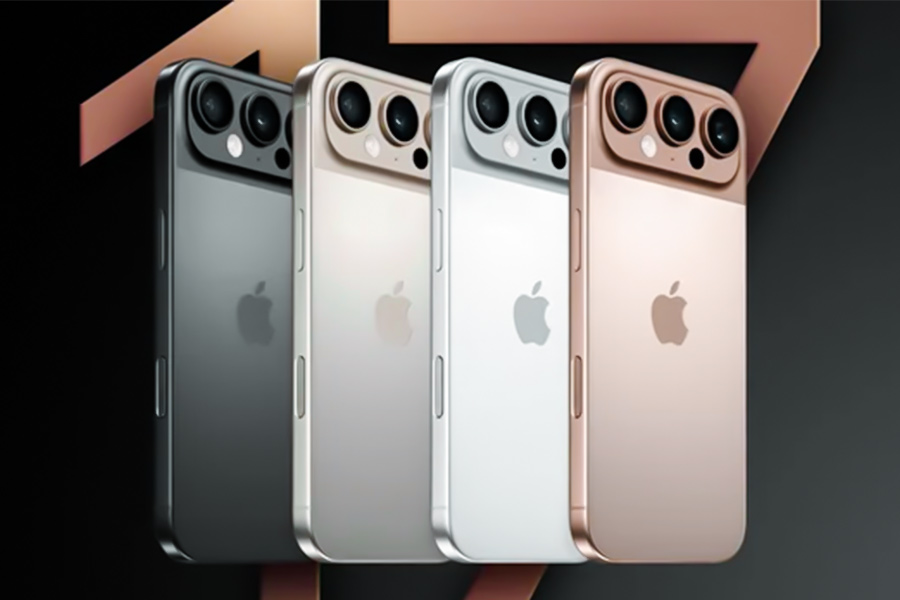
When metal materials’ beauty is to be spoken of, appearance and color are crucial. Titanium alloy and aluminum alloy, two of the most widely used metals in modern industry and consumer goods, look completely different and embody the two currents of style: “professional and deep” and “light and unorthodox” respectively. Their chief differences are outlined in the table below:
| Features | Titanium alloy | Aluminum alloy |
|---|---|---|
| Appearance tone | Deep, restrained, professional | Bright, diverse, lively |
| Gloss characteristics | Unique metallic luster (derived from the material itself) | Can present matte to bright luster (affected by the process) |
| Color realization | Mainly depends on PVD coating | Mainly achieved through anodizing process |
| Color style | Mainly dark/low-key colors such as gray, black, gun color, gold | Almost any bright color, extremely rich choices |
| Aesthetic feeling | Calm, precise, high-end, reliable | Vitality, personality, fashion, customizable |
| Core advantages | Professional sense, durability, unique metallic texture | Unlimited color possibilities, personalized expression |
1. Titanium alloy: mature and restrained professional taste
- Characteristic luster: Titanium alloy in itself has a rich, cold metallic luster, a physical characteristic that speaks naturally of high-end professional taste.
- PVD coloring of coating: Its characteristic deep/low-key colors (black, gold, gun color, etc.) are mostly produced by PVD (physical vapor deposition) technology. It coats an extremely thin, ultra-hard compound coating under vacuum, not only to provide color but also to impart the surface’s deep, restrained, and sharp look and feel. PVD is low in color saturation, dark brightness, and possesses good wear resistance, just presenting a professional, reliable, and resilient image.
2. Aluminum alloy: a bold personality with a colorful canvas
- Anodizing dyeing: the key to aluminum alloy’s bold colors is the anodizing process. An electrochemical process that forms a porous layer of aluminum oxide on the aluminum’s surface.
- Infinite color options: the porosity of the oxide layer can absorb almost any vibrant dye (red, yellow, blue, green, pink, purple, etc.). After sealing treatment fixes the color and makes it more durable
- Personality expression: Anodizing provides unparalleled color liberty and is the ideal choice for conveying vitality, personality, fashion and personalization. It is typically used on items where visual presence or distinction is demanded.
Titanium alloy achieves deep, reserved and professional beauty in its unique body texture and PVD coating; aluminum alloy, with the use of anodizing technology, turns into an unlimited canvas of dazzling colors and personality expression. Titanium alloy comprehends professional eternity, and aluminum alloy comprehends personality vitality.
Value for money: taking apart the price tag
When you see the eye-watering prices of certain products, especially the high-end “Pro” ones, most will wonder to themselves, “Why so expensive?” Fear not, there is a lot behind the price. Today we are going to take it apart and see why it is so expensive. The basic reasons are normally with the raw material and the processing.
First, have a glance at a small table to get an immediate understanding of the major differences:
| Comparison dimensions | Aluminum / Ordinary model | Titanium alloy / Pro model |
|---|---|---|
| Raw material analogy | High-quality beef | Kobe A5 Wagyu |
| Raw material characteristics | Common, relatively low cost | Extremely rare, high cost |
| Processing difficulty analogy | Cutting butter with a sharp knife | Carving on a diamond |
| Processing characteristics | Relatively easy, fast, high efficiency | Extremely difficult, requires special tools, extremely time-consuming and skill-intensive |
| Contribution to cost | Low | Very high |
Why are raw materials so expensive?
Imagine this: if aluminum is the good quality beef in the supermarket, then titanium is the legendary Kobe A5 wagyu. Everyone knows beef, the better the quality, the higher the price. The same is true in the world of materials.
- Aluminum: Like high-grade beef, it’s actually very ubiquitous (the third most common in the earth’s crust), the mining and refining technology is mature, and the cost is reasonably affordable. It’s lightweight, has a certain strength to it, and is easy to process, so it’s an economic one for lots of uses.
- Titanium: That’s a completely different league. It is analogous to Kobe A5 wagyu – highly rare (low abundance in the earth’s crust, difficult extraction), and of superior quality (high tensile strength, low weight, resistance to corrosion, excellent biocompatibility). But purely because of these “good qualities”, it is extremely costly to obtain. Extraction of pure titanium from ore itself is a complex procedure involving high energy inputs and cost. The scarcity and high performance of this “god-level” material are the first columns that push up the price of the Pro model.
Processing: From “cutting butter” to “carving diamonds”
- Processing aluminum alloys: relatively easy and economical, similar to “cutting butter with a knife” – high speed, low loss, low cost.
- Processing titanium alloys: extremely difficult and expensive, similar to “carving on diamonds”:
- Special and expensive ultra-hard tools (e.g., diamond coatings) must be employed, and regular tools are consumed in an instant.
- The processing speed must be extremely slow and careful, or the high heat will spoil the workpiece and tool.
- The cooling must be intense and high-precision devices must be employed, and the technical demands on the operator are extremely high.
- The tool is quickly consumed and the replacement cost is astronomical.
- The process is more complicated and time-consuming.
Therefore, the Pro model premium is largely the price of the titanium alloy, a scarce material of the “Kobe Wagyu” standard and the finest processing technology that is as demanding, time-consuming and expensive as “carving on diamonds”. This premium is for the ultimate performance and the refined process involved.
The Pocket Test: A Closer Look at Scratch Resistance
Pocket Test: Scratch Resistance Comparison – Aluminum Alloy vs. Titanium Alloy
| Comparison Dimensions | Aluminum Alloy (anodized) | Titanium Alloy |
|---|---|---|
| Mohs Hardness | ≈ 6-7 (higher than 5.5 for keys) | >7 (higher) |
| Anti-key scratch | Better, but not completely immune | Better, more scratch resistant |
| Battle Damage Effect | Obvious scratches (showing silvery white base) | Shallow scratches/inconspicuous |
- Tolerate daily anxiety: The “melee” of mobile phones, watches, and keys in pockets gives rise to anxiety regarding scratching. Choosing the right material can do away with such anxiety.
- Comparison of hardness: Keys have a hardness level of around 5.5 on the Mohs scale. The surface hardness of typical anodized aluminum alloys is 6-7 and can withstand keys but is scared of harder materials (like gravel). Titanium alloys have a hardness level of usually >7, which is more key-resistant, coin-resistant, and mostly resistant to gravel and is less scratch-prone.
“Battle damage” effect: Scratches are inevitable with long-time usage, visual effects matter.
- Aluminum alloy: Dyeing the scratched oxide layer will reveal the silver-white base, big color difference and stands out.
- Titanium alloy: Color usually is body color or original color, scratch color difference is little and shallow (usually hairline), low-key and not abrupt.
Titanium alloys outperform aluminum alloys easily in daily “pocket battles” with more hardness and less obtrusive visual effects after scratches, and do a superior job at soothing your “scratch anxiety.”
Gaming & Heat: Which Metal Keeps its Cool
| Features | Aluminum alloy (such as 6063, 7075) | Titanium alloy (such as TC4) |
|---|---|---|
| Core features | High thermal conductivity (about 150-220 W/m·K) | Low thermal conductivity (about 7-22 W/m·K) |
| Metaphor of thermal conductivity | Like a metal pot: heats up quickly and dissipates quickly | Like a thick casserole: heats up slowly and dissipates even more slowly |
| Temperature distribution | Relatively uniform warmth overall | Significant local hot spots (such as above the processor) |
| Heat dissipation dependence | Depends on the overall heat dissipation of the body | Highly dependent on the internal heat dissipation system (fan, heat pipe, heat spreader) |
| Gaming experience | The body may feel “warm” after long gaming sessions, but the core temperature is well controlled | After long gaming sessions, some areas may become “hot” and the core temperature may be higher, requiring strong heat dissipation. |
| Applicable scenarios | Commonly used in mainstream gaming notebooks and mobile phones, with high cost performance | High-end thin and light devices pursue strength/texture, and have great heat dissipation challenges |
Key to understanding thermal conductivity: the pan metaphor
Imagine you are cooking:
Aluminum is like a metal wok. When you place the pan on the fire, the heat spreads almost instantly throughout the pan and the sides. The pan quickly becomes evenly warm, and the handle quickly gets hot as well. At the same time, the heat is quickly dissipated into the air (dissipation). This is high thermal conductivity: heat is conducted quickly and spreads out.
Titanium is more like a thick casserole or enameled cast iron pan. When the flame heats the bottom of the pan, the heat is concentrated at the contact point, and the bottom of the pan will be very hot, but the sides and handles will heat up slowly and feel relatively mild. The heat is not easily transferred quickly throughout the pan, nor is it easily dissipated into the air (good heat retention). This is low thermal conductivity: heat tends to accumulate at the source and spreads slowly.
Impact on gaming experience
Aluminum alloy body:
- Sensation: After long-term gaming, the overall temperature is evenly distributed, and hot spots are not likely to appear.
- Core state: Heat is quickly “transported” to the shell, and the temperature of the core chip is better controlled, which is conducive to maintaining performance.
- Heat dissipation dependence: Good thermal conductivity reduces the burden on the internal cooling system.
Titanium alloy body:
- Sensation: The chip position may be abnormally hot locally, and other areas are relatively mild, with significant temperature differences.
- Core state: Heat is easy to accumulate in the core area, causing the chip temperature to soar faster and higher, and it is easy to trigger frequency reduction protection.
- Heat dissipation dependence: Extremely dependent on a strong internal cooling system (large VC heat spreader, strong fan, etc.) to “pump” out the heat, and the shell heat dissipation contribution is small.
Choose aluminum alloy, heat is evenly distributed, and the core is more “calm”; choose titanium alloy, heat is locally concentrated, and it is necessary to rely on “internal force” (strong cooling system) to suppress “anger”.
Case Study: From a Tough Titanium Camping Mug to a Sleek Aluminum Power Bank
At LS, we believe that product success begins with a precise grasp of the core properties of a material—what we call its “character.” Two recent projects demonstrate how we translate material science into user value:
Project A: Titanium Camping Cup (For Ultimate Reliability)
- Customer Needs: A high-end outdoor brand sought an extremely lightweight, impact-resistant camping cup that could withstand extreme environments, such as open flame heating.
- Material Insights and Process Implementation: We chose titanium alloy, whose core “character” is its extremely high specific strength (strength/weight ratio) and excellent corrosion/high temperature resistance. Through precision sheet metal stamping and welding, we successfully manufactured a cup that weighs only 80 grams. This combination ensures excellent performance in demanding outdoor scenarios: it can withstand rock falls without damage and can be directly heated by fire.
- User Experience Delivery: We have achieved an “ultimately reliable” user experience for our customers, allowing outdoor enthusiasts to trust their equipment without fear of challenges.
Project B: Aluminum Alloy Power Bank (Made for “Fashion and Portability”)
- Customer Needs: Fashionable electronic brands need a power bank with exquisite appearance, light and portable, rich color options, and good heat dissipation performance.
- Material Insight and Process Implementation: We chose aluminum alloy, whose core “character” lies in excellent processability (easy to form), good surface treatment adaptability and excellent thermal conductivity. Using high-precision CNC machining technology, we have achieved an ultra-thin shell with one-piece molding to ensure structural strength and exquisite appearance. Through colorful anodizing treatment, a variety of fashionable color options are provided. At the same time, the aluminum alloy shell itself serves as an effective heat dissipation channel, using its thermal conductivity to help the internal battery pack dissipate heat efficiently.
- User Experience Delivery: We have achieved a “fashionable and portable” user experience for customers, meeting the user’s comprehensive needs for aesthetics, portability and safety of use (heat dissipation).
LS Viewpoint: These two cases clearly prove that successful consumer product design is by no means accidental. It stems from engineers’ deep understanding of the essential “character” of materials (physical, chemical and processing properties), and accurately matching it with the user’s core pain points and expected experience. It is this deep material application capability that enables us to create product experiences that are not only functional but also create a strong emotional connection with users. At LS, we regard material science as the core bridge to realize user value.
Our Verdict: Who Should Buy the Titanium iPhone 17 Pro?
The titanium iPhone 17 Pro represents extreme performance, top craftsmanship, and extraordinary durability, but it also means a higher price. The standard iPhone 17 (aluminum alloy) focuses more on cost-effectiveness and diversified expression. Depending on your lifestyle and core needs, the answer may be very different:
💰 Please choose the titanium iPhone 17 Pro without hesitation if you are:
1.Tech enthusiast:
- Who are you: You are obsessed with the most cutting-edge technological breakthroughs, pursuing the ultimate performance, innovative features and top-quality materials that the device can provide. The launch day of the new phone is your festival.
- Why choose titanium alloy: Titanium is not only a symbol of status, but also represents the pinnacle of current smartphone materials. It combines high strength, lightness (compared to stainless steel) and unique texture, and is paired with the cutting-edge processor, camera system and screen technology exclusive to the Pro series. It is the perfect tool for you to explore the boundaries of technology. You are not buying a mobile phone, but a “sense of the future”.
2.Mr./Ms. Careless:
- Who are you: Your mobile phone is full of “thrilling moments” in daily life-coffee splashing, pocket slipping, and dancing with keys and coins are commonplace. You love and fear the “naked phone feel”.
- Why choose titanium alloy: The super hardness and scratch resistance of titanium metal are unmatched by aluminum alloy. Combined with the excellent dust and water resistance (IP68) of the Pro series, it can greatly improve the survival rate of mobile phones in accidental falls, bumps and scratches. It is the best armor for your daily “adventures”, allowing you to go to the repair shop less frequently.
3.Business elite:
- Who are you: Your mobile phone is an important business tool and personal business card. You need to show a professional, reliable and successful image at the conference table, customer negotiations, and social occasions, and you have high requirements for texture and details.
- Why choose titanium alloy: The low-key luxury, cold touch and unique luster (such as brushed texture) exuded by titanium metal are far superior to the “common” texture of aluminum alloy. It conveys a sense of precision, professionalism and high value, which perfectly matches your identity and occasion. Every time you take out your mobile phone, it is a silent self-expression.
💰 In fact, the standard iPhone 17 (aluminum alloy) may be more suitable for you if you are:
1.Pragmatist:
- Who are you: You value the excellent performance of core functions and value for money. You don’t need the most advanced performance. Sufficient, easy to use and reasonably priced are the kingly way.
- Why choose aluminum alloy: The core performance (processor, screen, basic camera) of the standard iPhone 17 is already very smooth and excellent for most daily tasks (social, entertainment, office, photo taking). The aluminum alloy body is sturdy and mature, and the price is significantly lower than the titanium alloy Pro version. Spending money on the blade is more in line with your consumption philosophy.
2.Fashionist:
- Who are you: The mobile phone is one of your fashion accessories, and color and appearance are important elements to express personality and match style. You are happy to try fresh colors and refuse to be the same.
- Why choose aluminum alloy: The standard iPhone has always provided richer, younger and more trendy color options (such as bright yellow, light pink, mint green, etc.). Aluminum alloy bodies are more likely to achieve these bright or unique color effects, allowing you to match the shape as you like and show your unique taste. The color matching of titanium alloy Pro is usually more stable and single.
3.Light user:
- Who are you: You mainly use your mobile phone to make calls, send messages, browse the web, and watch videos. You don’t play large games and rarely use professional-level photography functions. Lightweight, easy to use, and sufficient battery life are the core demands.
- Why choose aluminum alloy: The standard version of iPhone is usually lighter than the Pro version (although titanium alloy has been reduced in weight, the standard version is often still the lightest in the series), and it is more comfortable to hold for a long time. Its performance fully meets your daily light use needs, the operation is simple and intuitive, there is no complexity or learning cost brought by those professional functions on the Pro that you may not use, and the price is more friendly.
Pursuing the ultimate technology, needing super protection, and valuing the top business texture? → Titanium iPhone 17 Pro is your best choice.
Emphasizing practical cost performance, loving colorful colors, or a lightweight daily user? → The standard iPhone 17 (aluminum alloy) is smarter and more cost-effective.
The final choice depends on your core needs and budget. Knowing which type of user you are, you can easily find the iPhone 17 that suits you best.
FAQs
1. Is titanium really indestructible?
No. Titanium is indeed more resistant to falling than many common materials, and can significantly improve the impact resistance and survival rate of devices in accidental falls, but it is not indestructible. Impacts at extreme angles or strengths, bumps against sharp objects, etc. may still cause damage. The main purpose of choosing titanium is to greatly improve durability, not to obtain absolute invincibility.
2. Will aluminum alloy phones feel cheap?
Not at all. High-quality aviation-grade aluminum alloys can present excellent texture, delicate feel and rich color options after precision processing and surface treatment (such as sandblasting and anodizing). It provides another high-end feeling different from titanium alloys – lighter and more lively colors, and its exquisite appearance and sturdiness are enough to meet the positioning requirements of high-end products.
3. Should I spend more for titanium alloys?
It depends on your core needs. If you prioritize extreme durability, scratch resistance, and a more professional and unique texture (such as brushed texture, primary color metallic luster), and have sufficient budget, it is worth spending more money on titanium alloy. If you value cost-effectiveness, rich colors or lighter weight, aluminum alloy versions are usually a more economical and wise choice.
4. Can you provide these two material options for my product?
Of course! This is our core service. We have a mature supply chain and processing technology, and can provide you with detailed solutions for both titanium alloy and aviation-grade aluminum alloy according to the specific positioning of your product, target user groups and cost budget, including material property comparison, precise cost analysis and physical proofing services for your evaluation and decision-making.
Conclusion
The battle between titanium and aluminum for iPhone 17 reflects personality and attitude towards life. Are you a “titanium alloy party” who pursues extreme sturdiness, professional reliability, or an “aluminum alloy party” who prefers lightness, agility and fashionable colors? This is not just about choosing a shell, but also about choosing a way to interact with the world – calm power or bold expression. iPhone 17 uses two materials to provide a canvas for defining style.
Now, like Apple’s product managers, you have insight into the deeper meaning behind the material – it is about emotions, identity and experience. Are you ready to apply this deep user insight to your own products?
Whether you dream of creating an indestructible professional device like titanium alloy, carrying the trust and responsibility of users;
Or you hope to create a colorful and charming fashion item like aluminum alloy to light up the daily life and personality of users;
We can turn your vision into reality!
Upload your design or product idea now, and get an instant, transparent and exclusive quote in just one simple step. Let us work together to no longer just meet needs, but to dig deep into the desires of users and jointly create a perfect experience they truly love!
 📞 Phone: +86 185 6675 9667
📧 Email:info@longshengmfg.com
🌐Website:https://www.longshengmfg.com/
Disclaimer
The content appearing on this webpage is for informational purposes only. LS makes no representation or warranty of any kind, be it expressed or implied, as to the accuracy, completeness, or validity of the information. Any performance parameters, geometric tolerances, specific design features, quality and types of materials, or processes should not be inferred to represent what will be delivered by third-party suppliers or manufacturers through LS’s network. Buyers seeking quotes for parts are responsible for defining the specific requirements for those parts. Please contact to our for more information.
Team LS
This article was written by various LS contributors. LS is a leading resource on manufacturing with CNC machining, sheet metal fabrication, 3D printing, injection molding,metal stamping and more.


